
 •
Rating:
•
Rating:
THE REVIEW
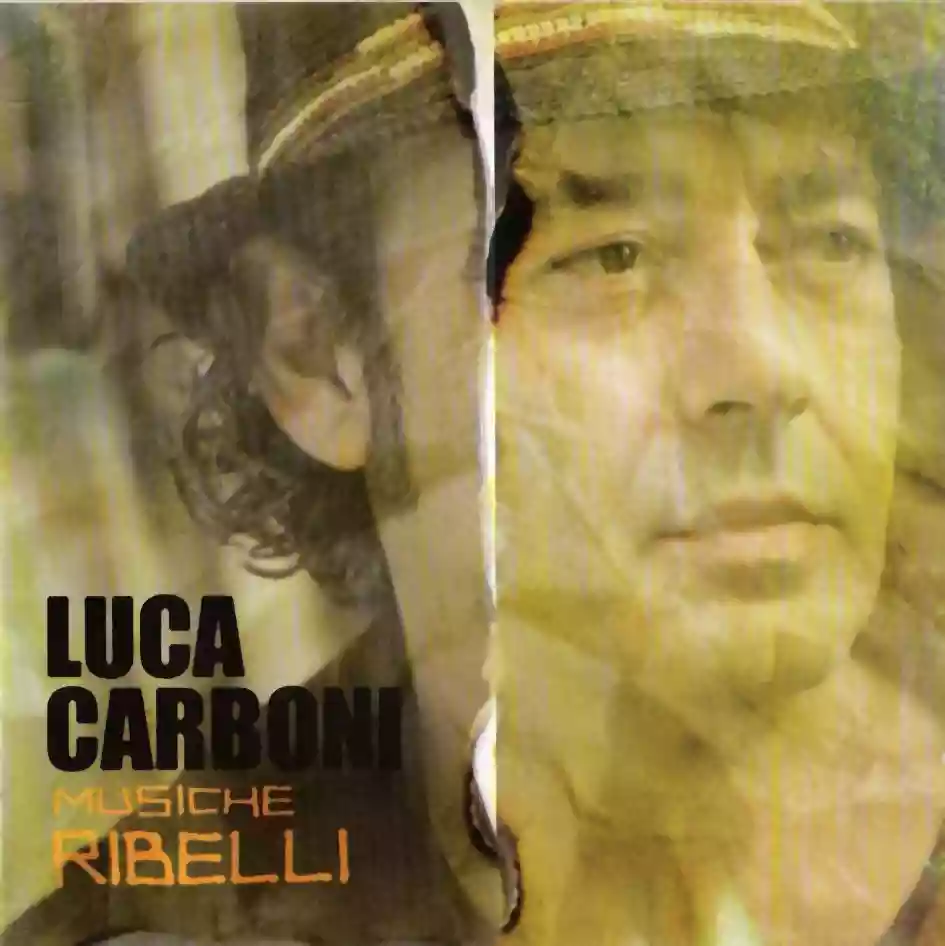
In the twenty-fifth year of his career, Luca Carboni, after having traveled far and wide in his music, dives into the revisitation of the "angry" singer-songwriter style of the seventies, with stunning results, especially regarding the choice of pieces, but also for the vocal approach with which he interprets them. "Musiche ribelli" is one of the most beautiful surprises that Italian music has given us in the last ten years, a skillful collection of the beautiful pages of true singer-songwriter music, the one with a capital S, which is the one from the seventies. It starts as best as it can, with the cover (and what a cover!) of one of the most forgotten authors of those roaring years: Claudio Lolli. Luca, with co-producer Riccardo Sinigallia, sings "Ho visto anche degli zingari felici" from Lolli's 1976 album of the same name, removing some verses and musical parts, bringing the song from nearly eight minutes of the original to less than four minutes of this more "pop" and accessible version. A video was also shot for this song, in which Claudio Lolli appears in Piazza Maggiore at the end, who has also been a high school teacher since the '80s. The songs chosen for this album range from the year 1973, the year of "La casa di Hilde" by Francesco De Gregori (sung also in duet with Riccardo Sinigallia, brother of Daniele from Tiromancino), beautifully interpreted by Carboni, and 1980, the entry into a new decade, with the last surge of rebellion, that of Franco Battiato with "Up patriots to arms", a song that Carboni sings with the right anger, but without shouting it. There is obviously also room for the song that gives the album its title, namely "Musica ribelle" by Finardi, and for other episodes more or less known in our singer-songwriter history. There is room for Bennato's "Venderò", for "Eppure soffia" by Pierangelo Bertoli, up to "Vincenzina e la fabbrica" by Enzo Jannacci, a 45 rpm single that was released in 1974 and was even the soundtrack of "Romanzo popolare" by Mario Monicelli. This homage to the great early singer-songwriter music could not lack Lucio Dalla, whom the disciple Luca honors with "Quale allegria", from the album "Come è profondo il mare", the first in which Dalla also writes the lyrics; nor could it lack one of the "three crowns" of singer-songwriter music, Francesco Guccini, whose "L'avvelenata" is interpreted, and it is among the best interpretations of the album. The other two crowns for the record are Francesco De Gregori (the only one to be covered twice, in fact, besides "La casa di Hilde", Luca Carboni interprets as the second track of the album "Raggio di sole" from 1978) and Fabrizio De André, remarkably absent from this selection. In a 2009 interview with Radio Deejay, Luca explained to Linus how the album was clearly the result of a selection, primarily thematic, that is, the politicized and social singer-songwriter music of the seventies, and secondly vocal, thus choosing the pieces that most suit the Bolognese's timbre. Fabrizio De André, Luca reiterated, was rightly and obviously considered, and the song would have been "Via del Campo", but the result was not satisfactory in the rehearsal room. Furthermore, among the other singer-songwriters considered but then discarded were also Pino Daniele, of whom Luca tried "Je so' pazzo", but the difficulty with the Neapolitan dialect made him give up; and Antonello Venditti, of whom he tried some songs from the early albums (in the interview, it does not specify which ones). Personally, I believe that Luca did an excellent job, if not always from a vocal point of view, certainly from a piece selection point of view, making the young generations rediscover the sometimes lost treasure of our singer-songwriter music. Moreover, the collection did not aim to be exhaustive, but only to be a starting point for further exploration on one's own.
Loading comments slowly
Summary by Bot
Luca Carboni’s album Musiche Ribelli revisits the politically charged singer-songwriter music of the 1970s with carefully selected tracks. His interpretations bring new life to iconic songs by artists like Claudio Lolli, Francesco De Gregori, and Franco Battiato. While vocals may occasionally falter, the album shines as a passionate homage and a gateway for younger audiences to rediscover classic Italian songwriting. The collection is praised for its thematic focus and artistic choices, rather than completeness.Tracklist Videos
Luca Carboni
Luca Carboni (born 1962 in Bologna) is an Italian singer-songwriter known for blending pop hooks with reflective, city-rooted storytelling. Debuting in 1984, he scored major hits with Silvia lo sai, Mare mare, and Ci vuole un fisico bestiale, and later renewed his sound with Pop-up (2015) and Sputnik (2018).20 Reviews
