
 •
Rating:
•
Rating:
THE REVIEW
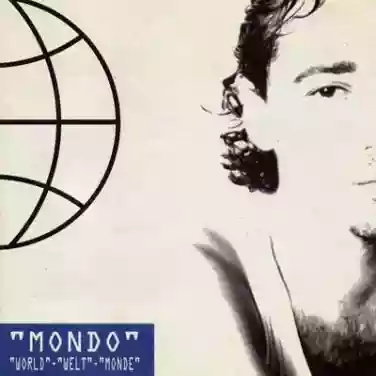
The album that follows the enormous success (more than a million copies sold!) of the previous "Carboni" from three years earlier, this "Mondo world welt monde" has among its many flaws the fact that it comes after one of the best works of the Bologna singer-songwriter, failing to measure up. In the thirteen tracks (never so many in an album of Luca's unreleased songs, neither before nor after) one perceives the taste of repetition, of what has already been sung. The most striking example of this fatigue after ten years and five albums of high quality comes from "Virtuale," whose chorus replicates the rhythm of "Mare mare," only changing the chords. It’s a Luca trying to follow the same path, but this time with less vigor. In contrast, there are tracks that will remain in the history of his repertoire, like "Inno nazionale," a song that better than many sociologists described Italy, focusing on soccer but also beyond, of those years. The theme of the homeland will return twenty years later in "Luca lo stesso," the most played piece on the radio in this second part of 2015. Returning to the '95 album, it is Carboni's sixth album of unreleased tracks, the seventh if you also count the "Diario" published two years earlier, and it was released on October 12, the day of the artist's 33rd birthday, baptized by Lucio Dalla and the Stadio in 1984. The title was probably chosen for the recurrence of the word "mondo" in the titles of three tracks. The album oscillates between engaged and solemn songs, like the concluding "Pregare per il mondo," and lighter themes, both musically and textually, as in the already mentioned "Virtuale," but also in the other song of this album that has withstood the test of time, "Non è," a light melody that also recalls the carefree spirit of "Mare mare." There are also nice lighter pieces like "Onda" and "Mercoledì," "Condomini del mondo," where Luca's irony appears, which will also characterize future tracks like "La cravatta," from the following "Carovana," and other very heartfelt songs like "Sto perdendo tempo," closer to the line of "Pregare per il mondo." Essentially, "Mondo" is a downplayed album, where Luca sings worse than in other albums, somewhat flatly, with some tracks coming across as fillers. In addition to the Italian version, a Spanish version was also produced, titled "Mundo," with texts adapted by Miguel Bosè, who will return to collaborate with Luca Carboni in 2013 on "Fisico e politico," singing, as was fitting and predictable, a song from this "Mondo," namely "Inno nazionale." Luca will opt for subdued and "homemade" productions in the next "Carovana." We will have to wait until 2001 to listen to "Lu*Ca," the album of revival based on acoustic and simplicity.
Loading comments slowly
Summary by Bot
Luca Carboni’s 1995 album Mondo follows his highly successful Carboni album but fails to meet expectations. Though it contains moments of brilliance like ‘Inno nazionale’ and some lighter, ironic tracks, the album largely feels repetitive and less energetic. Some songs come off as fillers, and Carboni’s vocal delivery is comparatively flat. Despite its flaws, Mondo still offers memorable pieces that remain significant in his repertoire.Tracklist Lyrics Videos
Luca Carboni
Luca Carboni (born 1962 in Bologna) is an Italian singer-songwriter known for blending pop hooks with reflective, city-rooted storytelling. Debuting in 1984, he scored major hits with Silvia lo sai, Mare mare, and Ci vuole un fisico bestiale, and later renewed his sound with Pop-up (2015) and Sputnik (2018).20 Reviews
