
 •
Rating:
•
Rating:
THE REVIEW
Preamble: this review is immoral, it’s a duplicate that probably pushed some more deserving analysis off the homepage. I just had a great urge to write about this work.
On first listen, I remained indifferent; in fact, I felt a sort of repulsion, considering the album pretentious, arranged in a kitsch manner and too evidently naïve in its '67’s Summer Of Love air. After numerous other “sessions”, I managed to come out of apathy, at least acknowledging the care of the soundscape and a fine dramatic piece like “The House Is Not A Motel”. I put it back on the shelf, next to The Byrds and Grateful Dead, and there it stayed for a long time. A couple of weeks ago, who knows why, I picked it up again. It must have been the twentieth listen, more or less, but finally something shifted, so I listened to it at least another twenty times, and I’m still doing it now.
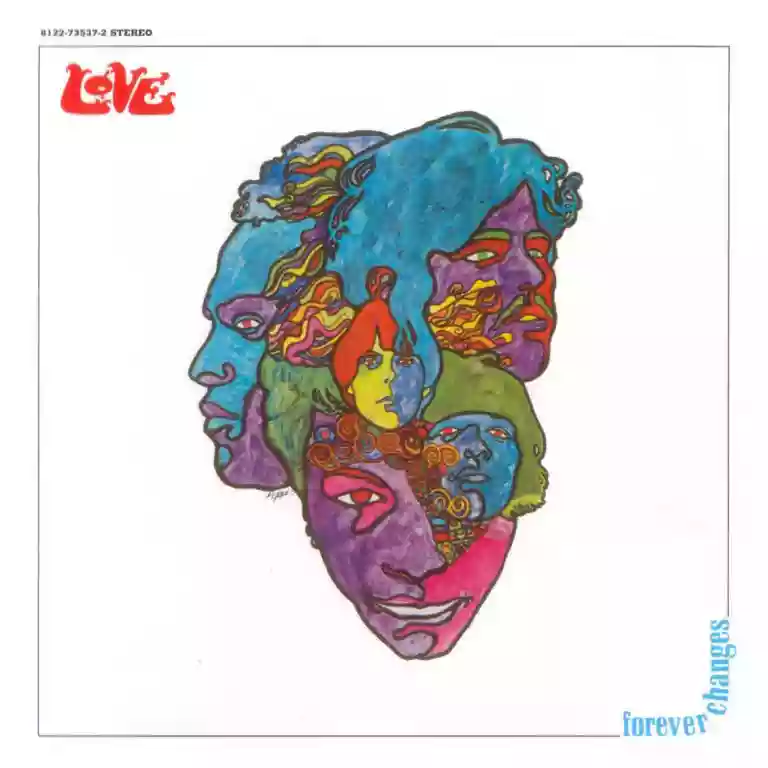
“Forever Changes” by the Californians Love is one of the greatest albums in the History of music, one of the symbols of the entire psychedelic season, one of the most radiant and dramatic examples of sonic intimacy. The year is 1967, the same as the earth-shaking debut of The Doors who released on the same label (Elektra Records, until then specialized in folk music). Love were already on their third work, and the previous one, Da Capo, with its jazzy and acid influences, had shown great free form creativity. Instead of continuing down that road, which would be dominated by a certain Hendrix, the group changes direction, steering away from electric instrumentation and rock enthusiasm. In this work, electric guitars are present in not more than three pieces, and keyboards are almost entirely set aside in favor of a composed but essential section of strings and brass.
To understand the reason for such a counter-current choice compared to the trends of the time (see Jefferson Airplane, Cream, Big Brother & The Holding Co.), one must immerse oneself in the atmosphere of those days, between June and August 1967 in the Elektra studios: the band is pressured by the good responses of the two previous albums, the members are divided by personal misunderstandings, also due to rampant drug use. At the center of this, Arthur Lee, the leader of this ensemble, is increasingly lost in his discomfort, and muses on life and death, on music business and isolation (from the song “The Red Telephone”: “sitting on the hillside/watching all the people die/I’ll feel much better on the other side”).
After almost inconclusive June sessions, the band takes a month to think, compose, and clear their minds. They return to the studio in August, and the masterpiece is born.
The first song, “Alone Again Or” composed and sung by the other cornerstone Bryan McLean, is already a masterpiece within the masterpiece: acoustic guitars and strings, a trumpet solo with Latin-American memories; McLean’s voice, curiously but deliberately, was mixed by Lee not in perfect harmony with the arrangements and the backing vocals, creating an almost dissonant and “crooked” effect. The already mentioned “The House Is Not A Motel” is the hardest and most acid piece of the work, as well as the most evidently dramatic (“the water’s turned to blood”). Other essential compositions are “Old Man”, “The Red Telephone”, and the concluding “You Set The Scene”, while the splendidly arranged (and with a long-winded title) “Maybe The People Would Be The Times Or Between Clark And Hilldale” deserves special mention: an incredible song in terms of intensity and measure.
Arthur Lee thought he was going to die (side effects of LSD?), and this was to be his personal requiem. He would die of cancer many years later, after a life of drug addiction and legal troubles, but his work remains there, sublimated in “Forever Changes”, untouchable in every groove. On par (...?) with the Doorsian debut, with the Jefferson Airplane Pillow, this is not just History, it is more.
Loading comments slowly
Summary by Bot
This review recounts the author's evolving appreciation of Love's 1967 album Forever Changes, highlighting its departure from typical psychedelic rock trends and its richly arranged soundscape. It explores the album’s creation amid band turmoil and drug use and emphasizes the emotional depth and historical importance of key songs. Ultimately, the album is celebrated as a timeless masterpiece embodying sonic intimacy and dramatic intensity.Tracklist Lyrics Videos
09 The Good Humor Man He Sees Everything Like This (03:08)
Love
Love was a Los Angeles rock band led by Arthur Lee, active in the 1960s and beyond, celebrated for blending psychedelia, garage rock, and eclectic influences. Their 1967 album “Forever Changes” is widely regarded as their defining work, notable for its orchestral arrangements and tense, melancholic atmosphere.11 Reviews
Other reviews
By psychopompe
No title has ever been more prophetic in encapsulating the timelessness and fragile equilibrium of these compositions.
There is little or none of the 'peace & love' rhetoric in this album, but rather a creeping unease that lurks here and there in the string arrangements.
By Melissa
The magic that made this album a masterpiece lies in the subtle work with which Love managed to weave flamenco adornments onto a rock sound tapestry.
Forever Changes has become a milestone of Rock, a work always loved by fans of acid rock, and for others, an album to know.
