
 •
Rating:
•
Rating:
THE REVIEW
We are in 1978, Lou Reed is now an established and well-known artist in the music field, also due to the large amount of work produced so far: after the first self-titled album (1972) with dull tones, Lou is welcomed into the arms of "Papa" Bowie, who makes him a big star and helps him compose that milestone of glam-rock which is "Transformer" (1972); later, he moves away from glam-rock and turns with an album with very depressing tones "Berlin," also a rock milestone. Then comes the adequate "Sally Can’t Dance" (1974), the avant-garde "Metal Machine Music," with four sides each containing 16 minutes and 16 seconds of pure feedback; and not to be forgotten are the live albums "Rock’n’Roll Animal" (1974) and "Lou Reed Live" (1975) which crown this first period with RCA.
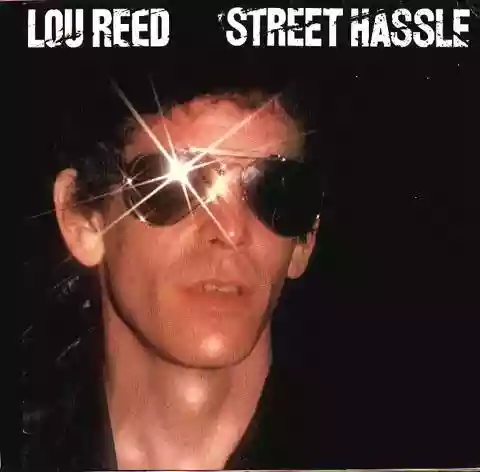
Subsequently, Lou falls under the grips of Arista, and during this period he churns out first "Coney Island Baby" (1976), a good album with vaguely bluesy atmospheres, and then the disappointing "Rock’n’Roll Heart." At this point, increasingly accompanied in life by heroin and alcohol, he releases this "Street Hassle" (1978), a very controversial work with songs that range from banal rock to a symphonic sound; in certain points, an almost spectral, strange work, with Lou singing in a way never heard before.
The album begins with "Gimme Some Good Times", a song that reprises the now-famous riff of "Sweet Jane", this time redone by a brass section with a banal text and a melody with almost pathetic tones. The second chapter is "Dirt", a monotonous and driving rock where Lou perhaps gives his best. Now it’s time for the masterpiece of the album "Street Hassle", a symphonic suite of almost 11 minutes divided into three sections: a-"Waltzing Matilda", accompanied by a great string riff and with a somewhat "trembling" singing; b-"Street Hassle", the theme here is taken up by an a cappella female choir and later the same riff is played in a less orchestral manner; c-"Slipaway", the final chapter introduced by a spoken recitation (by Bruce Springsteen) which is then overlapped by Lou Reed's melodramatic singing. After this masterpiece is the R&B of "I Wanna Be Black", good arrangement and ridiculous text; then the experimental "Real Good Time Together" and the bewildering rock of "Shooting Star". The album ends with two good chapters: "Leave Me Alone" with heavy distortions accompanied by a brass section (always very present on the album) and with a great Lou on vocals, and the melodic farewell of "Wait."
A great work, no doubt about it, but it perhaps lacks continuity within the track-list. However, such an inspired album is truly very beautiful, one of the best chapters in the discography of the Rock’n’Roll Animal.
Loading comments slowly
Summary by Bot
Lou Reed’s 1978 album Street Hassle is a complex and inspired work blending rock, symphonic orchestration, and experimental sounds. Though sometimes uneven in continuity, it features standout tracks like the title suite and showcases a new vocal style. The album reflects Lou’s turbulent personal life and musical exploration during this period. It remains one of his most daring and remarkable records.Tracklist Lyrics Videos
Lou Reed
Lou Reed (born Lewis Allan Reed, March 2, 1942 – October 27, 2013) was an American musician, singer-songwriter and founding member of the Velvet Underground. He had a long solo career noted for albums such as Transformer, Berlin and New York and for experimental works including Metal Machine Music.71 Reviews
