 •
Rating:
•
Rating:
THE REVIEW
JAZZ 7.5/10
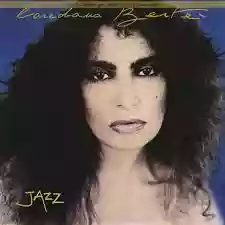
“Jazz” is Bertè's last great album before oblivion and, as had been the custom for some years, it was recorded in America, at Media Sound in New York in August 1983. The sessionists are all Americans (the Platinum Hook, who had already played with Bertè on the previous album “Traslocando”, 1982). Honestly, after all these years, it’s still unclear why anyone would need to go all the way to the US to record an Italian pop album (albeit with some rock influences), but, then as now, a bit of foreign flair is always “in.” 8 tracks, 35 minutes: very concise. And, in some cases, very beautiful.
The best of Italian singer-songwriters worked on this album: Ivano Fossati; Enrico Ruggeri; Guido Guglielminetti; Bernardo Lanzetti; Maurizio Piccoli; Luigi Schiavone. All ready to “gift” Bertè and her voice first-rate songs. The best among them is Fossati, but Ruggeri, who wrote 3 songs, is the author of the album’s most famous track: “Il mare d’inverno”. Ruggeri wrote the song for a very personal reason: a girl had stood him up, she hadn’t shown up for a date, and before him, in the heart of winter, the only thing he could observe was the sea, since he found himself (apparently) in a small town between Fano and Senigallia: the beach of Marotta. Ruggeri, who had just left Decibel, had started a solo career with no success (until then) and “Il mare d’inverno” truly raised his profile. Dario Salvatori writes: “...[...] Crepuscolare e malinconica […] stempera nell'intimismo da un lato la vena descrittiva, dall'altro un punto di vista elegantemente tetro sulle cose […] Il tappeto elettronico dominante è completato nel finale dall'intervento struggente e decisivo dei fiati: questo arrangiamento, indissolubilmente legato alla canzone, si ripropone sia nella versione della Bertè che in quella di Ruggeri”. Ruggeri “took it back” in 1984, the following year, and included it on his album “Presente”. Needless to say, there have been countless covers. Much of the song’s success is due to Bertè’s interpretation, of course, but also to the overturning of the classic canon of Italian songs about the sea, which is usually seen as something summery, cheerful, light-hearted, and carefree—but here, instead, it’s told in its naturally sad wintry state (the winter sea, in fact, is not cheerful at all). “...Mare mare/qui non viene mai nessuno a trascinarmi via/mare mare/qui non viene mai nessuno a farmi compagnia/mare mare/non ti posso guardare così perchè/questo vento agita anche me” has a truly evocative power, as do the brightly lit discotheques full of lies and the banal music that will, inevitably, spread in the summer (then as now, indeed).
The other two by Ruggeri are “Il testimone” and “La donna della sera”. Not much to write home about, to be honest. “La donna della sera” would also become the title of a song by Angelo Branduardi (1994). Fossati, on the other hand, is in stunning form: he gets the honor of the opening with the beautiful “Un automobile di trent’anni”, and right away sets things straight. We’re in the 80s, ergo—powerful drums (with endless rolls), straightforward, no-nonsense rhythm, a super-tight bass, the inevitable saxophone, and that passage, “...non è qui/che avremmo impegnato il cuore”, which is incredibly moving (and, unfortunately, so true). Life isn’t linear, we know, but in the title track Fossati reminds us (life is improvisation, like jazz). There’s the cover of “Sina”, a song by Brazilian singer-songwriter Djavan (an artist whom Bertè would “pluck from” again in the future, with little acclaim). Maurizio Piccoli writes the convincing “Così ti scrivo” and the far less convincing “Quanto costa dottore”, while Bernardo Lanzetti gets the closing track with “Ho chiuso con il rock’n’roll”, a powerful rockettone with a frame-worthy solo by Fossati (who, on the album, also plays piano, keyboard, xylophone, recorder, and synthesizer—a bit of everything).
Not a single single was released from the album (even though “Il mare d’inverno” would get a videoclip directed by Loredana Bertè herself) and yet it is her most commercially successful album ever. There’s a nice vinyl version, but no CD (the last edition dates back quite a while), so it’s hard to find except for crazy prices. For me, one of her best. It’s worth recalling that after “Jazz” Bertè would succumb to disappointing albums (the next one being “Savoir faire”, 1984) and improbable love affairs (Bjorn Borg).
Loading comments slowly
Summary by Bot
This review presents an objective take on Loredana Bertè's album 'Jazz.' The reviewer assigns a mid-range rating and gives an even-handed perspective. While not overly critical or enthusiastic, the review provides useful insights into the album's style and reception. It is a balanced assessment suitable for curious listeners.Tracklist
Loredana Berté
Loredana Berté is an Italian singer and performer known for a powerful voice, provocative imagery, and a run of major hits from the late 1970s to the early 1980s. Sister of Mia Martini, she helped inject reggae and rock into Italian pop and remains active on stage and in the studio.09 Reviews
Other reviews
By Sullenboy
"If the eagle flies there is hope, that what remains of me flies out of the room."
"Jazz is that search for freedom, for one’s place in the world."
