
 •
Rating:
•
Rating:
THE REVIEW
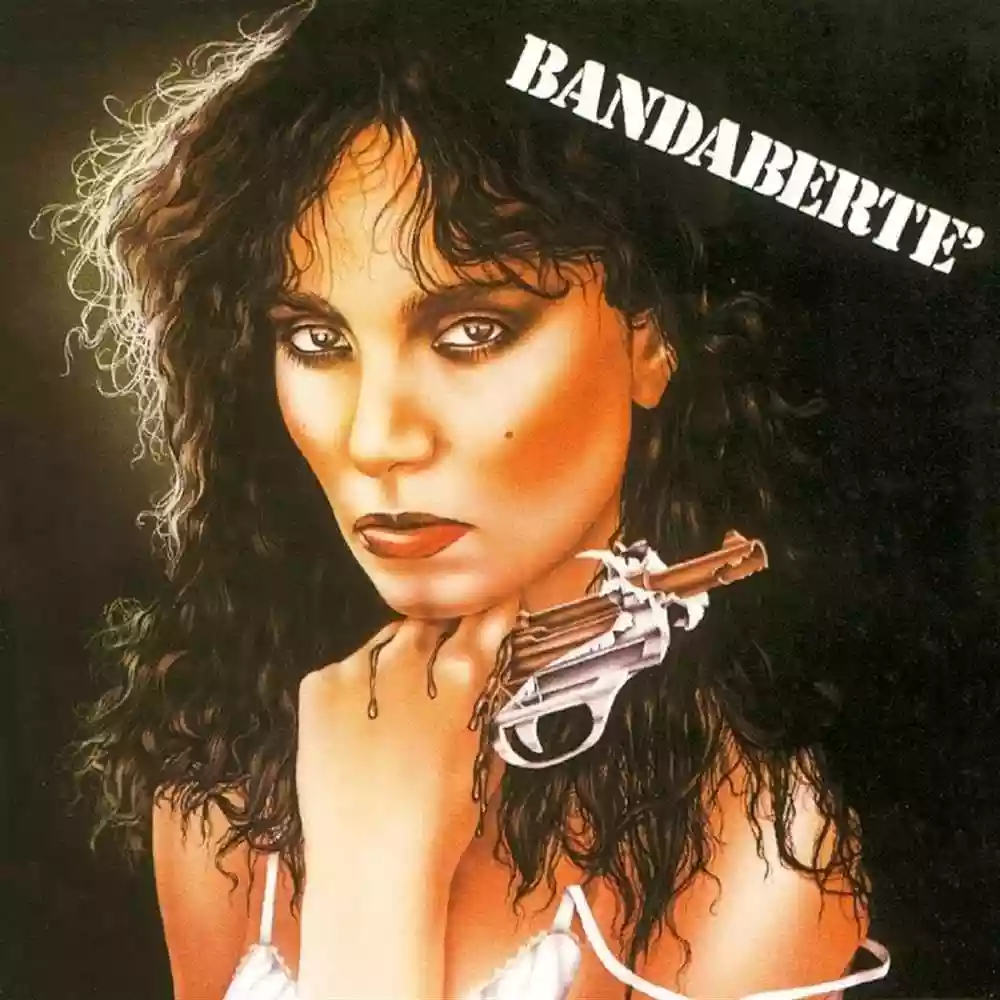
BANDABERTE' 7.5/10
The Bertè golden age (before her recent rentreé) lasted a long time, more or less from 1976 to 1984. It was inaugurated by "Sei bellissima" and closed by "Il mare d'inverno", with "In alto mare", "...E la luna bussò", "Non sono una signora", "Dedicato", and "Ninna Nanna" in between. In total, 6 albums, all of which could be reviewed using the same criteria and given pretty much the same score (give or take a decimal): they are all excellent works, featuring great songs (leaning toward “very great”) and fillers that sometimes work, sometimes not. My personal favorite is probably "Jazz" (1983), although over the years, the album I've listened to the most is "Bandabertè", 1979. The occasion, moreover, is a juicy one: in 2022, NAR released a fully remastered, scratch-free reissue, elegantly packaged in a minimal packaging, for just 10 euros (with a bonus track: "Dedicating").
The album (which spent several weeks high in the charts) was driven by the reggae of "...E la luna bussò"—which has a peculiar backstory that, I think, is worth telling. While on vacation in Jamaica, Bertè accidentally found herself in the midst of a gigantic crowd heading to an unknown destination. Unknown for her, but crystal clear for them: a Bob Marley concert. Now, at the time, Italian-made reggae wasn't exactly a thing, and Bertè had an intuition: she bought all of Marley's records, brought them back to Italy, handed them to her team (Lavezzi; Avogadro), and said: "Listen and study." They listened, studied (well), and composed one of the most famous pieces in Italian music, introducing reggae to Italy too ("...E la luna bussò" spent 4 consecutive weeks at the top of the hit parade) thanks to the summer appearance at Festivalbar (the album had been released in late spring). She sings magnificently (as she does throughout the album) and brings an incredible sensual energy to the table—so much so that even in Spain, they took notice, and she went there to record "Y la luna Ilanò." Over the years, in those years when her success was fading (and had already faded), in 1997, she reissued it as a duet with Francesca Alotta. That same year, still shaken by the death of her sister Mimì two years earlier, she went to Sanremo with the song "Luna", which started off with these lines: "Vaffanculo, luna/ho perso la fortuna." Clear enough, right?
The other “strong” track is "Dedicato." Written by Fossati—who would go on to write many more songs for Bertè—but it's not an original: Fossati himself recorded it the previous year (1978) on his album "La mia banda suona il rock" (my take: Bertè’s version is better, more dirty, more believable). The lyrics leave little room for interpretation: "Ai suonatori un po' sballati/ai balordi come me/a chi non sono mai piaciuta/a chi non ho incontrato/chissà mai perché." This one too was recorded in Spanish (and also in English, as I said above); there’s a cover by Gianni Morandi, and Bertè’s version reached all the way to number five in the hit parade. A real must.
The album has at least two other fairly memorable songs (and maybe a third as a bonus): "Robin Hood", which today would be almost forbidden given its truly provocative lyrics (some lines: "Vive in un palazzo enorme/sempre in tasca una pistola/mangia molto e molto dorme/spaccia l'eroina a scuola […] E' insensibile all'amore/la passione non lo tenta/con le donne è un gran signore/se le vuole le violenta"), but it has an enviable groove and a killer sax; "Colombo", still relevant today, is a critique of the political, media and even space dominance of the United States of America—colonizing and “ruthless”—again, great rhythm here; I would add "Agguato a Casablanca", which I find remarkable, above all for its driving sound and its expressed irony, really well executed in my opinion ("...Ed il fantasma di Don Giovanni per tre volte tentò/amore mio non ho più vent'anni/è meglio un film di Totò"). Other tracks convince me less and inevitably bring down the score for the whole album. I never understood the reasoning behind the two Battisti covers ("Prendi fra le mani la testa", also in reggae form, and "Macchina del tempo")—and in both cases, they’re not very successful—and songs that are much more forgettable, like "Peccati trasparenti" and "Folle città", the latter considered by many to be a (hidden) Bertè classic—a judgment I obviously don’t share. Of course, if records and songs like these were released today... Wow, what a boomer thing to say.
Loading comments slowly
Summary by Bot
The review offers a balanced look at Loredana Bertè's Bandabertè, awarding it 3 out of 5 stars. It highlights the album's strengths and weaknesses, reflecting on Bertè's distinct style and presence in the Italian pop-rock scene. The review is straightforward, aiming to inform potential listeners without bias.Tracklist
Other reviews
By Viva Lì
"Bertè wonderfully interpreted the track: great vocal range, enviable sense of rhythm, grit and anger to spare."
"Bertè, true to herself, injects anger, courage, determination, clenched teeth, and a desire to impress by shouting and writhing. Yet, she manages to remain implacable and elegant."
