
 •
Rating:
•
Rating:
THE REVIEW
Before Rage Against The Machine and Korn, before the many trivialities that came after with the useless 'nu-metal', there were bands that defined the coordinates of that musical crossover, an omnivorous creature capable of encompassing rock, metal, funk, psychedelia, and pop melody at the end of the controversial '80s: great bands like RHCP, Faith No More, and, indeed, the much-underrated Living Colour.
The four from NYC had a peculiarity of which they were, rightfully, quite proud: being the first TRUE hard/rock band composed exclusively of black musicians, and what musicians.... Indeed, if the Bad Brains were already precursors in that sense (but in the realm of punk/hardcore), Vernon Reid and company operated on their own personal and much broader musical scheme, one that could include both the hard/blues of Zeppelin and a rhythmic section reminiscent of the 'funky-drummer' lessons from soul godfather Mr. James Brown, or the memories of certain New York new wave from TH and the metal coined by California's Metallica at the start of the decade. Reid was quite a character, a guitar-man capable of starting from god Hendrix, moving through notes with a geometric solo à la Fripp, and ending with the funky embellishments of an Ed Hazel from the Funkadelic. No less talented were the other members, from the monstrous versatility of drummer Will Calhoun (one capable of playing 'Battery' and then perhaps 'Contusion') to the virtuous bass strings of Muzz Skillings, and finally, the singing infused with anger and soul passion of frontman Corey Glover.
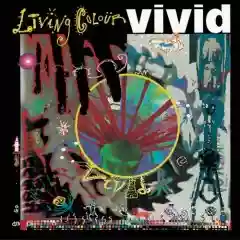
Thus, from 1985, the year of birth of the 'Black rock coalition', Reid's deus-ex machina dream is finally realized, and three years later, under the good auspices of admirer Jagger, struck by their incendiary live set at CBGB's, this dream is named 'Vivid'; 'vivid', pulsating with rock energy just like the music it contains. And it perhaps remains the most glaring case of reappropriation of the word Rock borrowed from the blues cultural roots by African Americans, a bit like going to Graceland and happily urinating in front of the huge gate (because we know, for a long time 'Elvis is dead'...). Introduced by the voice of Malcolm X, the granite riff of 'Cult of Personality' anticipates the conscious and disillusioned political lyrics of Glover: 'I know your anger, I know your dreams - I've been everything you wanna be... I'm the cult of personality. Like Mussolini and Kennedy... Neon lights, Nobel Prize - When a mirror speaks, the reflection lies...'. After the memorable opener, 'I Want to Know' combines power and catchiness in a successful mix that ends with Reid's guitar in evidence, while the Hendrixian 'Middle Man' remains memorable for the bitter lyrics of a man in between, on the margins of the U.S.A. social context of the late Eighties embodied by the Reagan government, glamour, success at all costs, and that damn yuppie lifestyle. And the poor, the weaker classes of blacks, Hispanics, etc., who populate the U.S. ghettos? Screw them, I have to go out with my new Armani jacket to drink a Martini... 'Desperate people' talks about this social illusion, the media as promoters of false life models that from TV, like a hypnotic drug, want to make us believe that 'Everything is possible...' - But nothing is real, I add, and Tom Morello must have had the angry notes of this song well stamped in his head, for sure. 'Open Letter (to a Landlord)' makes clear from the title LC's utopian commitment with a sharp melody supported by Skillings' vital bass: 'Now you can tear a building down, but you can't erase a memory. These houses may look all run down, but they have a value you can't see...' - Will the 'landlord' understand? 'Funny Vibe' is a supersonic funk/heavy blow (complete with a cameo from Public Enemy) that is more than enough to humiliate the Chili Peppers of the time, while the vibrant cover of 'Memories Can't Wait' re-establishes the connection with New York of the Talking Heads, and once again demonstrates how our band enjoys reshuffling the cards of their varied influences. 'Glamour Boys' was the ultra-melodic single that broke the charts, made them known, and that's enough. Mick Jagger himself got involved producing (and playing harmonica) on the ballad 'Broken Hearts' and in the finale between Led Zeppelin and Sly Stone of 'Which Way to America': the wise old fox had understood the potential of the four, which will literally explode in 1990 thanks to the amazing and innovative 'Time's Up'.
...WHAT'S YOUR FAVORITE COLOUR, BABY?!
Loading comments slowly
Summary by Bot
Living Colour's debut album Vivid stands out as a pioneering blend of rock, funk, metal, and soul. The band, notable for its all-black lineup, delivers skilled musicianship and socially conscious lyrics. Tracks like 'Cult of Personality' and 'Funny Vibe' showcase their powerful sound and message. Produced in part by Mick Jagger, Vivid remains a landmark album redefining rock’s cultural landscape.Tracklist Lyrics Videos
Living Colour
Living Colour is an American rock band from New York City known for a genre-blending crossover of hard rock/metal with funk, soul and other styles, and for socially conscious lyrics. The classic lineup features Corey Glover (vocals) and Vernon Reid (guitar), with Will Calhoun (drums) and bassists including Muzz Skillings and later Doug Wimbish.13 Reviews
Other reviews
By Rooftrampler92
Cult of Personality ranks among music’s top 100 solos.
An album that stands among the pillars of ’80s black music; a band underrated and almost ignored by the European audience.
