
 •
Rating:
•
Rating:
THE REVIEW
Operation Resurrection.
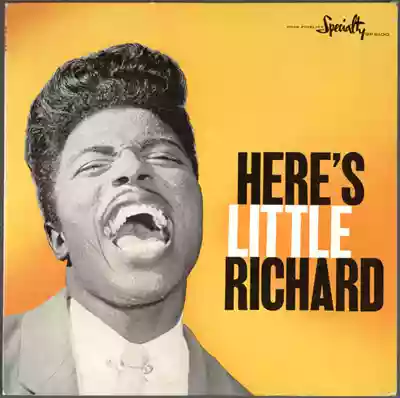
Approaching and judging records of this kind is always difficult, I believe. For two reasons: the temporal distance that separates us from the work—and thus the fact that it may seem dated—and the status it has acquired, in the opposite direction. Perhaps then it’s best to think in terms of influences: those that shaped this unruly and brilliant artist, and those he has bestowed over the years. Just to mention the first ones that come to mind, in the first group: the gospel performed in church celebrations and the blues, which on the timeline derived directly from spirituals and culminated in the boogie-woogie vitality. If the testimony of T-Bone Walker is true, that "the first boogie-woogie was heard in church," the circle closes unexpectedly and perfectly. Music that simultaneously flirted with the sacred and the diabolical was from the start that of Mr. Penniman: that’s why it resonated so strongly with the masses of youngsters. Little Richard added a crucial component: jazz and its danceable rhythms. I am obviously referring to the orchestral jazz of Count Basie and Duke Ellington, that is, swing (more precisely: the lindy-hop danced in the forties in black neighborhoods) with its wild and frenetic rhythms. From Malcolm X’s autobiography:
"Count's orchestra was playing full volume. I grabbed Mamie and we started dancing. She was a big, hefty girl, rather rough, and danced the lindy-hop like a bucking horse. I still remember the evening she became known as one of the show champions at the Roseland. The orchestra was playing the high notes and she threw away her shoes and barefoot began to scream and thrash about as if she were in the middle of the African jungle dancing a wild dance; then she made some figures always screaming at every step until the guy dancing with her was forced to use his strength to keep her under control."
It's easy to link this image to the frenzy that Little Richard’s performances unleashed, orgies of youngsters who found in rock 'n' roll the first true liberation from their inhibitions; Ready Teddy, Long Tall Sally, Slippin' and Slidin', Jenny Jenny were tracks that had to arouse the senses of hundreds of youths, and you can easily imagine them freeing and twisting muscles and joints. And how could you forget the track that brought Little Richard to historical fame, that Tutti Frutti covered and looted countless times by everyone, so much so that it’s unnecessary to even mention their names.
In short, is there anything else to say? Little Richard's band, Earl Palmer, Frank Fields, Alvin Tyler, and Lee Allen plays at a thousand, as if every piece should be the last; expertly maneuvering even through the slow tracks—Can’t Believe You Wanna Leave, Miss Ann—which are actually the least representative of the album, but are carried by Little’s strained voice that had no equal at the time. If it's true that rock 'n' roll is mainly short and fast pieces made for having fun and not overthinking, the history starts here and we all know where it will end. We spoke of influences at the beginning. Among the many, I must also mention the one that led a certain Antonio Ciacci to debut ("If they have someone in America called Little Richard, then I can call myself Little Tony"). We Italians always stand out for something, well, okay.
Loading comments slowly
Summary by Bot
This review examines Little Richard's debut album 'Here's Little Richard' as a foundational work in rock 'n' roll history. It highlights the blend of gospel, blues, and swing jazz influences shaping his energetic style and the cultural impact on youth liberation. The powerful band performance and iconic tracks like 'Tutti Frutti' are praised. The album represents the start of a musical revolution that continues to influence artists worldwide.Tracklist Lyrics Videos
Little Richard
Richard Wayne Penniman (December 5, 1932 – May 9, 2020), known as Little Richard, was an American singer, songwriter and pianist who helped pioneer rock and roll in the 1950s with exuberant performances and recordings such as Tutti Frutti, Long Tall Sally and Lucille.02 Reviews
