
 •
Rating:
•
Rating: THE REVIEW
After rightly entering the Olympus of Italian rock with the new wave masterpieces "Desaparecido" and "17 Re" and the good "3", Litfiba, due to the departure of bassist Gianni Maroccolo and drummer Ringo de Palma, who joined CCCP, decided to change their sound and turn toward a strong and powerful rock.
There has been much debate about this choice (some have even talked about betrayal), my opinion is that a band must always challenge itself because repeating the same sound on every album is ultimately counterproductive.
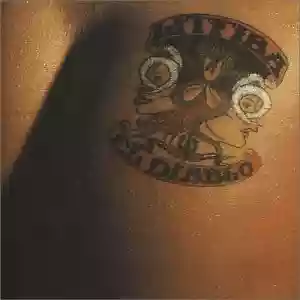
The first step of the new Litfiba (Pelù, Renzulli, and Aiazzi plus newcomers Trambusti, Terzani, and Candelo Cabezas) is "El Diablo" from 1990. The value of this album is more historical (it's with it that Litfiba achieved success) because it is inferior to both the previous and subsequent works due to a monotonous sound and the inexperience of Piero and Ghigo with rock sounds.
The opener is a true generational anthem, the very famous title track. Opened by a belch-cry and the words "Olbaid Le" (El diablo backwards), the song is not very powerful in itself but the lyrics (an accusation against all rock stereotypes) and Piero's interpretation make it an unforgettable milestone. It is followed by the Latin trip-hop of "Proibito", not excellent in this version, which ironically speaks against drugs ("I feel betrayed if you shoot up, and you no longer exist"). Track number 3 is the wonderful "Il Volo" dedicated to Ringo De Palma, who died just a few months earlier; the lyrics are beautiful because the pain is only imaginable ("Baby, zelig in evidence, you could have had the world, but you left it") and the music is full of pathos. It is followed by the negligible country-rock of "Siamo Umani", only the fiery finale is redeeming and the lyrics speak with many allusions about the history of the band up to that point. This brings us to the middle of the album and to "Woda-Woda" with a great performance by the whole group and lyrics about those who do charity only to have a clear conscience. "Ragazzo" on the contrary is a half misstep, too static and lacking in brilliance, especially in the middle part. If a decline is feared, the very rock-driven "Gioconda" arrives to stir the waters, no doubt about it, the paradigm of what Litfiba will do moving forward. The lyrics ironically discuss marriage ("But hope is the last to die, who lived hoping died you can't say, the heart no no I won't give it to you, the ring no no forget it") and a great number of solos make this song a gem. "Resisti" closes with good elements that will be highlighted later (also played by the current Litfiba) but here it's quite clumsy.
Summing up, an album with some of the best Litfiba songs of the '90s but that today seems quite outdated.
Loading comments slowly
Summary by Bot
El Diablo marks a significant stylistic shift for Litfiba as they moved from new wave to a stronger rock sound after key member departures. The album holds historical value as the band's breakthrough to success, though it suffers from monotony and some inexperience in rock. Notable tracks include the title anthem and emotional tributes, while others feel static or outdated. Overall, it is a mixed but important chapter in Litfiba's evolution.Tracklist Lyrics Videos
Litfiba
Litfiba is an Italian rock band formed in Florence around 1980. They were central to the Italian new wave/post-punk scene of the 1980s and are widely associated with the early trilogy of albums Desaparecido, 17 Re and Litfiba 3. The core public figures in reviews include Piero Pelù and Ghigo Renzulli.87 Reviews
Other reviews
By noodles
The album in question represents a true treatise that could be titled 'The Ruin of a Band'.
Piero Pelù, except for a few happy episodes, offers a caricature of himself shouting like a fool.
