
 •
Rating:
•
Rating: THE REVIEW
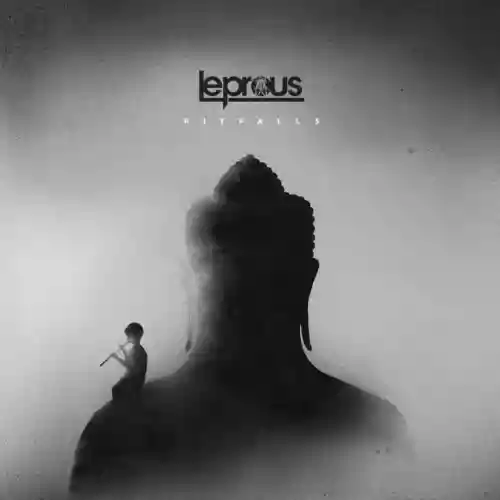
After the somewhat more "rock" turn of "Malina," Leprous this time want to truly surprise, venturing into unexplored territories and solutions that one probably wouldn't expect from them. "Pitfalls" is an incredibly courageous album, possessing the kind of courage every band should have to experiment without fear of negative judgments. It is first and foremost a very varied album where each track is different from the others, and they even gamble on a more pop approach, absolutely unthinkable during the "Tall Poppy Syndrome" era. Leprous have no qualms about creating songs with relatively easy appeal, yet they do so without falling into the temptation of pseudo-modernity and contemporary traps, consistently composing according to their own sonic ideals; dignity and the commitment to always remain true to themselves are important to Leprous. Just as they avoided indie and alternative temptations in the previous album, here they avoid the noisy modernism typical of, say, Imagine Dragons, as well as Coldplay-style melodies.
The approach is decidedly light and relaxed, even when the tempo picks up, with three main elements suggesting this: firstly, Einar Solberg's voice, which here favors a deliberately opaque falsetto or, in any case, a relatively weak timbre, albeit making room for occasional moderate shouts. Then there are frequent string arrangements, yet they are never bright and vigorous; they are always very subdued and melancholic, almost disappearing into the sound fabric without drawing too much attention, yet their contribution is crucial. Lastly, the drumming of Baard Kolstad, an incredible but somewhat underrated drummer, who had accustomed us to polyhedric and frantic rhythms, here prefers a very composed and softer style, with few flashes of virtuosity save for some subtlety with the cymbals, drumming much more in the manner of a Stewart Copeland, certainly not a Marco Minnemann. To all this is added the structure of the songs, which mostly settles on a composed song form, although there are a handful of longer tracks.
We are continually tossed back and forth between one style and another. The two explicitly pop episodes, however, are the opener "Below" and the central "Alleviate," not coincidentally chosen as promotional singles. These tracks start with particular and highly researched sounds in their manner, then vent all the energy into a deadly power-pop chorus where Solberg lets his voice loose uniquely. But the catchiest or what most winks at mainstream solutions is probably "I Lose Hope," which surprises the listener with funk and disco rhythms, used, however, in service of a very light melody, as if to give rhythm to an otherwise delicate track. A similar-funk and rather catchy incursion is also found in "By My Throne," certainly more energetic with precise and well-defined guitar riffs clearly rooted in math-rock, yet it’s the "yeah, yeah, yeah" in falsetto sung from time to time that lend a catchy aspect; it matters little if the orchestral backdrop tries to obscure this detail, not making the listener believe there's a pop attitude. Even rock-oriented yet composed Muse touches are reached with the vibrant guitar riffs of "Foreigner."
But there are also deeper tracks, think of the light and regular notes of "Observe the Train." Then there are longer tracks, detached from the song format, that touch closer to the typical Leprous style; "At the Bottom" exceeds 7 minutes, alternating delicate '80s retro synths with powerful choruses where guitar, bass, and voice draw out the grit, but also in "Distant Bells," where a crescendo of cold sounds somewhat in Radiohead style leads to energetic final guitar riffs. The track closest to classic Leprous is, however, the concluding "The Sky Is Red," 11 minutes devoid of any structural logic where technique and dynamism can emerge more freely. All of this while keeping the word metal outside the door, a definition that perhaps always felt too tight for the band, already eradicated in the previous album and seemingly destined to remain outside the door.
Among the albums that kept me company in 2019, this is certainly the most varied and unpredictable; it even earned the top spot in my year-end top 10. It's no surprise: when the name is Leprous or Haken, you expect it.
Loading comments slowly
Summary by Bot
Leprous' album Pitfalls takes a bold step into new musical territories, mixing pop, funk, and progressive rock with strong emotional expression. The band's willingness to experiment results in a varied and unpredictable collection of tracks. Vocal performances are subtle and emotional, supported by melancholic strings and refined drumming. The album balances accessibility with artistic integrity, earning high praise as one of 2019's best releases.Tracklist
Leprous
Leprous are a Norwegian progressive band formed in 2001, known for fluidly shifting from intricate prog-metal to artful, electronics-tinged rock. Fronted by vocalist/keyboardist Einar Solberg and acclaimed for Baard Kolstad’s drumming, they earned international recognition with albums such as Bilateral, Coal, The Congregation, Malina, Pitfalls, Aphelion, and Melodies of Atonement.06 Reviews
