
 •
Rating:
•
Rating:
THE REVIEW
This truly isn't a review, but a distorted attempt to celebrate in a few words a great artist, because Leonard Cohen is a carver of beauties that become true creatures at his touch.
Throughout the enthusiasms of the sixties and seventies, if we can define them so, before being acclaimed as a musician with this album, Cohen was already an appreciated writer and poet, a true wanderer of words for readers at war with decadent daily life, in search of that sweet and raw world, a bit briny, where sanctity gives us inhibitions and death strips off its black and dresses in white.
Enchantment.
What I immensely appreciate about this rugged Canadian is having given life to the irresistible combination of depth and simplicity, sealing this glimpse of perfection with the mysterious aura of inner malaise.
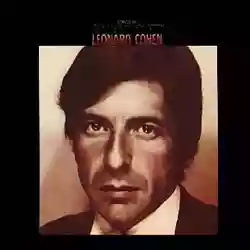
"Song of Leonard Cohen" is his first album, the first of the masterpieces that followed, among all "Songs of Love and Hate" and "The Future"; his legendary voice accompanied by a guitar sings poems (simplicity and depth): "The Stranger Song" is a vision, "Master Song" is a marble sculpture impervious to time, "Sisters of Mercy" sounds like an echo in a desert, "Suzanne" is a prayer, a love song, a dream, an imprecation.
Music at the center of poetry and poetry at the center of music, because Leonard Cohen is the path of ambrosia and nectar that connects all poets and musicians with each other, annihilating allergic intolerance. Thanks to him, all my heroes live together: Jeff Buckley as a child is astride on Lorca's smile, Neruda is the younger brother of Cave, who meanwhile wanders like a damned and virile Dorian Gray, Wilde, in my mind now an Adonis, is in love with Leonard, artisan aesthete of the sublime.
Everything becomes alienated, I imagine novels as true stories, I'm gripped by the conviction that Dostoevsky is a poem, and I see hordes of poets, workers, and notes exchanging identities, and lists of billions of questions no longer desire any answers because time has finally shattered.
Loading comments slowly
Summary by Bot
This review honors Leonard Cohen as a masterful poet and musician whose debut album 'Songs of Leonard Cohen' is a timeless blend of depth and simplicity. The album's iconic tracks like 'Suzanne' and 'The Stranger Song' showcase Cohen’s unique ability to combine poetry with music. The reviewer deeply appreciates Cohen's influence on both literature and music, highlighting the mystical and emotional power of his work. The album is celebrated as the beginning of a legendary career full of profound and enduring masterpieces.Tracklist Lyrics Videos
Leonard Cohen
Leonard Norman Cohen (born 1934 in Montreal) was a Canadian poet, novelist and singer-songwriter who released his debut album in 1967 and recorded and performed through the 2010s. He died in 2016.33 Reviews
Other reviews
By Bardamù
Cohen is the singer of silences and empty spaces. Confessor of the outcasts and observer of those invisible personal dramas forgotten by history and politics.
The opening track is Suzanne. A modern-day Dannunzian Barbara, 'She who gives and forgives all,' is the figure of a magnetic woman, sung about with a neutral and casual voice.
