
 •
Rating:
•
Rating:
THE REVIEW
I never thought I'd be able to witness something like this. At not even twenty, one of the greatest songwriters in history live.
The arena is quite full, middle to older age. Younger guys can be counted on one hand, but this is quite obvious with an artist who has fifty-six years of career behind him.
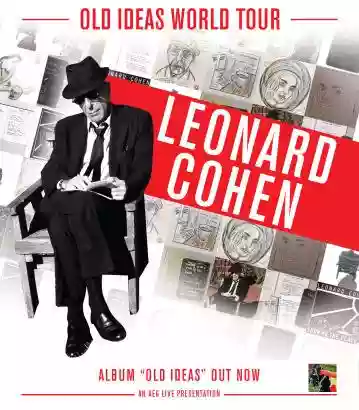
At nine fifteen—Mediterranean times—the show begins. The musicians and backing singers enter and finally, small and thin, but with irresistible charisma, it’s him, the extremely shy Leonard Cohen.
Not even time to speak and it starts with the most suitable song for any wedding, a dissection of love over time, the wonderful Dance me to the end of love. The band plays in perfect harmony, the backing singers support Cohen's profoundly deep and biblical voice excellently, who, despite the venerable age of recently turned seventy-eight, kneels and literally drags himself across the stage asking for love, forgiveness, or death, as circumstances dictate.
At the third song, “Like a bird on a wire/Like a drunk in a midnight choir/I have tried in my way to be free,” the hall explodes. Cohen sings what was defined as his epitaph with a quiet intensity that shakes the soul. The first set continues with recent songs, among which delicately stands out Come healing, with a duet between the abyssal Canadian and the celestial backing singers, the sardonic Going home, and the rolling Anthem. After this, Cohen bids the audience farewell for a moment of rest, after about an hour and a half of performance.
What strikes most is Cohen's humility. He often leaves space for the musicians for long solos, frequently lets the backing singers sing—but here, maybe it is also to catch his breath. After all, he doesn’t have the explosive type of show that characterizes other greats I’ve seen live: there is no explosive energy that crushes you, but an implosion that draws you towards him, makes you feel every single nuance of his voice and the stories told in his poems.
After twenty minutes, he and the band return to the stage. The second part of the set resumes in a more lively manner than the first, with Tower of Song, followed by a dragged Suzanne, sung in chorus by the whole audience. But the best moment of the evening comes shortly after, with The Partisan. The song, suffering and emotional, unfolds in the almost total silence of the audience and is enriched by a martial drum roll during the verses in French, a drum roll that is found immediately after in the martial Democracy. After two songs given to Sharon Robinson first and then to the Webb Sisters, the sensual (as could be noted from the ecstatic expressions of all the women around me) I'm Your Man arrives.
Then comes the moment we were all waiting for, the only Cohen song known worldwide—although often attributed to artists of lesser caliber—: Hallelujah. The song needs no description or introduction, and the performance has no possibility of it.
After Lorca's poem, Take this waltz, the band leaves. Only to return—of course—for a first encore: the audience that can crowds around the stage and sings the beautiful So long, Maryanne, then shouts, after a whispered concert, to the notes of First we take Manhattan, where Cohen's voice reaches an unexpected power and wickedness. The second encore opens with the doleful Famous blue raincoat, in a semi-religious atmosphere: after that, it seems Cohen wants to say goodbye with the usual Closing time. The audience begins to leave the hall, but they return with “I tried to leave you/I don’t deny” and the hall bursts into laughter. Time for an unexpected cover of the Drifters with Save the last dance for me and, at one ten, the concert ends definitively.
Not bad for someone who started singing and returned to performing concerts out of financial necessity.
Loading comments slowly
Summary by Bot
This review celebrates Leonard Cohen's live performance in Madrid in 2012, highlighting his profound vocal delivery and humble stage presence. Despite his age, Cohen's show captivates the audience through deep emotion and poetic storytelling. Signature songs like "Hallelujah" and "Like a Bird on the Wire" create unforgettable moments. The balance of musicianship and vocal harmony adds to the intimate atmosphere. The concert is praised as a rare and soul-stirring experience.Tracklist Lyrics Videos
Leonard Cohen
Leonard Norman Cohen (born 1934 in Montreal) was a Canadian poet, novelist and singer-songwriter who released his debut album in 1967 and recorded and performed through the 2010s. He died in 2016.33 Reviews
Other reviews
By primiballi
The album is, I repeat, simply perfect. Sung and interpreted by Him in a masterful manner.
Leonard Cohen is a wonderful person, and an unreachable poet and musician. He is the hope we do not dare confess.
