
 •
Rating:
•
Rating:
THE REVIEW
And you—do you still believe in that chatter about “eternal love”? That stuff that tears your hair out and forgives even those who don’t love you, yeah, that thing right there. We’ve all believed it. Then you come to realize that fire burns up everything it touches, it’s 𝑑𝑆 ≥ 0, you know, the scam of entropy: over time, everything goes to hell. It doesn’t matter how much energy or effort you put in—in fact, the more work you put into the system, the more chaos and disorder increase. But nothing is really lost: everything remains, unusable, shapeless. And, in our case, “there”—as the final mockery—is memory.
It’s a fundamental Law of the Universe. The will of God—if there were a God.
- Snow
For Helen Moore, memory, recollection, was a prison without bars. You see, there’s a place where sinners go to wash their clothes before their last journey. For Helen, that place was among the pews of a Methodist church. There she stopped fighting with God and finally found silence.
It’s always brutally cold in NY in the winter and, when Helen met Lee, it was seriously fucking cold and there was a lot of snow. And snow, as we’ll see, has a central role in this story. Helen had arrived in the Big Apple from Wilmington, which is somewhere in North Carolina, around ’45 when she was just 19 years old but already a widow with two children growing up somewhere.
And so there we find her, on that frozen night in ’67—she was around forty, not a cover girl, nor a beacon of life to be held up as an example, but she was someone who had taken—and given—her share of hits in life. She had become, in jazz circles, “the little hip square” and, amid all that snow, she appeared as an angel of salvation.
- Of Butterflies, Tigers, Monkeys, and Stray Dogs
Who knows why Helen was so drawn to jazz musicians? She welcomed them, helped them, pulled them off the streets; her apartment was a refuge for musicians in trouble, after the clubs closed, “Helen’s Place” was where you could get warm and eat. Like the suite of Pannonica de Koenigswarter at the Stanhope Hotel. But Pannonica was a butterfly, and Helen was a tiger.
Until only a few years before, Lee Morgan was someone who played the trumpet as if the devil himself was laughing at his side, whispering him notes—he had touched the sky with “The Sidewinder” and seemed unstoppable. But Lee had a monkey on his back that weighed as much as an upright bass. He was a junkie, one of those who dragged themselves along Third Avenue every night. Jazz doesn’t pay the bills if you spend your time with a needle in your arm trying to forget the face of the sun. Lee was in rags, he had even sold his trumpet and his coat. A washed-up failure, wandering through the snow in just a shirt.
In that darkness, Helen appeared to him. She picked him up off the pavement like you’d pick up a stray dog, brought him home, and cleaned him up from the world’s mud. Then she chased away the monkey from his back with slaps and hot soup. Helen became not just his partner, but also his altar and his armor. She went and bought back his trumpet and returned it to him, saying: 'Play, Lee. The world still needs your light.' And for a while, the light came back. They lived in that Bronx apartment like two shipwreck survivors who had built a sturdy raft. She managed the contracts, he managed the melody.
- You Need Four Aces To Make a Poker
Lee Morgan was a phenomenal jazz trumpeter, which means he was paid to turn breath into gold and sorrow. At only 19, he had already recorded his first LP, “Indeed”; he started very young with Dizzy Gillespie and then joined Art Blakey’s Jazz Messengers, and Art soon became both his mentor and his pusher.
It would take some time—nearly ten albums and a ton of gigs—but everyone knew the kid would eventually do something big.
That “something” is “The Sidewinder.”
“The Sidewinder” came out in July 1964 and is an infectious blend of hard bop, blues, soul, and funk that became a cultural phenomenon and introduced jazz to a broader audience. “The
Sidewinder” was a rare crossover pop success, peaking at no. 81 on the Billboard Hot 100 in January ’65. The album remained for weeks on the Top LPs chart, reaching no. 25 on January 9, 1965. “The Sidewinder” ensured Morgan a place in music history. The album was inducted into the Grammy Hall of Fame in 2000.
Bassist Bob Cranshaw recounted that Lee composed the title track in the bathrooms of Van Gelder Studios, with that solo all built around a single note. “Hard Bop” they would call it, but “Hard Bop” is just another label, convenient for critics and lazy listeners.
Such a success, though, risks becoming a cage: everyone kept asking Lee for another “The Sidewinder” while he was already looking somewhere else. Lee wanted to go where Clifford Brown couldn’t, because he died too soon. He played with everyone (feeding the monkey), but always took something from those giants he played with, especially Coltrane and Gillespie. So, our guy first pulls out “Search for the New Land” with his old friend Wayne Shorter on sax and Herbie Hancock on piano, then “The Procrastinator”—adding Ron Carter on bass to the two just mentioned. Fresh stuff searching for new paths, which Blue Note indeed shelved for years before releasing. Three different gems, a hand with three aces. But then, as we saw, Lee falls into a black hole—he can’t play anymore. He sells his trumpet, and that looks like the end. And with just three aces, you don’t make a poker hand.
But sometimes, good cards come from where you least expect. The fourth ace arrives, on a snow-covered sidewalk, from the hands of another castaway named Helen.
So come concerts, a new quintet, a bit of success and even some money.
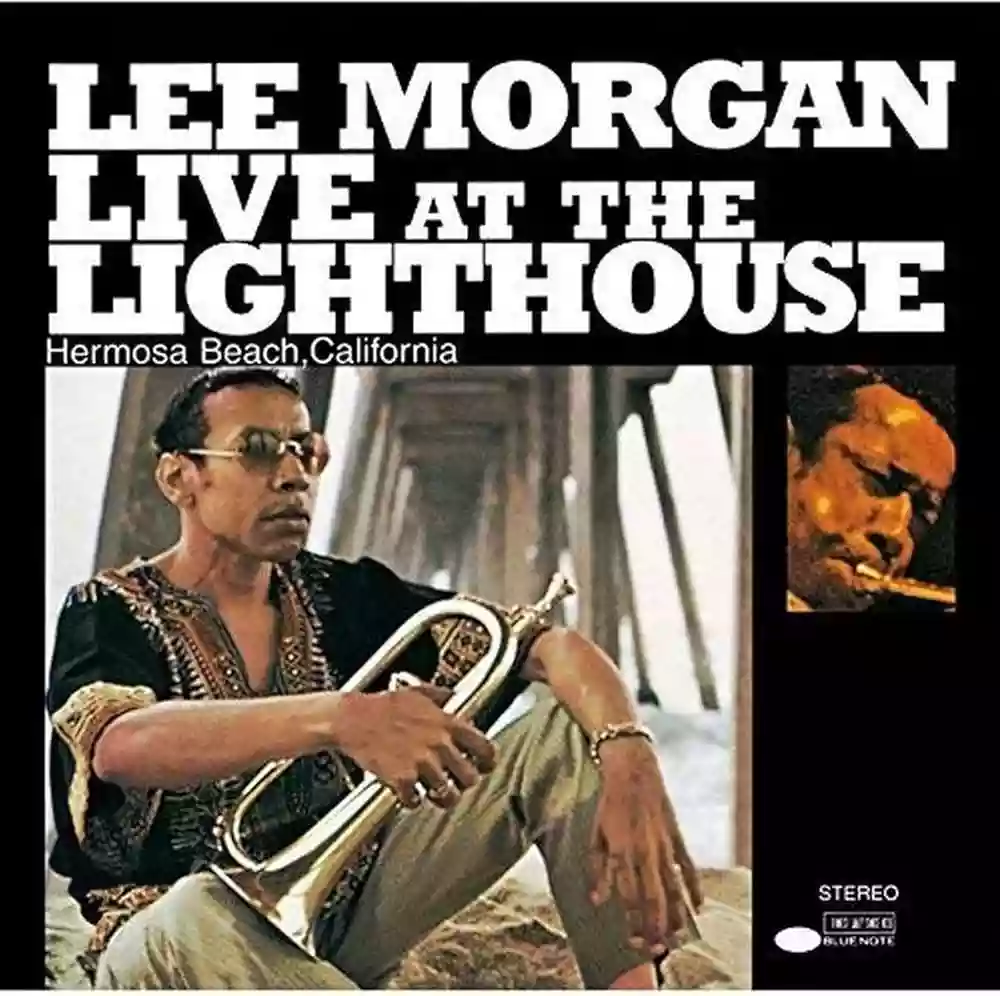
And also “Live at the Lighthouse” arrives, the fourth ace. That record is a sonic assault. It’s a vortex. Morgan throws out sharp, intense, direct notes. There’s the boldness of someone aware of his own precariousness but who, in that moment, feels like the best. There’s none of the composure of classic bop, but sweat, the smell of smoke, the urgency of someone who needs to express himself fully before it’s all over. Lee Morgan fronts an extraordinary band: Bennie Maupin on bass clarinet, Harold Mabern on piano, with the rhythm section of Jymie Merritt and Mickey Roker. The complete edition is an intense experience. It’s the sound of an artist who has stopped chasing approval and chosen to follow his own inner vision.
Maybe his best record, the one to have if you want just one, or if you want to try to understand where he might have gone.
Lee makes his Poker, and takes the whole pot. The only one, though.
- Snails, Ambulances, and More Snow.
It’s obvious, right, that this story doesn’t have a happy ending?
On February 19, 1972, NY is—again—covered in snow. At Slugs’—the Slug Saloon—down in the Lower East Side, Lee and his quintet are right at home. They’ve just finished playing “Angela” and are taking a break, but Lee’s chair is being kept warm not by Helen, but by Judith Johnson, someone who—clearly—had never cleaned up anyone’s vomit and, what’s worse, was much younger than Helen.
Gratitude is a rare good that expires fast, and betrayal is part of the deal—banal, boring as a Sunday afternoon without beer. Helen enters the club. There’s fire in her eyes and a gun in her purse. They argue, Lee throws her out of the club.
Sure, you could say he was acting like a jerk—but “thank you” and “I love you” barely fit in the same sentence, they just weigh everything down. Helen comes back in with the gun in her hand, fires one shot. Lee doesn’t die straight away; he stays there, bleeding out for more than an hour. The ambulance that could have saved him was stuck in the snow. Lee Morgan was 33, the age of martyrs.
Helen remains there, motionless; she doesn’t say a word even when they come to take her away.
May God have mercy on Lee Morgan, and even more mercy on Helen Moore.
- I Called Him Morgan
Helen didn’t remain in prison for very long: there were a lot of mitigating circumstances, and really, killing a jazz musician didn’t seem, to the jury, to be such a big deal.
So, in 1978, Helen got out of prison and went home, down South, back to the roots she’d tried to forget among jazz clubs and city lights. She lived her last years as a woman who had stopped fighting with God. She found herself sitting on the pews of a Methodist church because she needed a place where she could sit at the back of the room and breathe. She took to studying, watched her grandchildren grow, cared for her dying mother, went to bed early at night. She didn’t speak about Lee. Not out loud. But she carried his name like an invisible tattoo on her skin. The people in Wilmington saw only a quiet woman and a devoted grandmother. Then, in 1996, feeling her body failing, she decided to leave one last trace. She allowed her voice to be recorded on tape. Not to apologize, but to testify. ‘I called him Morgan’, she said, with that tone of someone who still possesses what she lost. She died in March of that year.
That’s how it ends, no plot twists, no coup de théâtre, just a woman closing the door and fading away into the dark.
But we prefer other endings. I like to imagine that somewhere, beyond the river, there’s a man with a golden trumpet waiting for her for the last set. Maybe he’ll push her out of the club again, or maybe, this time, he’ll buy her a drink and say: ‘Helen, we’re finally home’.
And for us who remain, all we’re left holding is “a few cheap caresses and a bit of tenderness,” and—worse still—we keep telling ourselves that, for us, it’s a happy ending.
Loading comments slowly
Summary by Bot
This review examines Lee Morgan's 'Live at the Lighthouse,' offering balanced perspectives on its musical strengths and possible shortcomings. The reviewer provides insights into the live performance energy and Morgan’s trumpet work. With an overall rating of 3 out of 5, the album is seen as valuable, though not flawless. Jazz aficionados may find noteworthy moments throughout. The review offers essential points for listeners considering the album.
Lee Morgan
American jazz trumpeter and leading hard‑bop figure. A Blue Note mainstay, he rose with Art Blakey’s Jazz Messengers, scored a crossover hit with The Sidewinder, and pursued bolder directions on albums like Search for the New Land and The Procrastinator. He died in 1972 in New York.04 Reviews
