
 •
Rating:
•
Rating:
THE REVIEW
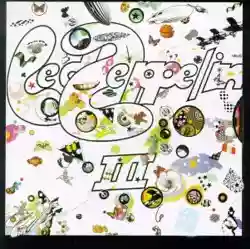
The third album by Led Zeppelin is without a doubt the most maligned by music critics.
What stands out the most is that, in the face of so much trash being given a presumed dignity of "historicity," the third work of this band that bridged rock from its blues hues to the hard phenomenon (also significantly contributing to shifting the music scene from the USA to the UK) was as poorly accepted at the time of its release as it was later snubbed, almost as if it were a misstep by the band, whether or not you want to include "Houses of the Holy" among the recommended ones.
The truth is that Jimmy Page, after such and so much apprenticeship with the Yardbirds, after the success of exhausting tours across different continents, after the noise for the first two albums, with the second one—several gold records—that was even recorded in the intervals of a US tour with copied (pardon, freely interpreted artistic) local melodies, Jimmy Page—let's say—retreats with his group into a remote Welsh cottage and meditates on his own artistic vein.
In this context, the third album of Led Zeppelin, the most complex one, is born.
The record (which preferably wants to be listened to on vinyl, at "realistic" volume) opens the curtain with a track, "Immigrant Song," which, although it clearly connects to its audience with the hard sounds and that voice which will pave the way for every hard or metal group to come, already hints at something different in structure, practically devoid of a refrain, and in the lyrics, always quite defiant, but very different from the various "... way, way down inside, honey, you need it..." and "...squeeze me, baby, till the juice runs down my leg..." that exhaustively exemplify the deep themes of the second album.
It continues with "Friends," a rich blend of influences and sounds, the first song published by Led Zeppelin with the complete renunciation of Bonham's powerful drums, almost implying that they wanted to open spaces for a new musical formula (something that will be repeated later in the album). Reassuring the fans with the "classic" "Celebration Day," they also offer the blues ballad "Since I've Been Lovin' You," which with that voice and those guitar slides, you go grab a beer from the fridge and think about the first love story of your life.
But, without dwelling too much, now I ask the most willing among you to listen to "Tangerine," up to the end of the first half (with the guitar starting after 1:40, until 2:02) and I ask you: is it the latest, heartfelt, single from the famous metal group, or is it a ray of light, the fold of the elbow of a Michelangelo sculpture, recorded 32 years ago?
A record beautiful, very beautiful, so rich in inflections and artistic digressions that it does not deserve to be appreciated by those who cannot understand it. Those softness and melancholy that are still considered excessive today, likely fueled that same artistic vein from which "Stairway to Heaven" is about to spring and that, when exhausted, will leave our guys searching among arid riffs and yodels from country cousins (with all due respect).
Loading comments slowly
Summary by Bot
Led Zeppelin III is one of the band's most misunderstood and maligned albums despite its artistic depth and innovation. Recorded in a secluded Welsh cottage, it blends hard rock with acoustic and blues influences. The album features complex song structures and a shift from powerful drums to softer, introspective sounds. Tracks like 'Immigrant Song' and 'Tangerine' illustrate its richness. This work paved the way for later masterpieces like 'Stairway to Heaven' and deserves more appreciation.Tracklist Lyrics
Led Zeppelin
Led Zeppelin were an English rock band formed in 1968 by Jimmy Page with Robert Plant, John Paul Jones and John Bonham. They became one of the most influential rock groups of the late 1960s and 1970s; the band disbanded after John Bonham's death in 1980.109 Reviews
