
 •
Rating:
•
Rating:
THE REVIEW
Originality is an important value in a work of art. It doesn't necessarily have to be accompanied by innovation, and often it manifests when we delve deep within ourselves to find that uniqueness that distinguishes our being. To express this uniqueness requires an ability that is acquired after a journey of maturation through experiences.
This is the journey of Laurent Thibault, from '69 to '79 (the year his short and only album was released), which he undertook alongside the mythical and legendary Magma. He began with them as a bassist in the very first lineup but left the instrument even before the recording of their first album to dedicate himself to the production of all Magma's albums up to Atthak.
Despite this, the style of Mais On Ne Peut Pas Rêver Tout Le Temps does not possess characteristics attributable to the Magma-Vander style, (if we exclude the wide expressive space given to Thibault's own bass, Francis Moze's fretless, and Dominique Bouvier's drums), and thus this album could be considered Zeuhl only as a familial connection and not stylistic. On the other hand, one should not expect a style attributable to Anglo-Saxon or Italian prog, as we are in Gallic land where certain influences are not so well accepted.
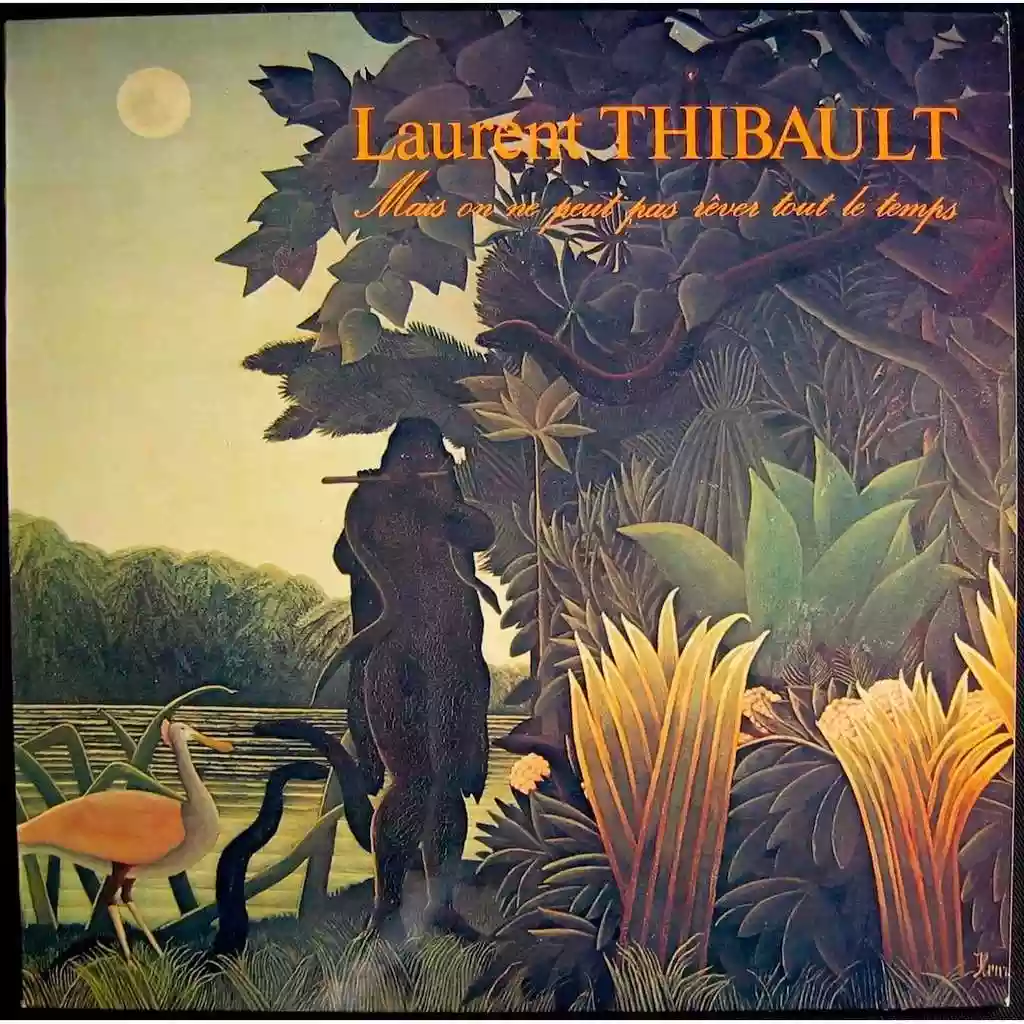
Laurent Thibault seems to have been inspired by the paintings of Henri Rousseau, trying to reproduce certain visual sensations, also using concrete sounds, which weave into the soundscape in landscapes taking us from untouched nature to the noises of man's despair and madness. It is music that might be forcibly described as progressive in setting and world (ambient and world music).
Introduced by the angelic voice of Amanda Parson, this short but intense journey begins, through many of the colors and nuances that the spectrum of the human soul carries. Just half an hour to attempt to immerse oneself in the depths of this palette where we will certainly recognize certain tones that also color our soul.
An album to elect as a manifesto against prolixity, a plague that often afflicts the genius of many of our dear artists.
Loading comments slowly
Summary by Bot
This 1979 album by Laurent Thibault is praised for its originality and emotional depth, diverging from typical Zeuhl styles despite his association with Magma. With a focus on bass-driven soundscapes and inspirations from visual art, it offers a short but powerful experience blending progressive, ambient, and world music elements. The album is seen as a mature artistic statement and a refreshing alternative to lengthy and overextended works.Tracklist Videos
Laurent Thibault
French musician associated with Magma; released the 1979 album 'Mais on ne peut pas rêver tout le temps' and worked in production for Magma during the period covered in the reviews.01 Reviews
