
 •
Rating:
•
Rating:
THE REVIEW
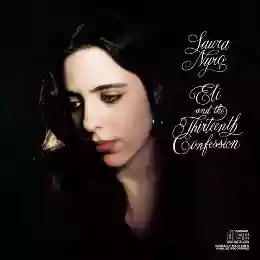
It's '68, a particularly happy year from a musical point of view: the Doors and Jefferson Airplane are riding the wave, Jimi Hendrix is revolutionizing the use of the electric guitar completely, and Pink Floyd is embarking on distant lysergic journeys from which Syd will never return. But alongside the psychedelic wave, sacred monsters like Bob Dylan and Tim Buckley keep the singer-songwriter scene alive: in this flourishing climate, women also begin to emerge: singer-songwriters like Joni Mitchell or Laura Nyro, for example, all had something to say to some extent. This "Eli and the Thirteenth Confession" is indeed proof that, at least from an artistic point of view, women are certainly not inferior to men...
Laura Nyro's music starts from the soul of the Bronx, New York, where she was born in 1947, to then refine itself, mixing with blues and jazz and evolving through complicated yet extremely compelling harmonies. Laura’s voice, powerful and emotional but at the same time remarkable from a technical point of view, is the sublime medium that unites these elements and guides the listener along the protagonist’s spiritual journey. The album is a sort of concept illustrating the parabola of a girl coming of age: Eli's growth also corresponds with an emotional growth in the songs; the first three tracks, in fact, echo classic soul and constitute the "easy" part of the album: "Luckie" is a song with an irresistible cadence and a vocal motif as simple as it is effective; "Lu" sounds like a fantastic and light soul slipping over you like April rain; "Sweet Blindness", the most catchy of the lot, captivates with its immediacy but induces repeated listening for weeks, akin to a drug.
With "Poverty Train", instead, the ears begin to serve as a conduit to bring the music to the heart: the beginning is pained, with the electric guitar alternating with the acoustic one to intone a very sad blues. Then a bass and a vibraphone, and a distant voice reciting: "Last call for the poverty train". From here the song picks up pace and becomes a marvelous piano-pop, with sumptuous arrangements and a heart-wrenching vocal melody, until it reverts back into a blues requiem submerged by undefined sounds: a gem. "Lonely Woman" is instead a splendid blues supported by the piano and sax, with Laura’s voice in the foreground.
Perhaps the most significant track of the album, and surely one of the most beautiful, is "Eli's Coming", which represents the emotional pinnacle of the LP. After a subdued start, a blend of voices over a frenzied piano evokes Eli's inner turmoil, until the instruments slow down and, over a wonderful and enveloping bass loop (one of the best I’ve ever heard), Nyro lets loose with a stunning outro to the cry of "Eli's coming, you’d better hide your heart".
The frenetic start of "Timer", which then takes on the characteristics of a normal soul, is followed by two calmer tracks: "Emmie", slow and suspended on ethereal strings, is perhaps the least remarkable piece; "Stoned Soul Picnic", more rhythmic and arranged with brass, is instead very catchy and, not surprisingly, will be covered by the 5th Dimension and will have great success.
I don’t know if you’ll agree with me, but I find the real masterpiece of the album is "Woman's Blues": after a slow intro, where Laura showcases her vocal qualities, a frenzied blues ensues that is simply unforgettable, with a bass groove so beautiful that it defies further adjectives, a guitar that couldn’t and shouldn’t play any other notes, a drum with the most fitting and warm sound there can be, and a voice that does nothing but grow in depth until the bridge, then becoming almost hysterical in the outro, with that "Damn be done" repeated several times echoing the background brass. 3 minutes and 48 seconds of virtual perfection.
If "Once It Was Alright Now (Farmer Joe)", a track divided into three parts (the first almost country, the second more in the Nyro style, and the third sweet and whispered) is already enough to demonstrate the unrestrained imagination of the New York singer-songwriter, the following "December's Boudoir" only confirms that we are facing a composer with immense skill: it is a sort of mini-suite supported mainly by the piano and Nyro's three-octave range, which continually changes rhythm and moves with every listen, despite being built on complex and certainly non-catchy harmonies.
The final track "The Confession" highlights Laura’s jazz spirit: after a splendid refrain floating over a fantastic instrumental carpet, the track intensifies up to that shouted "I confess", then continuing in the outro, with Laura sensually crying: "Love my lovething, love is surely gospel". A fitting conclusion, without a doubt.
We unfortunately know that an excellent artist is, in most cases, destined for a premature death. And so it was for Laura, who died of ovarian cancer at only 50 years old just like her mother. She never achieved great success in life, unlike artists such as the 5th Dimension and Tree Dog Night who sang her songs and made a lot of money. Perhaps this is due to her reserved behavior or her rejection of show business, who knows... In any case, we, 40 years later, listen to her music which, beyond any contrived and commercial mechanism, is beautiful.
Loading comments slowly
Summary by Bot
Laura Nyro's 1968 album 'Eli and the Thirteenth Confession' is praised for its blend of soul, jazz, blues, and complex harmonies. The album's concept traces a young woman's emotional growth through powerful vocals and varied arrangements. Standout tracks like 'Eli's Coming' and 'Woman's Blues' highlight Nyro's technical skill and unique musical vision. Despite her limited commercial success, her artistry remains influential and timeless.Tracklist Lyrics Videos
Laura Nyro
Laura Nyro (born Laura Nigro, 1947–1997) was an American singer-songwriter and pianist from New York. Her genre-blending, piano-led songs bridged soul, jazz, gospel, folk, and pop. She wrote classics popularized by others—And When I Die, Wedding Bell Blues, and Stoney End—and released landmark albums including Eli and the Thirteenth Confession and New York Tendaberry.05 Reviews
Other reviews
By ulysses
This Eli And The Thirteenth Confession is an absolute masterpiece of female songwriting.
We are left with the work of an extraordinary singer-songwriter, never too appreciated, who received the recognition she deserved only after her death.
