
 •
Rating:
•
Rating: THE REVIEW
The Laibach are a media mystery, and there is no definite answer to the question of their true cultural and musical identity. If it is, as possible, a 'tabletop' construction of a cult band, fictitious bearer of a reactionary imaginary (reversible in its opposite, given the paroxysmal tones), well, hats off and historical and contextual kinship with the equally mysterious Residents, other professional destabilizers (albeit on a different conceptual level). If this were the case, the perception would be entirely studied, meticulously sought in every detail, unmistakably referable to Tito's totalitarianism sympathizers, supporters of the various fascisms that characterized the first half of the twentieth century (from Mussolini to Tito, from Franco to Codreanu), devotees of a cruel ‘goose step’ aesthetic and executions in barracks cells.
The problem with understanding the staging by Laibach is that from the beginning they chose to scrupulously embody the aesthetics of domination, war, and totalitarian power, personifying every aspect of every possible fascism (from military to capitalist) without ever adopting any reasoned position, much less critical, but only the absolute affirmation of that ideal and every ignorant and violent corollary that logically and iconographically derives from it. This can well derive from the artistic implementation of psychoanalytic theories, predominantly Lacanian, according to which the raw and exasperated evidence of evil might constitute its most effective cure (and still constitutes the most incisive criticism) because it provokes awareness and a motivated as well as emotional reaction of shock and repulsion (no differently did Orwell when confronting us with the evidence of totalitarianism). On the contrary, it could mask the apology of totalitarianism behind a false cathartic claim, thus resulting in every excess being artistically and sociologically justified even peacefully ennobling those efforts of utmost ontological impersonification that objectively the Laibach have never spared.
To tell the truth, considering their concert performances, the intensive use of barbarized voices, squared and menacing rhythms, and military and propagandistic marches (historically plausible and all the more sinister), if not sound effects directly related to war events and chauvinistic speeches, appear so parodistic that it at least allows for the classification hypothesis of the Slovenian formation among the most successful fakes of pop music, direct inspirers of Rammstein and Feindflug, if not indeed among the most convinced detractors of every exploitation of man by man. Over time, Laibach has indeed pushed their art to the extreme, imagining the founding of a mythical Nation named NSK (with fictitious history and culture) and explicitly relating their fascist impersonification (also) to the methodologies and theories of capitalism and liberalism. Laibach Marxists, then? To see them, it wouldn’t seem so (but that is the effect they want to achieve, of course).
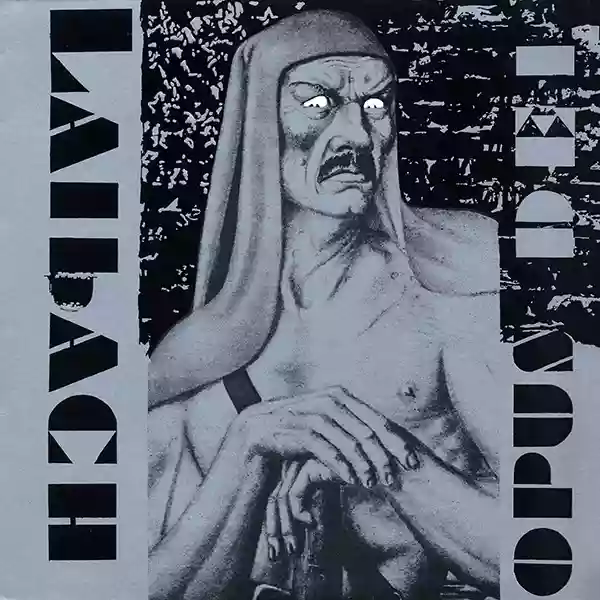
Comforted but not reassured by these arguments, we can examine the album with which they abandoned the stage of self-produced and almost clandestine tapes and vinyl, of necessity recorded in low fidelity (but this was an integral part of the fictio), to tackle the challenge of notoriety and deliver a systematic attack on the core of pop music through a process of effective deconstruction and aesthetic reinterpretation of successful music standards. Indeed, it is with the 1987 album 'Opus Dei', sectarian and provocative from the title, that the group decides to take over a couple of well-known chart tracks ('One Vision' by Queen and 'Live Is Life' by Opus) to completely overturn the style and subjugate them to their menacing Sturm und Drang aesthetic. (Subsequently, 'Sympathy For The Devil', 'The Final Countdown', 'Jesus Christ Superstar' and even the entire album 'Let It Be' will receive the same treatment, testifying a willingness to reconvert the Western musical heritage that knows no shame and truly allies Laibach to the Residents).
It is from this album that the huge progress in sound production and the use of electronic instrumentation derives, compared to a much more 'crafty' past, which will lead them within a few years to record actual EBM tracks, always very threatening and reactionary, in this approaching rhythm and industrial not dissimilar to Klinik and Front 242 (famous, in 2003, 'Das Spiel Ist Aus' and 'Tanz Mit Laibach'). In any case, the two previously mentioned tracks – transformed into 'Geburt Einer Nation' and 'Heben Heisst Leben' – are only the calling card of an incredibly aesthetically and didactically guessed LP, full of proclamations and speeches, military marches, and nationalist rhetoric, fanfares and war machine rhythms, all assembled within compositions that for the first time want to function as songs (including instrumentals) and no longer as mere representations and sound provocations. In this Laibach show they have perfectly learned the aesthetic lesson of Kraftwerk, among the first to have bent in 1974 the artificial expressive medium (buzz and hiss, noise and sound record) to the needs of the conventional pop refrain and not using it 'only' for the purposes of industrial noise, as Throbbing Gristle, 23 Skidoo, Cabaret Voltaire and many others will then do. In this sense, the maturation of the Laibach sound appears as a real assimilation of the path 'Kraftwerk I – Autobahn' (if you will: 'Tone Float – Autobahn') and the subsequent path of the German band the Slovenians will take due account in continuing to produce substantially electronic dance, although distorted and ferocious, ultimately contaminated by the darkest rock much more than many Satanic riffs.
Probably it is impossible to debate Laibach's aesthetic (inseparable from the sound and the overall 'message') without quarreling and disagreeing even violently. It is not in the group's will and DNA to provide easy keys of interpretation and easy decryption paths. While often listening to the fruits of their musical imagination, however, I cannot help but perceive a constant and altogether sophisticated, probably intellectual, provocation, which if confirmed would have the undeniable historical merit of being carried forward since 1980 and must nevertheless be considered seminal for the undeniable influence it has had on many artists of today.
Loading comments slowly
Summary by Bot
Laibach's Opus Dei is a groundbreaking 1987 album that combines provocative totalitarian imagery with electronic reinterpretations of famous pop songs. The band embraces and embodies fascist aesthetics not to endorse but to evoke shock and critical reflection. Their evolution from low-fi tapes to polished industrial tracks marks a significant musical and conceptual development. The album showcases their intellectual provocations and solidifies their influence on industrial and electronic music.Tracklist Lyrics Videos
Laibach
Laibach is a Slovenian industrial/avant‑garde music group formed in 1980 in Trbovlje and a founding member of the Neue Slowenische Kunst (NSK) collective. Renowned for provocative use of totalitarian aesthetics, they deconstruct popular culture through radical reinterpretations and multimedia work.06 Reviews
