
 •
Rating:
•
Rating: THE REVIEW
But seriously, is this a Laibach album? Are you sure? I can't believe it... is it really them? Well...(perplexity).
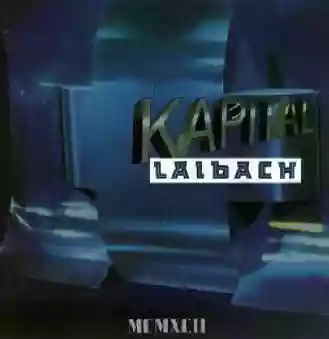
Yet it's the truth, this album from 1992, "Kapital", is indeed a Laibach album, even if it hardly contains any of the group's unmistakable sound.
What happened to the martial percussion and the ranks of angry timpani and brass that marked their clanking Wagnerian marches? Where is Milan Fras' powerful tenor voice? Where are his angry autonomist proclamations and his tirades against Belgrade's centralist regime? Where have the classical airs and bizarre covers, which mocked the rock star system, disappeared?
In this album there's none of that; there's only sophisticated and danceable techno-house music, ready to be played in Ljubljana's trendiest clubs.
But what happened to Laibach? Why have they changed so much?
To understand, we need to go back a year.
In 1991, while Laibach are practically exiled abroad as their concerts are considered "not welcome" by the government, the inevitable war breaks out within Yugoslavia. At the start of the conflict, Slovenia, taking advantage of the clashes between Serbia and Croatia, unilaterally declares its territorial and political separation from the Slavic federation. The timing is perfect, and the operation succeeds without a hitch. European nations, despite the protests of Serbian nationalists, promptly recognize the newly born state, and so on June 25, Slovenia can officially celebrate its independence. It's the beginning of the crisis for Belgrade's centralist government and the disintegration of Yugoslavia.
For Laibach, everything changes: they are immediately called back to their homeland and become one of the symbols of the new nation, acclaimed and lauded everywhere.
However, all this comes at a high price: Slovenia is now a young independent nation, there's much to do, we must think about the future and not the past. Even Laibach understands they need to close with the past: they must forget the proclamations and invectives, the poses, and defiant attitudes, the anger and bitterness towards an enemy that no longer exists. It's time to put away all the pseudo-para-Nazi trappings before they become grotesque, provocative, ridiculous, and pathetic. The long artistic phase tied to politics is over, the "militant" Laibach have completed their task and now must completely change their skin or disband.
They choose the first option, and it's understandable: better to change than to disappear. But there's a way and a way to do it, and Laibach chooses the easiest and most commercial route. The result is this album, anonymous and banal from the cover onwards. Now, "Kapital" isn't a terrible record, its grooves contain sparse bursts of originality and creativity, some tracks are interesting and enjoyable and hold their own against the hallucinatory techno-ambient tracks of the early albums, but many songs, too many, lack vigor and depth and quickly slip away without leaving any trace or memory. Perfect for listening to in the car amidst traffic.
The same goes for the lyrics. It's useless and even a bit hypocritical to rail against capital and its contradictions when this album is clearly designed to cash in. It almost seems like a product designed at the table, refined and trendy, but without a shred of heart and passion.
That said, those who still get off when they hear the rumble of timpani and brass, who reach orgasm when they hear Milan Fras' roar, are better off steering clear of this album.
Two and a half stars, but half less because I get angry if I think of the previous albums and the memory of the good old days.
P.S.: unfortunately, after this album, Laibach will do even worse, continuing their relentless process of de-evolution to the point of aping none other than Bach (sigh).
Loading comments slowly
Summary by Bot
Laibach's 1992 album 'Kapital' represents a significant departure from their traditional martial and orchestral style to a more commercial techno-house sound. This shift reflects the political upheaval in Slovenia and the band's transition from militant provocateurs to mainstream artists. While some tracks retain creative bursts, the album largely lacks the passion and vigor of their earlier work, disappointing longtime fans.Tracklist Lyrics
01 Decade Null (02:55)
03 Illumination (03:58)
05 Codex Durex (03:04)
06 Hymn to the Black Sun (05:31)
07 Young Europa, Parts 1–10 (06:22)
08 The Hunter's Funeral Procession (From the "Wunderhorn" Trilogy) (05:33)
09 White Law (04:23)
11 Torso (04:15)
12 Entartete Welt (The Discovery of the North Pole) (08:23)
13 Kinderreich (English version) (04:08)
15 Regime of Coincidence, State of Gravity (07:28)
Laibach
Laibach is a Slovenian industrial/avant‑garde music group formed in 1980 in Trbovlje and a founding member of the Neue Slowenische Kunst (NSK) collective. Renowned for provocative use of totalitarian aesthetics, they deconstruct popular culture through radical reinterpretations and multimedia work.06 Reviews
