 •
Rating:
•
Rating:
THE REVIEW
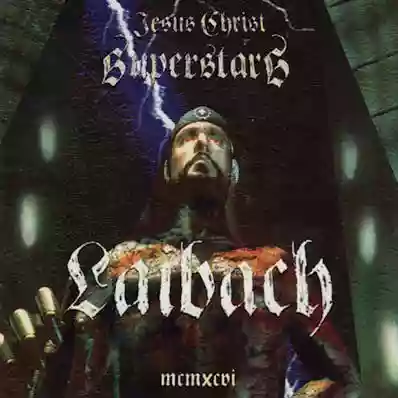
We are in 1996, and a band, which had been the soundtrack of the difficult situation in the former Yugoslavia for years, until the fall of the Berlin Wall, decided to add to the sounds experimented up to that point a strong Heavy Metal component.
The band in question is the Slovenian group Laibach, and for this unusual attempt at experimentation they decided to draw on nothing less than the famous musical of the same name directed by Norman Jewison.
Musically, the album is a mix of electronic drums, synthesizers, keyboards, arrangements, and typically Industrial choruses, and canonical Heavy Metal. However, this mixture is not entirely homogeneous, as the band, in most tracks, retains its electronic roots, while only in some does it develop (succeeding admirably) its (never before expressed) HM attitude. The eclectic album begins with "God Is God," which confirms what was said earlier. The song remains within the traditional Industrial canons, with the rhythm marked by the ever-present sampled drums (it will be "abandoned" only in a couple of songs); the singer's voice is guttural and deliberately monotone, while the marked use of male and female choirs is immediately noticeable (they will be used frequently throughout the album).
The title track follows, which takes up the original text of the musical; in my opinion, the most successful piece of the album: even though devoid of metallic inserts, it flows easily, paced by the pounding synthesizers and the piano (especially in the finale). The, in my opinion, negligible "Kingdom Of God" represents the transition point between the first songs (of electronic matrix) and the metal songs of this album (in the finale the song accelerates with the support of the guitars). "Declaration of Freedom" and "Message from the Black Star" are, in every sense, Industrial Metal tracks (in the more modern conception of the term): Kraftwerkian synthesizers overlap sharp guitars producing Thrash-style riffs, and the result obtained is truly excellent. Then comes "The Cross" (a cover of Prince), characterized by a Techno trend, the unsettling "To The New Light" and, in conclusion, the instrumental "Deus Ex Machina", apocalyptic like few others, which ends with a sudden deceleration that recalls the most inspired Throbbing Gristle.
This CD assumes great value within the discography of the artistic collective (I've recently discovered it also deals with the visual arts), and an important piece in the now famous genre that intersects between Electronics and Rock (in the broadest sense of the term).
Loading comments slowly
Summary by Bot
Laibach's 1996 album Jesus Christ Superstars merges their traditional industrial sound with strong heavy metal influences. The album experiments with electronic drums, synthesizers, and metal riffs, featuring standout tracks like the title song and dynamic industrial metal pieces. This release is a significant milestone in their discography and the industrial rock genre.Tracklist Lyrics Videos
Laibach
Laibach is a Slovenian industrial/avant‑garde music group formed in 1980 in Trbovlje and a founding member of the Neue Slowenische Kunst (NSK) collective. Renowned for provocative use of totalitarian aesthetics, they deconstruct popular culture through radical reinterpretations and multimedia work.06 Reviews
