
 •
Rating:
•
Rating:
THE REVIEW
There are few atmospheric things like the Labraford; their sound is something incredibly diaphanous, a vibration that feeds on stentorian shadows but also on rustic silences before ineffably taking off towards the starry vault.
Transcendence inevitably becomes the predominant emotion.
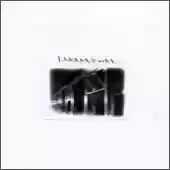
This 1996 album is a treasure chest of hidden desires, to be opened randomly on a night now and then.
Play... layers of old hypnotic mini moogs begin their journey in the background, almost creating a soft, padded cushion. It’s an ascent, and it is of sculptural beauty.
Every second oozes artificial lights (or stars), slow movements, movements in apnea; you could spend hours in front of a window without noticing the time slipping by, waiting for those few seconds when an ethereal synth line blends its vibrations with the shapes constantly merging in the background (percussions, violins, trippy hop games from Bristol, guitar twang). Notes of celestial-hued sideral organs engaged in dubbing that noir air derived from the contemplative fascination implicit in the narcotic immobility.
Compared to the German cosmic couriers, Labradford brings with them a more modern inspiration, such as the film music of Angelo Badalamenti, and in the subsequent album (Mj Medja Naranja), that of Morricone.
A stylized and modern sound fabric, underlaid by infinite ambient chiseling in drapes that have not aged in the slightest.
Their music results in being profoundly persuasive and deeply emotional, every movement ends up being effectively seen from afar. The sensation is very clear that this advancing-but-backwards is nothing but the desire to surrender to the selective and truly antagonistic power of narcolepsy.
In the distance, if we looked from the cosmos, the silhouette of the city would stand out in its own way as a temptress: with its fatuous thaumaturgical lights and all its ephemeral turgid icons, from which one can be freed only by closing the eyes and walking roads that leave their mark -on my skin-.
The sleep-wake effect or real night in the cosmo-polita air of the metropolis is never a neutral filter in Labradford, but a diffraction of unknown pleasures capable of altering the very perception of interpersonal relationships, where - ...on the other side now nothing is changing... I run through your deserted streets... dissolved light on your dissolved face.
Loading comments slowly
Summary by Bot
Labradford's 1996 self-titled album is celebrated as a richly textured and atmospheric ambient work. The review highlights its ethereal synth layers, hypnotic moogs, and cinematic inspirations reminiscent of Angelo Badalamenti and Morricone. The music evokes transcendence, deep emotion, and a contemplative nocturnal mood. It remains timeless and captivating for repeated listening.Tracklist Videos
Labradford
Labradford are an American ambient/post-rock trio from Richmond, Virginia: Mark Nelson, Robert Donne, and Carter Brown. Active from 1991 to 2002, they released six studio albums on Kranky between 1993 and 2000, including Prazision LP (KRANK 001), the self-titled Labradford, Mi Media Naranja, and E luxo so.05 Reviews
Other reviews
By CosmicJocker
A sweetly tormented violin crystallizes the memories, moments detach from the dials of years lost forever; they detach and fall to the ground with the sound of shattering glass.
Yes, if "Spiderland" spoke of this rebellious man, of his passions, of his flesh, this album speaks of his shadow: so similar to him yet so intangible, so elusive.
