 •
Rating:
•
Rating:
THE REVIEW
I don't like Baricco, the Baricchism, and all the cultural-ideological apparatus aligned in service of the good capitalism that is aspiring to lead the country. Fazio, "Che tempo che fa," Luca Mercalli, Assante and his partner, Littizzetto, Dandini, and then I can't remember more - all so absurdly frivolous in their gentle and respectable mutiny. Oh, I forgot Bollani and that music program always on rai3. In short, each engaged in cleansing culture and art of radioactive waste to bring it into the good salons of civil society. Without jolts. Without losses. Sting, Bacarach, Taylor to move the purple crowd in front of the TV (inviting, I don't know, the Liars, they won't). Reformers stuck at the carcasses of U2.
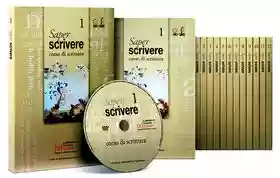
To this climate of cultural adjustment, I ascribe this series. An ideological work, of revision, whose purpose is to defuse the great works of literature and turn them into mere catalogs of technical topoi, a collection of nonsense. Right now, I don't feel like quoting text pieces; I'll just give a few examples of how this type of publication operates.
They want to teach you how to write dialogues, fine. What do They do? They put in a few examples taken from Dostoevsky or someone like him and tell you that that specific dialogue, and not another, and then why that one, is valid for a certain reason, invented on the spot by the self-proclaimed Writing Master, and you feel like shit because even though maybe you've read the book, perhaps even reread, that specific dialogue you just don't remember, and they make you look like a fool, and they want you to believe that the whole book is encapsulated in that dialogue, or rather in the supposed reasons that make it an exemplary dialogue, which says nothing about your life or the book or about any damn thing, but Baricco says it, so you're an idiot for not remembering that specific part. (The same applies to how to write an incipit, a description, etc.)
Astonishment, wonder (I think they've convinced themselves they've written the new Aristotelian Telescope and are reviving the glories of a Baroque Turin) dominates everything. Creating improbable effects in the quest for the most vertiginous surprise twist. And meanwhile, they surprise you by proposing examples that, according to them, brush up against the most daring experimentalism. Rewriting tales from bizarre points of view, creating a character by inviting you to consider the great invention characters (Achab, Orlando, Peter Pan, Donald Duck, the Winx: this is just an example of the climaxes they use by misaligning disparate characters and ultimately watering down the truly great ones).
Behind the façade of structuralistic grammar lies a history of literature written to deny literature its foundational characteristics, sedition, dismantlement, irreducibility, and transform it into a harmless, friendly, superficial commodity like those behind this stuff here.
Loading comments slowly
Summary by Bot
The review harshly criticizes 'La Repubblica - Saper Scrivere' as an ideological and superficial work that reduces literature to technical clichés. It accuses the book of aligning with a sanitized, culturally conformist vision that strips literature of its rebellious and profound nature. The author's examples and approach are seen as reductive, making readers feel inadequate and watering down literary greatness. Ultimately, the review rejects the book's effort as a cultural adjustment catering to mainstream tastes without real literary depth.
La Repubblica
La Repubblica is an Italian national daily newspaper founded in 1976 and headquartered in Rome.01 Reviews
