
 •
Rating:
•
Rating: THE REVIEW
The overture of this work will remain memorable: the haunting and circular melody of a sampled keyboard (or electric guitar) crescendo is interrupted by a thunderous industrial clamor, and the rhythm begins: slow, reiterative of "Natura Morta."
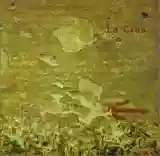
They are La Crus, a new Italian group (Milan and surrounding areas) who, together with their colleagues Massimo Volume, open a new chapter in Italian Music. Something genuinely exciting, it seems, is happening: the mentioned song, perfectly realizing the sought-after scenic effect — namely, the opening of a theatrical curtain — unfolds a sweet and poignant melody over a cold percussive carpet; the singing, deep and intense, recalls the Italian Autore Song of the '50s and '60s (Authors like Piero Ciampi, Sergio Endrigo, etc.); the absolute novelty is that the language is Italian, the type of poetic inspiration is very close to that of the mentioned Authors, but the form is a very contemporary hybrid between the sounds of Berlin in the '70s and decidedly smoother jazzy grooves, along with certain contemporary electronic. The host of that "Rai Stereo Notte" space, presenting the aforementioned lead single of the album, described the band in question with a voice hinting at a smile and in these words: "try to imagine Luigi Tenco singing in Einsturzende Neubauten."
It was exactly so, and the following album confirms it in a stunning way. It's as if a cycle has closed: Punk, born as a stylistic (form) and cultural (substance) rupture and demarcation from the era of Singer-Songwriters, then evolved into increasingly "refined" genres (post-punk, new wave, up to the aforementioned electro-industrial sounds) while maintaining the band structure of 3-4-5 elements (group vs. single "Poet/Singer") now re-encounters that past from which it had distanced itself and rediscovers the Beauty of what is classic, therefore timeless. Here's hence "Notti Bianche" settling into a jazzy mood, "Il Vino" seems a faithful reproduction of sub-Alpine and across-the-border Singer-Songwriters, the reinterpretation of "Angela" by L. Tenco with a soundscape devoid of percussion and consisting of faint electronically treated violins, with "disturbing" electronic interferences in an industrial style, extremely experimental, compared to the song, interpreted with the same desperate pathos of the original version, which sits at the pinnacle of the work as it unveils the poetic and stylistic imprint: the play of dissonance between poetry, emotionally warm and felt, and the coldness of industrial electronics that outlines post-apocalyptic scenarios on which Poetry, a simulacrum of the past, with occasionally nostalgic coloring, can also be understood as a bastion towards a frightening techno-scientific future, or as the highly cultured conceptualization on the expressive realization level, the circulation in new media of (seemingly) faded images and vintage films.
Existential Rock between the beauty of the Eternal Past of Authors and the greater awareness of the innovative impulse of new sounds, in which, beyond the skyline of alienating metropolitan scenarios, far in the background, the "night splendor" of "Unknown Pleasures" by Joy Division can be glimpsed.
"By bringing past and present into contact, they create a short circuit whose sparks illuminate glimpses of the future" would later write the same chronicler. It doesn't matter, for now, which future. Because it is already quite clear from now on that the further evolution of the song form towards something else not yet definable has already begun. To land on shores, it seems (given the absolute mastery of such heterogeneous material by the Authors) already foreseen and intuited. One can conclude with this splendid phrase
"The Future enters into us, to transform itself in us, long before it has happened" - Rainer Maria Rilke
Loading comments slowly
Summary by Bot
La Crus' self-titled debut album is a groundbreaking fusion of classic Italian singer-songwriter traditions and modern industrial-electronic sounds. It evokes the spirit of 70s Berlin music scenes while revisiting timeless poetic themes. The album's highlights include haunting melodies, jazzy moods, and emotionally intense vocals. The band is recognized for bridging past and future in Italian music, signaling an exciting new evolution.Tracklist Videos
La crus
La Crus are an Italian (Milanese) band described in the reviews as blending classic Italian singer-songwriter/crooner tradition with modern sounds such as electronics, samples and, at times, trip-hop/industrial textures. The core lineup cited includes Mauro Ermanno Giovanardi, Cesare Malfatti and Alessandro Cremonesi.12 Reviews
