
 •
Rating:
•
Rating:
THE REVIEW
"Cause For Conflict" is not the predictable "return to the cabin" for the four warriors from Essen and never a furious tumble into soundscapes already widely explored with the post '90s makeup, but the transition from the dark experimentation of "Renewal" to the rational yet vehement metallic dawn of "Outcast". An album of transition, therefore, mistaken for a starting point by many long-time fans, still nursing their ears from listening to "Pleasure To Kill" and "Terrible Certainty".
The demon has evolved, leaving behind the old Noise house and opening its eyes to the world of machines, to the petroleum-green-covered transistors, to the creaking of cranes. In the trunk of memories, there is still the battlefield, the pile of skeletons, the smoking ruins, the extreme violence, the thoughts on the society of the time. Certainly akin to the cenobite Pinhead, this demon has nevertheless come to represent the German band more than their fast and scathing thrash metal, revealing itself as a symbol, a silent and terrifying travel companion.
Since "Endless Pain" in 1985, Kreator embodies the imperfect European thrash metal band, capable of gradually evolving both in sounds and in the structure of their pieces: streams of killer grater, elegant solos, and precise yet furious drumming. "Renewal" represents the dirty rain, a vigorous deletion of the metallic armor, the hooking of inspiration to noise temptations, compositional schemes slowed down and sped up with decency in leaden sonorities, a more disciplined and bemused voice bowing to sound as a reason of state.
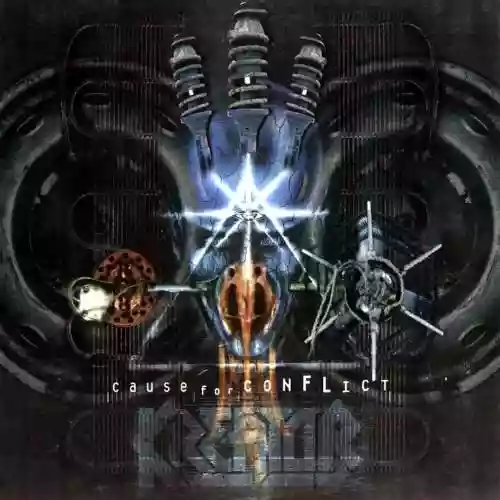
"Cause For Conflict", released by GUN in 1995, is instead a watershed, a no man's land where Kreator and the monarch Petrozza reorganize their ideas, crouch to reflect, purifying themselves with a sound again angry, sprightly, baptized by Vincent Wojno and with lyrics even more critical of society and all the institutions that create oppression. The technical sticks of Joe Cangelosi (ex-Whiplash and Massacre) and the crackling bass of Christian Giesler dictate the pace in every episode. And the change of season is palpable: the linear drumming of "Renewal" is nullified by the snare of Cangelosi "forced," after "Insult To Injury" with Whiplash, to run out of breath, as happened at the time to Paul Bostaph, going from the solemn fanfare of "Twisted Into Form" to the pounding Slayer-esque "Divine Intervention". All tracks are marked by the double kick drum and, thanks to its push, the slow or rapid passages change skin both in the headlong restarts and in the more contemplative parts.
We have a Slayer-like "Killing Fields" structured opener which is "Prevail", the charming hit-and-run of "Men Without God" or the flood of speed in "Catholics Despot", highlighting the Church's negative primacy ("No respect for other people's lives"). There's no lack of an alternative single like "Lost" and useless swift fillers like "Dogmatic" or the "ambulance" "Bomb Threat," opposite to shadowy and inspired pieces like "Crisis Of Disorder". The shadow of "Renewal" surfaces here and there, especially in "Celestial Deliverance" but it is in "Isolation" that we find the sui generis claw: after 4 minutes of an ear-catching song (single in a shortened version), it plunges into silence and after 4 minutes the delirium of screams, feline howls, and scraping that recalls the intro of "End Of The World" from the beginnings emerges. The demon does not want to leave.
By the end of the platter, we feel that something is missing, or there's an abundance of Kreator elements that leave us baffled; impact and speed prevail over creativity: crystallization is around the corner. After experimenting with "Renewal," even the most staunch detractors of the band see in Mille and Co. a band in clear evolution, an institution that, however, to demonstrate the metal up your ass attitude to the audience disoriented by the previous "renewal," opts for a more robust sound, in line with the modern thrash of the era, as a balm for recent criticisms, but filtered by the "born of fire" drumming of Cangelosi in songs more frigid and robotized, which we feel as premature days of the blackbird. "Progressive Proletarians" then becomes a showcase for the drummer, for the didacticism that starts again from the technical maturation of "Extreme Aggression", while a "Sculpture Of Regret" observes the Coroner in the atmospheric intro but it's just a passage: the metallic burden returns forcefully in the second part.
"Cause For Conflict" finds its identity as a platform to take new flights, a reconciliation with its audience: Mille Petrozza opts for the course change of "Outcast", for the return of Ventor and the arrival of Tommy Vetterli on the second guitar. A new beginning that will not be the last, but will be among the most fascinating of the '90s, born of this suburban sound cultivated in Essen.
Loading comments slowly
Summary by Bot
Kreator's 1995 album 'Cause for Conflict' represents a key transitional phase between their experimental 'Renewal' and the classic thrash of 'Outcast.' The album combines heavy aggression with technical refinement and critical social commentary. It showcases new drummer Joe Cangelosi's influence on the band's pace and sound. Despite some perceived creative limits, the album marks an important evolution for the German thrash veterans.
