
 •
Rating:
•
Rating: THE REVIEW
The Kraftwerk, known for their "robotic" music, are usually rarely listened to, and excluding the Tour de France 2004 track, it's hard to hear about them in Italy. However, there is little deep exploration of this genre in the country, and this record is, let's say, the launching pad for the Düsseldorf band.
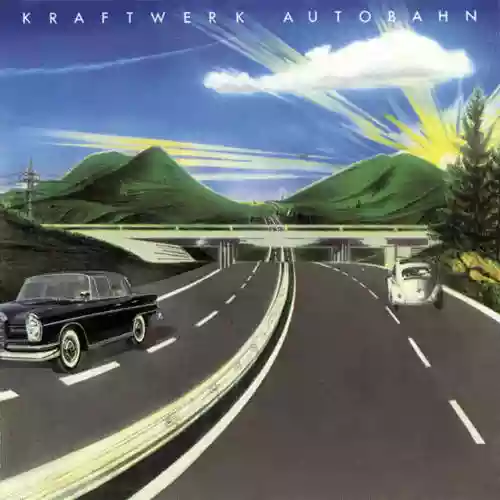
The title track is undoubtedly the most well-known, with the repeated chorus that will become the trademark of Kraftwerk, and especially the sounds of the autobahn—a baroque representation of noises and sounds that, in a long 22 intense minutes, catapults us into the Kraftwerk universe. It’s a must-listen, just this song alone, for the entire electronic and kraut genre of the period. The second, "Kometenmelodie," composed for the Kohoutek comet, is wonderful. The electronics and its musical power in two parts slowly make us want to be there, on the cover, observing the autobahn and its sounds. Never have Kraftwerk expressed themselves like this. The record then moves on to the last two tracks, "Mitternacht" and "Morgenspaziergang." The former is perhaps the weak point of "Autobahn," while the latter is another manifesto of electronics, spatial noises, and art in finding inspiration in every sound from the keyboards and synthesizers—freer and never as "rock" as in this masterpiece.
After this work that propelled them to success, Kraftwerk released many records, among which the legendary "Trans Europe Express" and the various Tour de France mishaps stand out. However, Kraftwerk are these—the early works were a novelty, a new frontier, cynical and repetitive music that actually conveyed sensations, bringing us to the landscapes of the various songs like poetry written by robots: the highway, the tracks, the mechanisms that gradually intertwine with the landscapes as in "Autobahn." The highway, the wheels, those little details that each of us ignores are greatly used, filled with magic, music that speaks for itself—this is "Autobahn," and this is Kraftwerk.
Maybe someone will say to me that Kraftwerk are repetitive, that only Germans can listen to such boring music, somewhat like when we were asked to study the great writers and poets. This music needs to be listened to; the sacrifice is non-existent. Stop and hear the electronic noises, so sophisticated yet so wonderfully profound—the tracks, the robots, the highway.
Loading comments slowly
Summary by Bot
This review praises Kraftwerk's Autobahn as a groundbreaking electronic album and a launching pad for the iconic Düsseldorf band. The title track, a 22-minute sonic journey, is highlighted as essential listening for electronic and krautrock fans. Despite some weaker moments, the album showcases innovative use of synthesizers and sounds to evoke vivid imagery. Autobahn is depicted as a poetic, robot-driven work that continues to influence electronic music.Tracklist Lyrics Videos
Kraftwerk
Kraftwerk are a German electronic music group formed in Düsseldorf in 1970 by Ralf Hütter and Florian Schneider, known as pioneers of electronic, krautrock and synth‑pop music.42 Reviews
Other reviews
By Airone
"Autobahn is a masterpiece, pure as spring water."
"In the 23 minutes you're about to listen to, there are all the elements of modern disco, enriched by the suite format, beautiful progressions, and avant-garde experimentation."
By Eneathedevil
"Autobahn... stands as a naive appetizer to what would become the first popular phenomenon of Kraftwerk’s production."
"Kraftwerk positioned themselves as precursors... their music is not and never would have been disco dance, but it accompanied it without involving it."
By 123asterisco
Lightheartedness and anguish coexist. As if they were one.
From the smooth, polished, and predictably lucid journey, to cosmic, floating, gloomy disorientation without coordinates.
