
 •
Rating:
•
Rating:
THE REVIEW
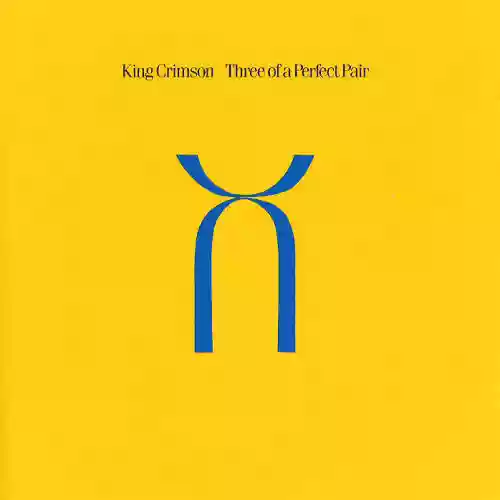
There isn't a review for "Three of a Perfect Pair"? Then I'll do it!
First of all, it should be noted that the lineup is the usual one from the '80s: Fripp-Levin-Bruford-Belew. Personally, I complain about the Pop in the album, especially in the first part, which is starting to "corrupt the King." But despite everything, it's King Crimson-style Pop, very difficult to listen to compared to the standard. As a prelude, it's worth mentioning that this album, despite being very good, is the "worst" of the three from the '80s; moreover, it must be said that it's the album in which Bruford gives his best.
The album begins with the Title Track, very similar to "Discipline" and "Neal and Jack and Me", due to its guitar network; it's a track where you can feel a bit of the pop influence. It continues with "Model Man", which has a pop rhythm and an almost country sound, but despite everything, you can feel the influence of King Crimson; however, it's not an exceptional track. The Pop reaches its peak with "Sleepless", for which they also have a video; Levin starts with a relentless rhythm, then the track explodes into a chaotic and distorted frenzy, obviously in King Crimson and Belew style. We proceed with the too-short "A Man with an open Heart", which focuses solely on the chorus, making it the most commercial song on the album. Thus ends the first part.
The second is more serious and experimental, making this album avant-garde, taking listeners a leap 10 years ahead, into the periods of "Thrak," "The Construkion of Light," and the masterpiece "The Power to Believe," which I will review. This part begins with "Nuages", where Fripp's Soundscapes predominate. But the best comes with "Industry", which still features Soundscapes, and Bruford begins to unleash himself. This is an almost ambient and "industrial" track: in fact, it seems to catapult us directly inside an industry. In my opinion, it's an exceptional track. It is followed by "Dig Me", a Belew-style track, where the frenzy and chaos reach their peak, with a guitar on the edge of the psychedelic and a voice in Zappa style; but the chorus is completely different: it's King Crimson-style Pop.
It continues with "No Warning", where the main protagonist is Bruford, supported by Levin's Stick. This track serves as a prelude to the best piece of this King Crimson period: Ladies and Gentlemen, "Larks' Tongues in Aspic part III"! And here, the discussion must be explored very well. The track begins with a classic virtuosic escape by Fripp, very similar to the previous Larks' and especially "Fracture". After about 40 seconds, Belew enters, starting a frantic and rhythmic part, with Bruford masterfully playing the drums and Levin keeping the rhythm perfectly. But after about 2 minutes, the track changes drastically: with an intertwining introduction of the two guitars, a solo by Fripp starts (please correct me if I'm wrong) that lasts until the end.
Loading comments slowly
Summary by Bot
This review highlights King Crimson’s 1984 album ‘Three of a Perfect Pair’, noting its unique blend of pop and avant-garde styles. Though considered the 'worst' of their ’80s trilogy, it features standout performances, especially by Bill Bruford. The album contrasts catchy, pop-influenced tracks with serious, experimental pieces that hint at the band’s future direction. The review praises tracks like 'Industry' and 'Larks’ Tongues in Aspic part III' for creativity and technical skill.
King Crimson
King Crimson is an English progressive rock band formed by Robert Fripp in 1968. The group is known for seminal late-1960s/1970s albums, frequent lineup changes, and a long-lasting influence on progressive, art and experimental rock.74 Reviews
