 •
Rating:
•
Rating:
THE REVIEW
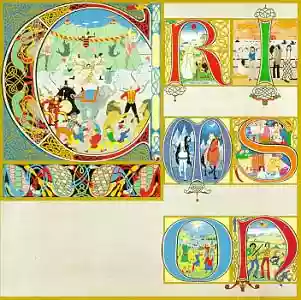
It might seem anachronistic to talk about King Crimson's Lp Lizard 25 years after its creation, but I believe that certain Progressive works that have fallen into oblivion need to be reevaluated. Especially when these are little masterpieces, despite having received a rather tepid reception at the time, both from critics and the public.
With Lizard, King Crimson decisively steers towards a rock-jazz with a broad symphonic scope. This adventure, which today seems anachronistic, was, at the time, the first bold experiment by the rock movement to enter the Olympus of serious music with its own unique specificity. Until then, there had been unsuccessful experiments of fusion between rock bands and symphony orchestra (let's recall Deep Purple and the Nice of Keith Emerson), which did not yield the desired results because both entities remained in their respective positions, without creating a genuine osmosis between them. Robert Fripp, instead, understands that the symphonic scope is not achieved by playing with an orchestra, but it depends solely on the composition and musical approach of the rock band. Being a talent ahead of his time, the brilliant guitarist conceives the daring idea of creating a mini-rock symphony in several movements (like a real classical symphony) and makes it occupy an entire side.
Lizard, which naturally also gives its name to the entire album, is a true musical gem that draws from both the rigid romantic tradition and the freer jazz conception (and at some moments even free-jazz). The first movement (Prince Rupert Awakes) immediately strikes the listener with the delicate melody that alternates a verse in A minor and one in A major, almost a dualistic metaphor of existence that gives pain and joy. The whole is embroidered by the dreamy and melancholic voice of Jon Anderson, a luxury guest-star borrowed from Yes, who masterfully paints the decadent character of the composition. But it's in the second movement (Bolero) that Robert Fripp's genius expresses his desire to make great music. Accompanied by the obsessive rhythm typical of bolero, the melody unfolds sweetly and desolately towards a disturbing finale, where a set of winds, in free-jazz style, breaks the spell given by the crystalline sound tuned by the cornet. It's a true mini-masterpiece, both grand and experimental at the same time, which didn't receive the recognition it deserved. The third and fourth movements (The Battle Of Glass Tears and Big Top) are slightly inferior to the first two but still contain pearls of originality, heightened by the mysterious and restless waltz rhythm finale, suddenly interrupted right when one expected a "Grand Finale" worthy of the best symphonic compositions. The first side, on the contrary, is occupied by four tracks that more or less reprise the themes of King Crimson’s first two great LPs ("In The Court" and "In The Wake"), among which Cirkus stands out, whose decidedly classical finale hints at Robert's desire for "Serious Music," and the resolute Indoor Games, composed of a long intertwining, almost a dialogue, between voice and sax. The other two pieces (Happy Family and Lady of the Dancing Water) are decent, unfortunately marred by Gordon Haskell's poor voice (a merciless comparison with Jon Anderson on the second side).
In conclusion, an album that most do not remember, but whose originality is beyond question. The attempt, ultimately failed, by Progressive musicians to create "classical music" for 2100, found in Lizard a well-executed and serious experiment, which in the rock scene has its brother, even if completely different, in the legendary Atom Heart Mother by Pink Floyd.
Loading comments slowly
Summary by Bot
King Crimson's Lizard is a bold and overlooked progressive rock album that merges rock, jazz, and symphonic music into a cohesive mini-rock symphony. Despite its initial tepid reception, the album features innovative compositions and performances, notably the title suite with guest Jon Anderson. The work remains a unique experiment in the genre, blending romantic and free-jazz elements while pushing the boundaries of rock music.Tracklist Lyrics Videos
King Crimson
King Crimson is an English progressive rock band formed by Robert Fripp in 1968. The group is known for seminal late-1960s/1970s albums, frequent lineup changes, and a long-lasting influence on progressive, art and experimental rock.74 Reviews
Other reviews
By Paolo
"Lizard is a synthesis of the entire record, an authentic crucible where all the different moments of the constantly evolving Frippian/Crimsonian inspiration merge."
"Fripp himself enlightens us on what the Crimson style is: 'I suppose Crimson is a way of life.'"
By Hetzer
Lizard is one of the King’s greatest achievements as well as a progressive peak with no precedents or worthy heirs.
Fripp devotes particular care to the mellotron... becoming a sort of generator of emotions, a mechanical altar that evokes delirious visions of deep unease and sinister modern charm.
By madcap
A fantastic album that may not appeal to everyone, whose tracks won’t be used for advertisements, and that you won’t hum in the shower, but if you are patient, it will give you much more than you could have ever imagined.
Perhaps these weren’t even King Crimson.
By MrGMauro
Under revision, coming soon...
By pier_paolo_farina
"Lizard is more fascinating, more exciting than I remembered!"
"These ‘difficult’ records deserve to stay in the homes of those who occasionally really listen to them, know their genesis, and place them in context."
