
 •
Rating:
•
Rating:
THE REVIEW
"Part of the time is snatched from us,
part is gently taken away,
and part slips away without our noticing". (Seneca)
Time. Something all too often neglected, "illegally used." Yet, a basic element of that multiple experience called life. The passing of seasons, of days, of hours, of minutes, of seconds...
The seasons as four distinct moments of human life.
Spring: innocence and purity transform into timid curiosity, into play. The pain that the little monk will cause will be returned to him.
Summer: temptation. Carnal, sexual. The monk repents, is aware of having erred, flees... for love...
Autumn: disappointment, defeat. The return to the master. Fear, fatigue, and then farewell.
Winter: peace. The bitter realization of death. The desire to return to an "old and new" life. The return to the past. Rebirth. The closing of the circle...
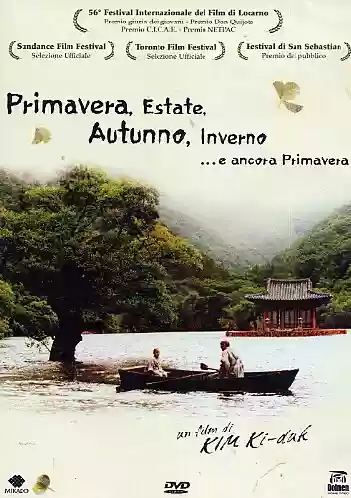
Kim Ki Duk brings us mentally closer to Buddhist spirituality. An essential film, capable of blending together in a whirlwind of increasing emotions and sensations love in its various forms, the importance of time, the joys, and pains of human life. Complex yet delicate, poetic, and spiritual at the same time. Religious and revealing. Few have managed to unite these elements. Even fewer have managed to blend them in a sensible way.
Starting from an isolated, closed place, the director shows us the spiritual and non-spiritual pains that emerge in the weak souls of men. The filmmaker manages to exemplify an entire lifestyle. He transitions from the micro to the macrocosm. And he does so by reaching peaks of sensitivity difficult to find in modern cinema. A "sublime" film in the most aesthetic sense of the term, touching the heart with the same delicacy with which the waters of a lake caress the gentle and sad shores...
Loading comments slowly
Summary by Bot
This review praises Kim Ki Duk’s film as a profound and poetic meditation on life’s seasons mapped to human growth and spirituality. It highlights the director’s skill in intertwining Buddhist themes with emotional depth. The film is noted for its aesthetic beauty and unique sensitivity. The journey through innocence, temptation, disappointment, and peace is rendered with subtlety and reverence. Overall, it is regarded as an essential and sublime cinematic work.
Kim Ki-Duk
South Korean film director and screenwriter known for minimalist dialogue, visual lyricism, and stark explorations of pain, love, and spirituality. His films include 3-Iron and Spring, Summer, Fall, Winter... and Spring; Pietà won the Golden Lion at the 2012 Venice Film Festival. Active from the late 1990s until 2020.07 Reviews
