
 •
Rating:
•
Rating:
THE REVIEW
She’ll deceive you
She’ll unsettle you
Just to please you.
She'll tease you
She'll unease you
Just to please you
She’s ferocious and she knows just what it takeS. / She’s ferocious and she knows just what it takeS.
She’ll ruin you
She’ll throw you like dice
She'll take a tumble on you
She'll roll you like you were dice
Bette Davis’ eyes concealed something infinitely ambiguous, both divine and infernal.
Her gaze emerged from the deepest abysses, or perhaps descended from the stars. In your eyes, sunset and dawn; you scatter both joy and disaster at random. Do you perhaps rule over everything?
Yet you answer for nothing.
---------------------------------------------------------------------------------------------------------------
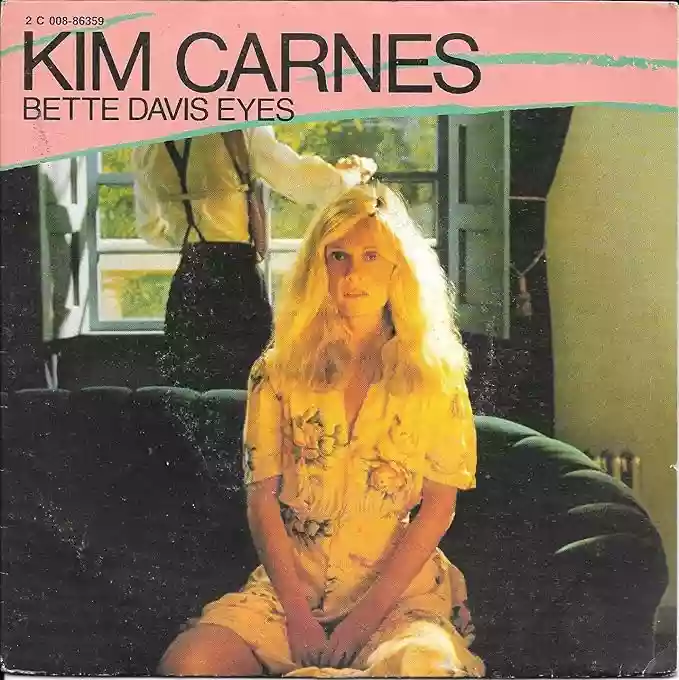
Released on March 9, 1981, “Bette Davis Eyes” conquered the public and remained at the top of the Billboard Hot 100 for nine consecutive weeks. It was the best-selling single in the United States in 1981 and the second-best of the entire decade, surpassed only by Olivia Newton-John’s “Physical.” It reached number one in 21 countries, including Italy, France, Germany, Australia, and Norway.
In 1982, the song received two Grammy Awards: Song of the Year and Record of the Year. Billboard later included it in its list of the 100 greatest songs of all time.
The lyrics paint the portrait of a fascinating and elusive woman, with the magnetic gaze of Bette Davis, the hair of Jean Harlow, and the enigmatic allure of Greta Garbo. Bette Davis, struck by the song, wanted to meet Kim Carnes to thank her for making her a part of modern pop culture.
This song obsessed the world for generations; the story I am about to tell speaks only of one among those thousands of obsessions.
That summer, the heat was everywhere. The wind was an icy, scorching breath, slipping through the hair and making everything more electric. The heat wasn’t just in the air, it was in the thoughts, in the emotions, it smoldered beneath the skin with unbridled desires. It pulsed in your veins. The summer in California didn’t ask permission: it entered, imposed itself, made you sweat even your thoughts. Manolo could feel it, that heat, like a fever that refused to heal. But it wasn’t just the sun burning. It was her.
Kim Carnes.
The first time he heard her was by chance, in a diner on the coast, while cleaning tables and trying to ignore that life of his. The radio crackled, then it came: that voice. Hoarse, scratched, as if it had lived too much and sung even more. “Mistaken Identity,” the DJ said. Manolo stopped. Time stopped. Everything stopped.
From that moment on, he was never the same.
He bought the album the next day. Vinyl, matte cover, Kim’s gaze seemed to cut right through him. He listened to it in a loop, lying on the bed, with the window open and the wind carrying scents of the sea and distant promises. Each track was an open door, each note, a step closer to her.
He didn’t really know who she was. He’d never seen her live. But he could feel her. He sensed her everywhere. In the streets wet from sudden rain. Hanging between shadows lit up by the neon of nightclubs. In the women who walked past him with dark glasses and lit cigarettes. Kim was everywhere, and yet nowhere at all.
She ruled over everything. But she answered for nothing.
He began to look for her.
Not with maps, not by following her platinum blonde traces, but by chasing those sensations, by following that cold synth intro and that voice, scorched by sleepless nights and nicotine.
He followed the music, the stories, the whispers.
They said she had a secret house near Sarasota, Florida. That sometimes she showed up in clubs, singing under a false name. Manolo became a shadow. He’d enter the clubs, sit in the back, order bourbon and wait. Every night, a song from the album became reality. “Draw of the Cards” pushed him to take risks. “Break the Rules Tonight” made him enter places where he shouldn’t have gone.
One night, he saw her.
Or at least, he thought he did.
It was in a place called “Velvet Mirage.” Red lights, smoke, jazz. A blonde woman, dark glasses, black tuxedo, that unmistakably hoarse voice. She was singing a Kim cover, and Manolo stood frozen. His heart drummed like a tribal beat. He wanted to come closer, say something to her, touch her. But he didn’t. She vanished into the crowd.
From then on, his obsession became sweet and murky. Kim was no longer just a singer, but a mirage. Manolo began to write. Endless letters describing her beauty, as captivating as it was merciless, letters he never sent. He drew her face on scraps of paper, trying to capture something he’d never truly seen.
Then, that night arrived.
The hottest of the summer. The sky looked like liquid, and the air smelled of jasmine and electricity. Manolo followed a voice, a hint, an instinct. After a walk, he found himself in front of a mysterious villa on the beach. The door was ajar. Inside, a turntable was playing “Mistaken Identity.” He went in.
The house was empty. And yet, full of her.
Records everywhere. Photographs. Vintage sunglasses. In the wardrobe, the black lamé tuxedo worn by Kim in the videoclip. A scent in the air he couldn’t identify. It was as if Kim had just left. As if she’d been waiting for him. Manolo sat down on the couch, closed his eyes, and let the music envelope him. Each track on the album became a memory he’d never lived. A stolen kiss. A run in the rain. A whispered goodbye.
Then, the voice. Suddenly she appears and whispers in his ear:
“I was waiting for you. You took a lifetime to get here. In the meantime, I’ve smoked a pack of Camel and downed half a bottle of Johnnie Walker.”
He opened his eyes. She was there. Kim. Or something that looked like her. Maybe a dream. Maybe reality. Neither spoke. Neither moved. She came closer, brushed his cheek, put a vinyl in his hand. Signed. Inside, a dedication: “To those who seek, but don’t know what. – K.”
The light was soft, golden. The turntable kept spinning, and the house seemed to breathe. There was an unmade bed, light sheets scented with a polished blend of skin and vanilla. Manolo didn’t remember lying down, yet his body bore the signs. On his neck, a mark of fire-red lipstick. Warm, precise, indelible.
He smiled. He needed nothing more. He had found her. Or maybe found himself. In that music, in that summer, in that sweet, murky obsession.
And Kim’s voice kept singing.
Loading comments slowly
Summary by Bot
This review applauds Kim Carnes' 'Bette Davis Eyes' as a defining hit of the 80s pop era. The reviewer emphasizes its catchy hooks and Carnes' unique vocal style. The song's continued popularity and cultural impact are highlighted. It's celebrated as both a critical and commercial success. The overall tone is one of admiration and nostalgia.
Kim Carnes
Kim Carnes is an American singer‑songwriter with a distinctive raspy voice. She achieved worldwide success with “Bette Davis Eyes” (1981), which topped the Billboard Hot 100 for nine weeks and won two Grammys (Record and Song of the Year). Active since the late 1960s, she released a run of pop/new wave–leaning albums in the 70s and 80s, including Mistaken Identity, Voyeur, and Barking at Airplanes, and scored other hits such as “More Love” and the duet “Don’t Fall In Love With A Dreamer.”03 Reviews
