
 •
Rating:
•
Rating:
THE REVIEW
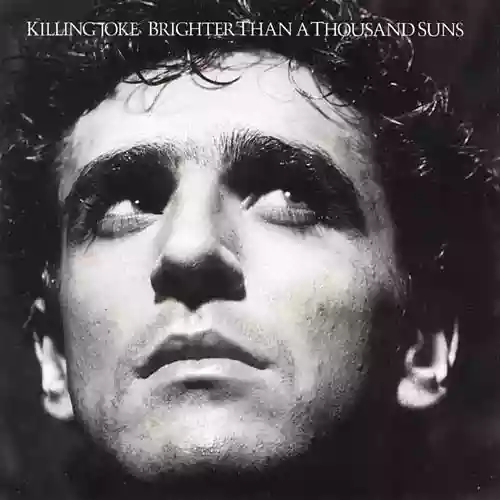
Ladies and gentlemen, I present to you one of the absolute best albums by Killing Joke.
You might ask me, but is it better than the self-titled debut? I answer: completely different records, both beautiful, but personally, I listen to this and 'Night Time' much more often. And you might retort: but how, Scaruffi gives it a mere 5 and you call it one of the most successful episodes of their discography? I reply: Scaruffi and all those like him who pretend to objectify music, making it a coldly technical matter, can say what they want.
The greatest merit of this “Brighter Than A Thousand Suns” is especially that it contains the most beautiful song of the “Killing Joke”, namely the wonderful “Adorations,” the opening song of the opus. Oneiric might be the right term to define it. I have never heard a more ethereal and dreamlike song than this one up until now. An absolutely fascinating blend of ever-present bass, delicate and dreamy guitar arpeggios, penetrating synths, and Coleman’s magnificent voice when he was singing and not grunting as he does now, making Lemmy Kilmister’s voice seem like that of a soprano. Just listening to this song alone would be worth buying the album blindly. But the whole work certainly deserves a place of honor and respect within their production, regardless of the historical importance of the debut album.
We’re in the mid-80s, and you can tell, as “Brighter Than A Thousand Suns” is definitely the band’s most new wave album and the one classified as the most commercial. Always melodic and engaging wave sounds, never trivial. Listen, for instance, to the sweet and refined “Sanity,” to believe it. Or the magnificent “Chessboards,” a classic example of a song that is difficult to describe for the emotions it evokes. Along with “Adorations,” this song gives the album the highest rating. “Brighter Than A Thousand Suns” is studded with moments like these, even though from the final listen it might seem that you’ve witnessed a beautiful show but, in itself, somewhat repetitive. But this is precisely its strength, namely the oneirism, imperceptibility, and cosmic energy that characterize almost all of its pieces. Features that are also found in “Love of The Masses,” in the danceable “Victory,” in the anthem of “Rubicon,” in the dark and decadent “Goodbye To The Village.”
In conclusion, who would you listen to, the good Scaruffi or your own feelings and emotions?
P.S.
This review is more of a pretext to thank De Baser and its users for being a constant presence in these months of hard study and work for me. A presence that made me grow fond of the site which I consider to have been my travel companion. It’s also a review that I dedicate to myself because sometimes dreams come true. Greetings to all.
Loading comments slowly
Summary by Bot
This review praises Killing Joke's 'Brighter Than A Thousand Suns' as one of their best albums, highlighting its melodic new wave style and standout tracks like 'Adorations' and 'Chessboards.' The reviewer favors emotional connection over technical criticism, appreciates the album's dreamlike qualities, and places it alongside the band's iconic debut and 'Night Time.' Despite some repetition, the album's cosmic energy and atmosphere earn high respect.
Killing Joke
Killing Joke were an English band formed in London, known for blending post-punk with electronic, tribal rhythms and a harsh, industrial-leaning attack, fronted by vocalist Jaz Coleman and guitarist Geordie Walker.24 Reviews
