
 •
Rating:
•
Rating:
THE REVIEW
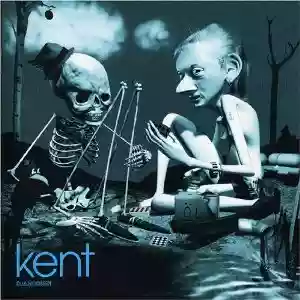
Of death, in this sixth album by Kent, there's only the "I" in the title. It starts with what is quite likely the ugliest cover in the entire discography of the Swedish band, which, after having permanently put aside any ambition of expanding towards European markets, produces a work permeated by dark tones coming from Scandinavia's shadowy side. Joakim Berg's lyrics become increasingly cryptic and personal, so much so that interpreting them becomes complicated unless you put yourself in the shoes of an awkward person who sees ghosts in iron. Now, while this brief preamble might be enough for listeners who need a special needs teacher to ignore the album, what is actually contained in the 11 tracks of Kent's black album is one of the most exciting and interesting works of the just-concluded decade.
The task of opening the macabre dance falls to the stormy "400 Slag", and you immediately realize the product's quality, with the instruments making their entrance one by one, in a strict single file: bass, drums, rhythm guitar, lead guitar, keyboard, almost as if they want to introduce themselves, each claiming their own space before settling in their seats waiting for orders from Joakim Berg's commanding voice, which makes anyone aspiring to be a band singer envious during the first choruses and when he screams, almost in pain, at the end of the song, you can feel all the sharp cold of Sweden in your bones. The impression is that Kent has understood everything, and that from this understanding, they are now teaching the concept of how a rock record should start.
It continues with the metallic "Du Är Ånga", you are steam, and the crystalline "Den Döda Vinkeln", before getting a chance to catch a breath with the lighter "Du Var Min Armé", with arpeggios that seem to be plucked by a ballerina on tiptoe. Then it moves to "Palace & Main", probably the most radio-friendly track of them all, where radio-friendly doesn’t mean banal.
At this point, the tones change; the second part of the album is filled with the feeling of absence, loss, and tearing of emotions, with consequent nostalgia. Cold nostalgia, to be precise. The atmosphere from here becomes more intimate, reserved, vulnerable: "Järnspöken" is a wonderful interlude between the first and second half, the kind you sit and listen to in the hall even if you're dying to go out for a smoke; the only slowly arpeggiated acoustic guitar accompanies a melancholic and thoughtful song, a vision of the past on a Swedish winter morning. "Klåparen" is more driven but only musically speaking; the clumsy one from the title is weak and lost in the blurred visions of distant green, red, and yellow lights. "Max 500", in eighth place, is perhaps the least interesting episode of the whole work; strangely chosen as the lead single, it is actually a fairly anonymous piece that pales compared to its successor, the tremendous and sublime "Romeo Återvänder ensam", an empty collection of midnight blue visions of a sad Romeo returning home alone through deserted streets made of closed windows and sealed doors; here Joakim Berg plays with himself, Joakim calls, and Berg answers in a call and response that gives the song a great sense of despair for a Juliet never named but now buried in the winter sea's sand. "Rosor & Palmblad" presents itself as the penultimate track, intensifying the dose, this time with a slow melody steeped in memories that slowly transforms almost into a funeral march in honor of the joys that once were and that the present has now devoured in anticipation of the sweet. You arrive at the final track that alone could be worth buying the album with a blank check: "Mannen I den vita hatten (16 År senare)" is one of those songs that can only be at the end, at the end of everything. No wonder it also closes every Kent concert from 2005 to today. A bone-chilling arpeggio that transforms into a storm within seconds, with all the past drawn into the middle. The notes are embraces, tears, moments snatched from memory and brought to the surface, gasping and present to remind something that won’t return, the entire song is a movement of moments and memories slipping away before the last two stanzas shake them like a hurricane to make them all dance together, memories, and photographs of people working, laughing, driving, singing, getting married, flying, writing, crying, shining, thinking, traveling, crossing the street, pretending, reading the newspaper, dancing, undressing, selling records, getting sick, leaving home, running, taking drugs, sticking post-it notes, comforting, biting, caressing, losing, loving, wearing a shirt, ruling, fanning, missing the train, praying, despairing, getting sick, inventing, drawing, tossing a coin, counting, coloring, deciding, remembering. And finally, the song ends with a terse, firm, monumental, inevitable "We will all die one day," a firm and statuesque verdict, the only true certainty of everyone.
This album closes a chapter in Kent's career, a band to whom it is fitting to shake hands and accept their business card even just for the fact that they have always managed to reinvent themselves and question themselves by evolving and mixing genres, not to follow trends but to obey the natural progression of their growth, from indie rock infants to mysterious electronic grown-up men, as evidenced by the productions up to the present day (the writer’s days are concluding at the end of 2010).
Also noteworthy would be the numerous b-sides excluded from this album, but the risk is to go on too long. A single suggestion, enclosed in a letter, for anyone curious: M.
Loading comments slowly
Summary by Bot
Kent's sixth album 'Du Och Jag Döden' delivers a powerful mix of dark Scandinavian tones and cryptic, personal lyrics. With 11 emotionally intense tracks, it blends melancholic melodies and strong musical arrangements. The album showcases the band's evolution from indie rock beginnings to mature electronic-infused rock. Key tracks include the explosive opener '400 Slag' and the memorable closer 'Mannen I den vita hatten (16 år senare)'. This work closes a chapter in Kent's career, praised for its creativity and depth.Tracklist Lyrics Videos
Kent
Kent are a Swedish band associated in these reviews with melancholy, sharp “cold” atmospheres, and an evolution from indie/alt-rock toward electronics. Joakim Berg is repeatedly described as the band’s voice and main songwriter, with lyrics often called cryptic and personal.11 Reviews
Other reviews
By Gale
The many instrumental passages scattered throughout this work are truly moving and make this album something different from the previous works.
The vocals remain penetrating and ethereal, as Kent had accustomed us to.
