
 •
Rating:
•
Rating:
THE REVIEW
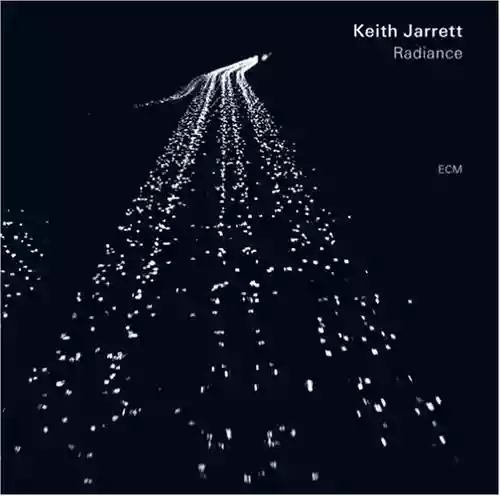
Radiance, the new solo piano work by Jarrett, is the testimony of two concerts held in Tokyo and Osaka during the 2003 Japanese tour. Released in 2005, the album does not lend itself much to emotional considerations, as you can already guess from the back cover, where instead of titles, numbers in progression (albeit incorrect) indicate the sequence of tracks.
A bit contrary to his previous solo piano works, especially "Vienna Concert," "Paris Concert," and "La Scala," here we witness a reversal in composition trends (even though they are improvised), no longer the long-lasting suites with a pronounced melodic search, but on the contrary, we find brief tracks, some even just interludes. The entire album unfolds over two CDs, where there is a work of deconstruction, especially in the first CD. In fact, one can hear in the opening track a piano exploration pushed more towards atonality, and then in the second track a phrasing at the edge of counterpoint with clear classical influence. Certainly, there are also remarkable moments of musical reflection such as track 3 or the suggestive and melodic "Radiance n° 7 and 8". The second volume, to be honest, I found a bit less rigid in execution compared to the first. The opening track is rather grave, and the insistent note choices many times lead to a not insignificant dramaticity of the piece. The album, however, is very heterogeneous, yet the beauty and intensity of tracks (a terrible term I know) 6 and 7, which close the entire work, should also be noted.
Ultimately, I don't think that judging "Radiance" track by track is the best course of action. It should be appreciated in its entirety—an album that is neither immediate nor easy to listen to, but nonetheless valuable, a value that only Jarrett can give to every note that emerges from a piano key pressed by him. The only criticism I feel I can make of an excellent album like this is that it lacks the magic I felt when listening to "La Scala" or even more "Paris Concert", a magic that permeates the performance giving it warmth and a soul that is missing here. But I think that Jarrett, considering the Gurdjieffian thought he pursued, had also taken this into account, in his spiritual search for a life that he also externalizes musically, but that's a whole other story.
Loading comments slowly
Summary by Bot
Radiance captures two 2003 solo concerts by Keith Jarrett in Japan, showcasing a shift from long melodic suites to shorter, atonal pieces. The album is complex and challenging but rewarding, with moments of profound musical reflection. Though lacking the 'magic' of earlier works, it remains an intense and valuable expression of Jarrett's artistry. Appreciated best as a whole, it blends improvisation with classical elements and spiritual depth.Tracklist
Keith Jarrett
Keith Jarrett is an American pianist and improviser, widely known for solo piano concerts built on total improvisation as well as for jazz standards and ECM recordings across multiple ensembles.25 Reviews
