
 •
Rating:
•
Rating:
THE REVIEW
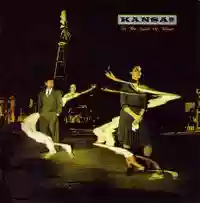
The album in question is, in the extensive discography of Kansas, the furthest from their typical sound.
This is due to the absence of the electric violin, a usual reference point in their music, but not only that: the producer of the work is the prestigious Bob Ezrin, a mind fully matured in the Pink Floyd school, thus capable of instilling conceptuality, depth, lyricism, direction, authority, and absolute timbral balance to the music under his responsibility. "In The Spirit Of Kings" is therefore, thanks especially to him, the most ambitious, best produced, best played, best sung work in Kansas's vast discography. It's no coincidence that it is a concept album, with penetrating lyrics, suggestive messages, particular charm. It's a shame that it was a bit of a flop at the time, selling very little. Perhaps it came out at the wrong moment: the late eighties, with Van Halen's and Guns & Roses's arena rock being fashionable, and still to come the powerful and virtuosic progressive of Dream Theater and followers (who owe Kansas quite a bit). And if for the second and last time in Kansas’s discography, the violin is missing (the previous album "Power" was also made without Robby Steinhard's bowing), it hardly matters, as this allows more space for the evolutions of the virtuoso Steve Morse, in his second and last appearance with the group, a phenomenal guitarist given how many qualities he manages to summarize, among which the disarming versatility not being the least, which allows him to perfectly fit into the group's mechanisms, judiciously dousing his overwhelming soloing and gladly subjecting himself to the constraints imposed both by the intrinsic style of the group and by that of the producer, who intends to create complete and balanced songs rather than virtuosic instrumental jam sessions.
The concept at the base of the album, which is the story of a ghost town and the memories of those who lived there and are now gone (in body, but not in spirit), thus assumes a central and constant role, breaking in immediately with the piano ballad prelude "Ghosts", thanks to the heartfelt tone of the great singer Steve Walsh, to the powerful and reverberated sounds of his piano that announce an intense and touching music album. The track proceeds linearly with almost only voice and piano, until it crashes into Morse's staggering solo, the first demonstration of the absolute strength of this musician, able to dive perfectly into intense and baroque atmospheres and indeed emphasize them even more, despite coming from much lighter and sunnier experiences (his fusion group Dixie Dregs). The masterpiece of the album is titled "Rainmaker," a beastly tour de force for Walsh's voice, who strains to recount the story of this rainmaker, the primary architect of the tragedy that befell this village. Steve Morse then adds the finishing touch with a tense and vibrant solo that leads the song to the grand finale, filled with gospel choirs surrounding a frenzied Walsh. Dramatic and epic too is the concluding "The Bell Of St.James," but the album also offers much more straightforward passages, like the pure AOR of "Stand Beside Me" and the hard rock of "House On Fire," embellished by a heart-attack-inducing back-and-forth between the two guitarists of the group, the usual monstrous Morse and the much more conventional Rich Williams, the latter distinguishable among all his colleagues not for any particular instrumental merit, but rather for the black pirate patch that covers his right eye, injured in an accident at a very young age.
What else to say? In my opinion, this album is among the top five favorites in the fifteen or so released so far under the Kansas name. Its concept structure and its rich, deep, and balanced sound prompt a periodic re-listening from start to finish, lyrics in hand, as is appropriate with beautifully conceptual and well-played works such as "The Wall" by Floyd (co-produced by Ezrin) or "Metropolis Part Two" by Dream Theater.
Loading comments slowly
Summary by Bot
Kansas' 'In the Spirit of Things' stands out in their catalog as an ambitious and conceptually deep album. Produced by Bob Ezrin, it emphasizes strong lyricism and balanced sound without the usual electric violin. Steve Morse shines with versatile guitar performances, complementing Steve Walsh's powerful vocals. Although initially overlooked, the album offers a richly layered, thematic experience worth revisiting.Tracklist Lyrics Videos
Kansas
Kansas is an American rock band formed in Topeka, Kansas, in 1970 (originally as White Clover), known for a blend of progressive rock and hard rock with a prominent violin. Their best-known songs include “Carry On Wayward Son” and “Dust in the Wind,” and their 1970s albums Leftoverture and Point of Know Return are widely regarded as classics.14 Reviews
