
 •
Rating:
•
Rating:
THE REVIEW
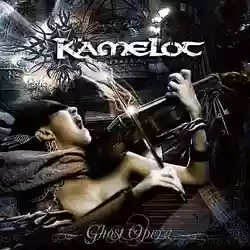
The climb to success for Kamelot seems unstoppable, and this album, "Ghost Opera," a new exciting chapter in the saga of the American combo, is here to dispel any shadow of doubt. Do you see this cover? Love it or hate it, it hints at a shift towards certain gothic themes, partially already undertaken with the previous "The Black Halo." The omen is, however, auspicious: today we are no longer facing the good but predictable speed metal band of the early days, nor a medieval rhapsodic ensemble disguised as power metallers as in the times of "Epica," but a quintet (keyboardist Oliver Palotai has become a permanent member of the lineup) that no longer has any fear of daring, of blending with perfect ease the most popular metal genres of recent years, enriching the power heritage of the previous work with masterly symphonic contours, futuristic-tinged vocal distortions, and velvety gothic sinuosity.
It may not be their most beautiful album, but "Ghost Opera" has the good taste to amaze both the fan and the occasional listener, to ensnare them in its mischievous web, to tame them with orchestral passages worthy of the best acts of the genre. Thomas Youngblood's guitar virtuosity is an old acquaintance and Sasha Paeth's clear production is as effective as always, but the undisputed director of this magnificent work remains the voice of the Norwegian singer Roy Khan (a true distinctive mark of Kamelot, as well as one of the best in the current metal scene), today more than ever imbued in a role of absolute importance that favors interpretation over power.
After a brief violin introduction ("Solitaire"), the air is immediately heated by "Rule the World," rarefied in atmosphere by Arabian tones but as powerful as a boulder in rhythm, and by the title track, skillful and intelligent in creating a perfect mix of power (in the rhythms), gothic (in the murky atmosphere enhanced by impetuous orchestrations), and prog (in the refrain that almost recalls Ayreon). "The Human Stain" represents the first real innovation: simplified but roaring and modern guitar structures suddenly find themselves duetting with possessed piano chimes in a real gothic anthem, supported by a truly over-the-top interpretation behind the microphone. Leaving aside its rhythmic section practically identical to that of any song from Epica's "Consign to Oblivion" (the same Simone Simons enriches the chorus), we can say that "Blücher" represents the second surprise of the album: the use of the vocoder proves very effective in wrapping Kamelot's music in darkness and nighttime mystery. Promises of eternal love fill the almost Japanese candor of "Love You to Death," a romantic semi-ballad in which it is the vocal contrast between the host and guest Amanda Sommerville (Aina) that steals the show (not forgetting the remarkable role of the orchestra and the lead guitar), while "Up Through the Ashes" is so epic and devastating that it does not allow even a glimpse of light, makes your skin crawl with its apocalyptic verve.
Gregorian chants introduce "The Morning Star," only to abandon it between the coils of a pleasant orchestral episode once again similar to what the Dutch cousins Epica propose (the union between the two bands seems to have become of primary importance; we will see what the splendid Simone and her companions will be able to offer us with the new album currently scheduled for September). "Silence of the Darkness" is the transposition of the most intense episodes of the two previous albums in this new semi-gothic guise, where everything is quite canonical except for the superb keyboard score, while "Anthem" is a sweet ballad that earns the award for the best song of the album, in which echoes an age-old sadness worthily enclosed in Khan's moving vocal lines and the first-class cinematic-orchestral arrangement. The dances are closed by a superb and overwhelming "EdenEcho", endowed with a monumental string section, alluring piano passages, and a finale complete with lyric choirs perfectly embedded in the concluding act of an outrageously epic and romantic album.
The small inflection towards the rules of the market has not led the band to the slightest physiological drop: although the songwriting has been softened, I was not able to find a single underwhelming track or another unattractive one. Among particular evolutions, some emotional peaks, and many other beautiful tracks, "Ghost Opera" is destined to remain a solid chapter in the discography of this great band, meticulously professional, coherent, and increasingly in tune with the times without completely distorting the trademark created over the years.
Loading comments slowly
Summary by Bot
Kamelot's Ghost Opera marks a daring evolution towards gothic and symphonic metal, blending genres with masterful orchestration and compelling vocals. Roy Khan's emotive voice leads a powerful lineup, supported by strong guitar work and notable guest appearances. The album balances epic and romantic themes without losing the band's identity. Overall, it stands as a solid and professional addition to Kamelot's discography.Tracklist Lyrics Videos
Kamelot
Kamelot is an American symphonic/power metal band formed in 1991 in Tampa, Florida by guitarist Thomas Youngblood. The group gained wide acclaim with the concept pair Epica and The Black Halo, featuring Norwegian vocalist Roy Khan (1997–2011). Since 2012, Swedish singer Tommy Karevik has fronted the band. Their catalog spans melodic power metal to darker, gothic-tinged works, including Karma, Ghost Opera, Poetry for the Poisoned, Silverthorn, Haven, The Shadow Theory, and The Awakening.10 Reviews
