
 •
Rating:
•
Rating:
THE REVIEW
In orbit in the '80s, around the faint sun of electronic Pop Muzic, Kajagoogoo are more like asteroids than meteors in terms of historical significance: small groups in orbit without ever cementing into a solid commercial product, mere vassals in the Synth-Pop carriages of various Duran Duran and Spandau Ballet.
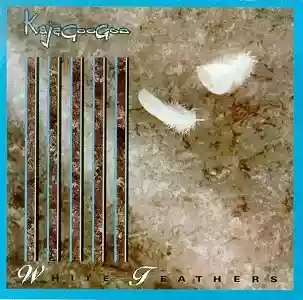
The reference to Nick Rhodes’ band is not accidental, as the producer of this debut album is precisely the keyboardist of the English band, who wanted to transfer, unsuccessfully, his moderate glam look similar to Bowie’s Berlin trilogy onto these pale epigones. So here comes the world hit "Too Shy" with its rarefied progress, with Nick Beggs’ bass setting the pace of the piece along with the warm, uneventful voice of the singer Limahl, the decisive elements that take the band's tongue-twisting name to clubs all over the world. As complicated as the band's name is the elusive musical recipe: on the foundation of "Too Shy", our pop vassals manage to craft an album, this "White Feathers" dated 1983, that sells little, certainly not helped by the depersonalized cover.
The five Kajagoogoo, born from Art Nouveau in 1979, are children of their own era, with a overloaded look, haircuts crafted by shrewd hairdressers, makeup artists like Gil Gagné who transform the Englishmen’s faces into perfect kits of blush and rouge, pin-up men ready to shoot videos to launch the three or four good tracks of the album in question. Here’s the second minor hit "Ooh To Be Ah" which doesn’t repeat "Too Shy" but smells of dancing more than necessary, contrary to "Hang On Now", chosen as the third single, which is slow and atmospheric, complemented by the usual music video. Other tracks like the title-track and "Lies And Promises" are filled with electronic drum sounds and keyboards that reproduce all imaginable sounds, not at all intoxicating, engineered to try to get maximum airplay on the UK and US charts. Bubblegum music?
Even "Magician Man" could grab the children’s attention given the high glucose content that imbues the piece, certainly coverable excellently by Cristina d'Avena of the golden years. There’s also the instrumental brushstroke "Kajagoogoo" to keep the pace of the strobe lights high, followed by "This Car Is Fast", both comparable to the B-sides of the singles, "Interview Room" above all, even more plastic and devoted to the dance music of the time.
In 2003, a "Best of" appeared with more or less known group songs and Limahl’s solo pearls: tepid flashes of posthumous stardust, relics of "fake-rock" built in the studio. But there is also a flip side represented by the live performances, where the songs reapply their makeup, more "popped-In" and less artificial with Limahl as a comfortable but not thrilling frontman. Nonetheless, Nick Beggs was hit by a rock flame finding himself face to face with Lemmy from Motorhead in the rehearsal room, the victim of a skit, with considerable comic force, set up by Mr. Kilmster to his detriment (www.megabass.it/Stick/Nick Beggs). Within a few months, the group’s tale concludes, and Limahl is ousted, according to him because his easy-going image hindered the musical growth of the band. For a couple of years, the former voice of Kajagoogoo lives off the hit-nightmare "The Never Ending Story", appearing at our Festivalbar with "Love In Your Eyes", then disappearing for several years from the music world.
Nick Beggs becomes the new singer of the group and main composer, with this change of course the band will release the good "Island" in 1984 before collapsing with the third album, released under the fragment moniker Kaja in 1985.
Loading comments slowly
Summary by Bot
Kajagoogoo's debut album 'White Feathers' (1983) is remembered mostly for the hit single 'Too Shy' but overall lacked commercial impact. Produced by Nick Rhodes of Duran Duran, the album reflects typical 80s synth-pop and bubblegum pop aesthetics. Although the band aimed for glam-rock inspired sophistication, the album came off as somewhat derivative and artificial. The group's short-lived success and subsequent changes led to their fading from mainstream attention.
Kajagoogoo
Kajagoogoo are an English synth-pop/new wave band, best known for their 1983 worldwide hit "Too Shy". The original line-up included singer Limahl and bassist Nick Beggs.01 Reviews
