
 •
Rating:
•
Rating:
THE REVIEW
I act a bit pretentious. The library, for an uneducated person like me, is the ideal place. More than anything, to feel loved, or simply considered, is a disease, I am aware of it. A complex I have carried with me more or less since I started being conscious of walking on the most forgotten crust of the globe, of having to be part of a community that for more than twenty years seems not to appreciate me. When I realize this particularity, I end up recalling at least all the most embarrassing moments of my life. I remember a girl, one of my infinite failures, answering me about this dilemma, "This shows you that people are bad." I ended up insisting with her too. The library is the place to forget; entering and asking for Henry Miller, being told by the librarian "but you're obsessed with this Foster Wallace, you've read them all by now, are you writing a thesis?" and answering innocently "um, no, I just like how he writes," wandering the sections with something by Jonathan Franzen or Jeffrey Eugenides. It's a consolation for me. I like to joke about it, to be ironic every now and then, especially when I come out with nonsense like "I feel about Kerouac the way Truman Capote does" etc. Then I shut up, remembering the reason why I behave like this. I sit in a corner, keep quiet. "I'm talking too much. Sorry, tell me everything." I wouldn't blame anyone who hates me for this.
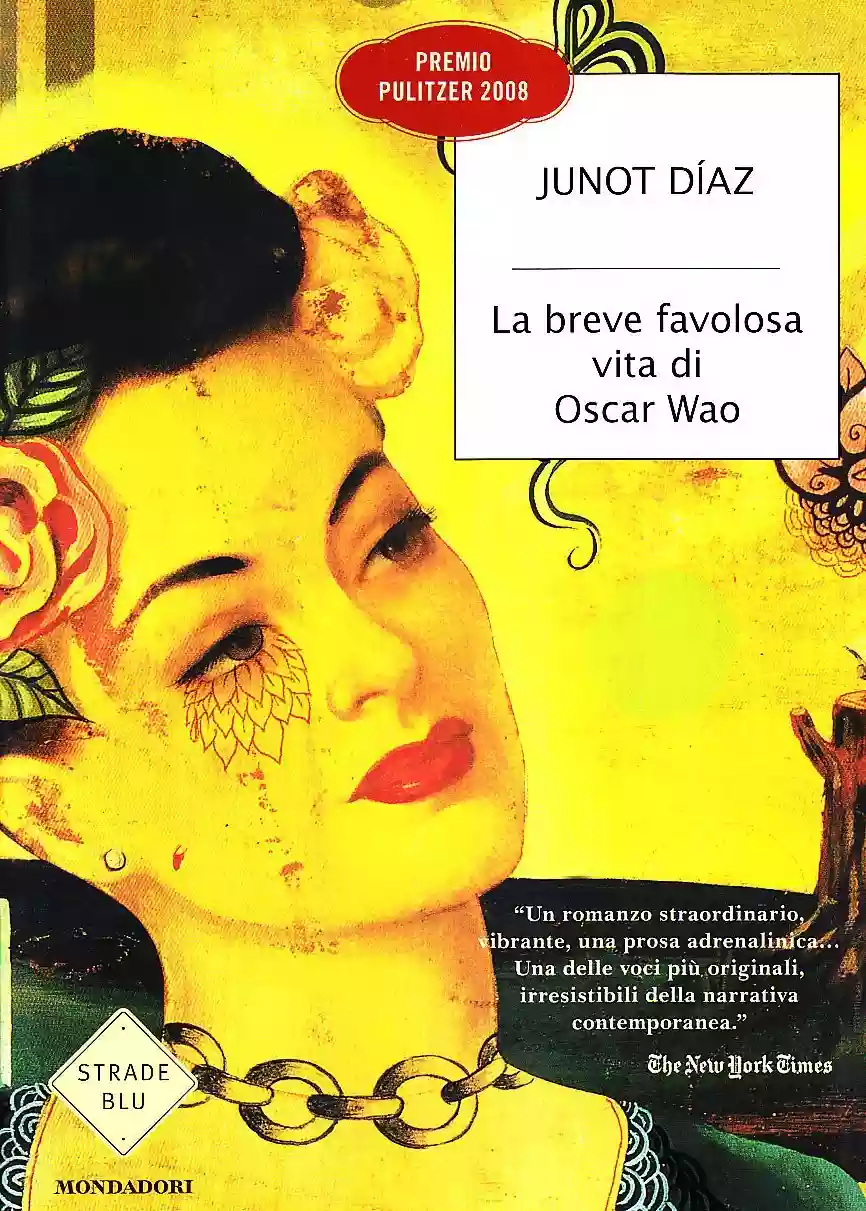
Sometimes you end up reading something that can change you without you realizing it; there are novels you read and think of hundreds of more fun things you could be doing, and there are others where you end up wondering what you will do after reading them. There are novels that resemble you, console you without you actually understanding why. Irresistible, disturbing, moving. This The Brief Wondrous Life of Oscar Wao is magnificence, the redeemed land, the golden river for the outcasts. It is first a novel of life and then an esoteric novel. All the codes of literary post-modernism and magical realism are distorted, exaggerated, and discomfited to best describe a reality that constantly returns to the most sincere, ridiculous domestic drama. It is the chronology of a curse (the fukù) that haunts the scorching lands of a brutal Santo Domingo and a disgustingly superficial New Jersey that end up cruelly forgetting how deserving of compassion the story of a reject is, of a first-rate dominated person searching for his intoxicating light of freedom, eating his flesh, tearing every one of his most sensitive nerves. Forget George Saunders; one doesn't joke in any page of Junot Diaz's main work to laugh heartily, but to laugh bitterly, with merciful, sweet, contradictory mockery. Forget Zadie Smith as well; here there is no trace of an accurate social analysis with frivolous, everyday aspects. Not a single detail is spared about daily life to ridicule the key character of a novel that wisely analyzes its evolutions, its failures, oscillating wisely from mobile viewpoints (that of Oscar's sister, and that of Yunior, Oscar's friend and self-proclaimed playboy, who is also the author's alter ego) and different times (the Dominican Republic under Trujillo's regime, the past history of Oscar's family composed of martyred subjects) in whose darkness distant sacred lights shine, exotic superstitions. Making an audience ridicule the life of a human disaster only to end up moved by it is a damn difficult task. This is probably one of the brightest examples of how such an endeavor can be achieved, of how ordinary conscience can be moved simply by touching its heart. Magnificently unrepeatable.
Loading comments slowly
Summary by Bot
This review reflects on how Junot Díaz's The Brief Wondrous Life of Oscar Wao deeply resonates with the reader by portraying the life of an outcast haunted by a family curse. Through a blend of magical realism and post-modern narrative, the novel evokes bittersweet laughter and profound compassion. The story's shifting viewpoints and layers of history enrich its exploration of identity and suffering, making it a powerful and unforgettable literary work.
Junot Díaz
Junot Díaz is a Dominican-American author born in the Dominican Republic, winner of the 2008 Pulitzer Prize for Fiction for The Brief Wondrous Life of Oscar Wao.01 Reviews
