
 •
Rating:
•
Rating:
THE REVIEW
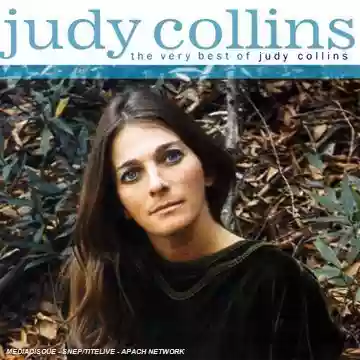
A beautiful woman. Two big blue eyes, or rather violet like the amethysts to which a critic compared her songs, eyes that made people fall in love and inspired Stephen Stills to write "Suite: Judy Blue Eyes," a track by CSNY that remains in the history of American rock. Raised as a classical pianist from early childhood, in the mid-'50s she developed a passion for the folk of Pete Seeger and Woody Guthrie and decided to switch to the guitar, much to the dismay of her teacher, an internationally renowned orchestra conductor, Antonia Brico, about whom she would make a documentary in the '70s. She was signed to Elektra and promoted as the "rival" of Joan Baez and immediately demonstrated her versatility in repertoire choice and vocal use, strong and crystalline, accompanied only by her guitar.
The performances we find on YouTube with Pete Seeger, her version (one of the first) of "Who Knows Where The Time Goes" by Sandy Denny, or a duet with Leonard Cohen in "Suzanne" are priceless. It was indeed she, Judy Collins, who introduced this poet and novelist, unknown outside Canada, to the world of American folksingers, literally pushing him onstage overwhelmed by shyness, and the first version of "Suzanne" is indeed hers. But Joni Mitchell also owes her entry into the music business to her: "Both Sides Now" would be a major success in 1967 and increase sales of her album "Wildflowers," perhaps the best known in her discography.
If interpretations of others' songs would make her known for her sensitivity and personal rendering of the lyrics, the songs written by her own hand are few but shine with their own light. They are moving intimate portraits, piano ballads that often speak of her strained family relationships, like "My Father" from 1969, "Born To The Breed," dedicated to the sixteen-year-old son wanting to be independent and play in a band, who would commit suicide at 33. Today this strong and courageous woman (she managed to overcome her alcoholism, depression, and quit smoking to not compromise her vocal cords, which underwent surgery) is 71 years old, has musically reconciled with Joan Baez (last year's beautiful duet in "Diamonds and Rust") and still performs over 100 concerts on average every year. I am grateful to have discovered her recently and wish her many more years of life and music.
Loading comments slowly
Summary by Bot
This review highlights Judy Collins' remarkable influence in American folk music through her crystalline vocals and versatile repertoire. It recognizes her role in popularizing songs by other legends like Leonard Cohen and Joni Mitchell. Her original compositions reveal deep, personal stories, while her resilience in overcoming life's challenges is celebrated. The review expresses gratitude for discovering her music and admiration for her continued performance career.Tracklist Lyrics Videos
Judy Collins
American singer-songwriter known for crystalline vocal interpretations of other writers (notably Leonard Cohen and Joni Mitchell) and for her own intimate songs; classically trained pianist who turned to folk guitar and recorded for Elektra beginning in the 1960s.01 Reviews
