 •
Rating:
•
Rating:
THE REVIEW
Once upon a time, there was that fantastic, somewhat surreal and ephemeral "fashion" that went down in history with the curious name of Space Age Pop Music.
In the era of great space travels, some crazy pop orchestra composer, those who dominated the world in the 1950s, around their tenth martini (and, I swear, maybe their tenth of something else...) in some nightclub where they might have just performed, began to fantasize about what orchestral pop might be like on Saturn or Jupiter...
It wasn't "cosmic courier" music that emerged, but rather this dark and mysterious object that is the music of Esquivel, a Mexican pianist and composer who, at the end of the Fifties, fascinated by the possibilities of the newborn Stereo sound, began his extravagant "experiments" more exotic than spatial. His is a kind of cocktail pop music, but what makes it absolutely unique and peculiar are the arrangements that I could only describe with a metaphor: Henry Mancini (the one from the Pink Panther, Breakfast at Tiffany's) on Mexican mescaline...
All the typical elements of the pop orchestra (from a thousand strings to the little choirs "doo bi doo bi doo ba-ba"...) are mixed with any new electronic gadgetry that could produce a sound at that time, first among all the legendary theremin, the one from the start of "Good Vibrations" (even here I would swear Brian Wilson learned a couple of things) and many Sixties horror movies, the ondioline and who knows how many others, to create a sort of strange proto wall of sound... A sound that, just try it, cannot but be defined, in the most Sixties sense of the term, "psychedelic" for its distorted, deformed version of the easy listening then in vogue (listen to "Misirlou" from the Pulp Fiction theme, a real gem)...
And this possible "interpretation" of his music found confirmation in the Nineties no less than with the great Stereolab who, with their "kraut-psych-avant-rock retro-futurist," revived Space Age Pop by skillfully re-proposing what was new and different from what Esquivel and company had created...
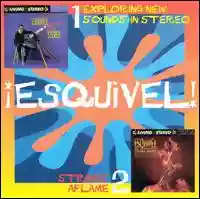
Note: this is a compilation of two of his best albums released in the mid-Nineties precisely on the occasion of the genre's rediscovery...
Loading comments slowly
Summary by Bot
This review explores Juan Garcia Esquivel’s inventive Space Age Pop albums that emerged in the late 1950s. Esquivel’s music is described as a psychedelic, cocktail pop orchestra with unique arrangements and pioneering use of stereo sound and electronic instruments like the theremin. The compilation reviewed combines two of his best albums from the 1990s reissue era, highlighting his influence on later artists like Stereolab. Overall, the music is praised for its originality, surreal vibe, and retro-futuristic charm.
Juan Garcia Esquivel
Mexican bandleader, pianist and composer, pioneer of Space Age Pop known for stereo experimentation and inventive lounge arrangements.02 Reviews
