
 •
Rating:
•
Rating: THE REVIEW
Many musical entities have given their best in their debut albums, bolstered by expectations, ambitions, novelty, spontaneity, years and years of amassing ideas and experience. It happened (just to name a few) with Doors, Boston, America, Hendrix, King Crimson, Oldfield, Pastorius, Pearl Jam, Van Halen, even Led Zeppelin for those who like.
But for the Journey from San Francisco, California, definitely not... they had to undergo a slow and determined evolution, characterized by an impersonal and uncertain beginning, which lasted for a few years and albums, and fortunately for them, followed by a couple of decisive leaps towards specificity and excellence, supported by clever lineup changes, heralding abundant fame and success, able to grant them a precise place in the evolution of rock and to organize the rest of their career in the name of conservatism and repetitiveness of what was painstakingly refined.
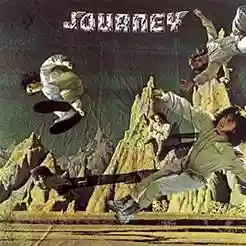
This debut work (we are in 1975) is really poor in content, lacking direction, pretentious. The band was put together by two exiles from the Santana group, following the release of the fourth album "Caravanserai" and the related tour, having resigned because both were unhappy with the new mystical and jazz-influenced (indeed boring) direction taken by the Mexican leader: I'm referring to the very young guitarist Neal Schon (who was already with Santana at sixteen) and the keyboardist and singer Gregg Rolie.
The almost seven minutes of the initial “Of A Lifetime” pass monotonously, in the cyclical interplay of only three chords, with changes that are dynamic and never harmonic, pretentious and interminable guitar solos by the youngster, and so-so vocal performances by good old Rolie. The following ballad “In The Morning Day” is more structured and contained, marked by the piano and then evolving into an intense instrumental tail, a vehicle for the twists of Gregg's darting Hammond organ.
With the instrumental “Kohoutek” (a comet that in those years was passing near our solar system) we are at pure progressive: changes of time and atmosphere, rhythmic unisons, various virtuoso displays, duels between guitar and minimoog... all extremely competent, but nothing more.
The short “To Play Some Music” plays the up-tempo vaguely funky and accessible card, with Schon also engaging the talk box, a gadget in vogue at the time designed to modulate the guitar sound directly with the mouth. The episode serves as an interval because then the quintet plunges back into another abundant instrumental called “Topaz” (we’re already there with suggestive titles, if nothing else), which also leaves much to be desired despite drummer Aynsley Dunbar's great efforts and the still nineteen-year-old guitarist Neal Schon somewhat mimicking the phrasing and sounds of his mentor Carlos Santana too much.
The last two contributions, both slow and atmospheric episodes, also fail to improve the situation, loading themselves with distortions and pretentious displays of heavy rock, amidst long rolls and Hammond blasts. Many things are still missing... above all, a lead singer of substance, then the still nineteen-year-old Schon should complete his formation and start associating his already remarkable dexterity, as an enfant prodige, to those solid musicality and characteristics that will come in a few years. What is also missing is a less blues-influenced composer who expands the horizon and makes it very accessible even to people who are by all appearances far from hard rock, progressive, fusion, and music solely for musicians like what is performed in this work. Finally, a more powerful drummer less progressive and jazz-oriented than good Dunbar is needed... this element will also arrive, even more, later on to finally square the circle.
Thus, this is a record for only completists, die-hard fans, and the curious.
Loading comments slowly
Summary by Bot
Journey's 1975 debut album is marked by uncertainty and a lack of clear direction. While showcasing technical skills and progressive elements, it falls short of the band's later polished sound. The album appeals mainly to die-hard fans and completists interested in the band's origins. Key members Neal Schon and Gregg Rolie were still developing their signature styles. Overall, it reflects a slow start before Journey achieved fame.Tracklist Lyrics
01 Of a Lifetime (06:54)
The mist is slowly lifting
The sound of life misplaced your mind
You're sitting, spellbound thru out time
I hope that you remember what you find
Singin' more of a lifetime
You put it down-all that I'm thinking
but take a long and distant search, when all is right
you take for granted
You can't look down but you're no worse.
Singin' more of a lifetime
The countless visions that are drifting
The silver dreams you hate to lose.
There's no harm. We've all been waiting.
well keep your faith. Do what you choose.
Singin' more of a lifetime
07 Mystery Mountain (04:22)
Mountain of mystery,
Rising high above the clouds.
Mountain of magic,
Standing tall and proud,
Your magical veins
Flowing silver and gold,
Your cumulus cloud glows misty red,
As Apollo sets beyond your head.
Releasing the pressure built over the years
The mountain is crying hot lava tears
Molten rock created under vibrations of
Sub-terranean thunder
Ejecting boulders like pieces of sand
The mountain is
Giving birth to the land.
Under your feet you feel a rumble
As thousands of rocks are starting to tumble
Above the trees where the buzzard flies
Swirling vapors begin to rise
Beneath those misty peaks you hide
A tremendous force boiling deep inside.
Journey
Journey is an American rock band associated with AOR/arena rock, widely known for its 1980s commercial peak and big radio staples such as “Don’t Stop Believin’,” “Open Arms,” and “Separate Ways (Worlds Apart).” Reviews highlight key lineup eras (Steve Perry, Neal Schon, Jonathan Cain, Ross Valory, Steve Smith) and emphasize the band’s shift from earlier prog/jazz-rock leanings to a more melodic, chart-focused sound.12 Reviews
