
 •
Rating:
•
Rating:
THE REVIEW
https://www.youtube.com/watch?v=i4KBohkaHDE&list=PLNPGM2D7aODd4hZKqwBxWVUpfh4HbnJ7R
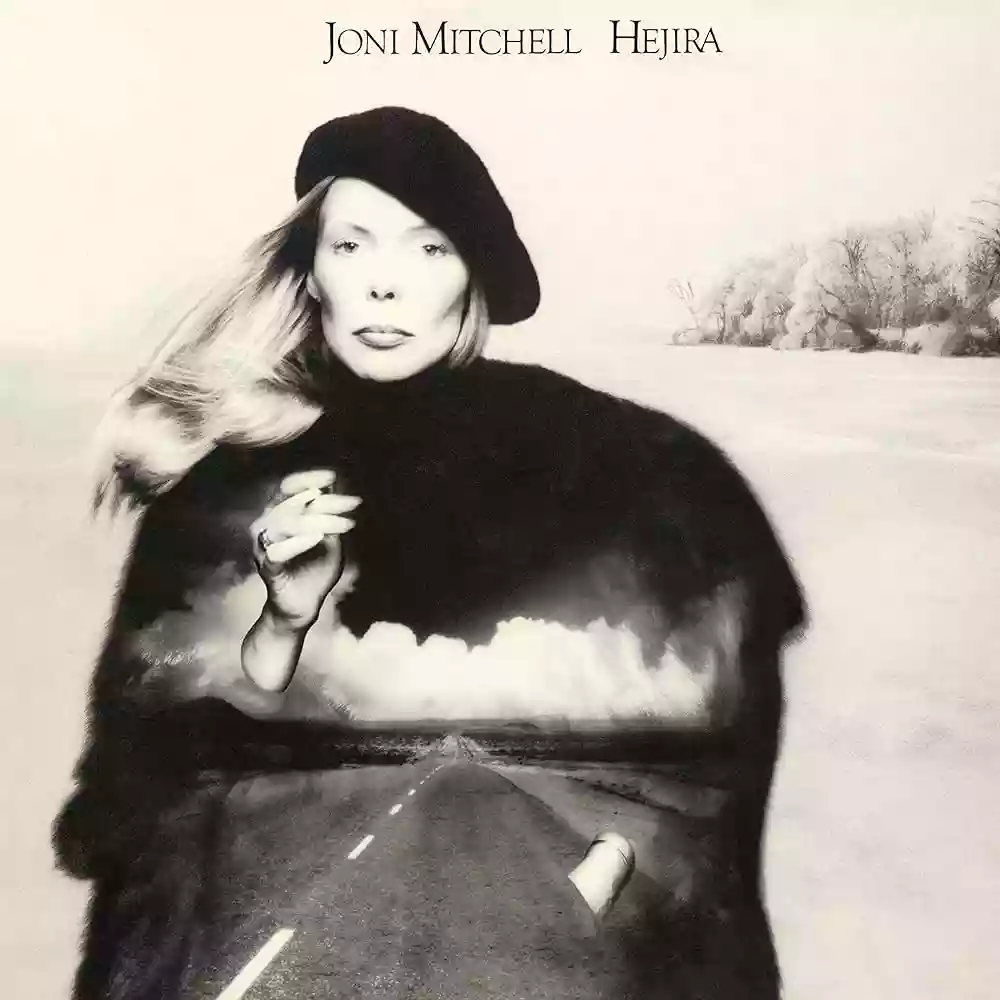
I don't know to what extent it makes sense to review today an iconic and popular album from 1976, like Hejira. Almost 50 years on the radio. It can perhaps be said that it hasn't lost its relevance or originality. It was an album ahead of the rest of the world, setting a trend without ever being cloned. Probably it is a seed so refined that it took root only where it was worth bearing fruit, hence other artists (both women and men) who did not give up their own originality.
This album comes a bit after the Joni Mitchell songwriter period, the one perhaps most celebrated still today, the one from the beginning when she captured global attention surely for the quality of her lyrics and the unusual harmonies she achieved from her spontaneous freedom in tuning the guitar.
A woman who wrote well, about female experiences, who loved sound and harmony, in the first person, she wrote everything herself. Boom.
Hejira is the third album from a later period, as I was saying. The lyrics remain those of a songwriter, increasingly confident, while the music is never enough for her. She joined mainly with the L.A. Express, a beautiful group from the ecstasy of jazz and pop jazz. With them, she brought to a - not at all bored - 1970s market three very important albums, of which Hejira is the last, the most mature, certainly. The album also features Jaco Pastorius, while on tour there's always Jaco but also Pat Metheny. Then Lerry Carlton, Max Bennet, but these are "simply" the L.A. Express...
At this point, one could talk about how it was written and what it's about, there's legend and history, but I won't do it because there's no point in me doing so.
I close this whole section here, which was just the preamble. And I talk about myself.
I discovered this album when I was wandering everywhere down the streets of youth with my Giulietta with the stereo bought in the Spanish Quarters following a long story that also brought me to Naples. American channeling of the radio section, who knows where it came from...
I don't know why, it was the late '80s, they played "Coyote" on a national private radio. There was a bunch of "fresh" music available at that time, and already radio plays were paid for, and then the revival that's so trendy now surely wasn't popular. Who knows why. You need heart in life, sometimes you run into someone who has it.
I had missed the presentation of the track, if there had even been one, and so I started going around the record stores of the city trying to explain to the clerks this huge and beautiful bass line that was unlike anything else, and then the piece of text "the white line of the freeway," which was quite easy, who knows if they took me for a fool to sell me other records, maybe passing the word among themselves... Better this way, anyway, because in the search for the American (who is actually Canadian) singer-songwriter, I discovered Carole King, Carly Simon, Laura Nyro, and others.
Having found Joni Mitchell, I set out to find the L.A. Express, unobtainable. It was there that I made my first DSL, which maybe was still an ISDN, and I learned the religion of downloading from eMule.
Loading comments slowly
Summary by Bot
This review reflects on Joni Mitchell’s 1976 album Hejira, praising its originality and lasting impact nearly 50 years later. The album marks a mature period where Mitchell blends jazz with folk, collaborating with the L.A. Express and jazz great Jaco Pastorius. The reviewer shares a personal journey of discovering the album in the late 1980s, emphasizing its timeless allure and how it sparked interest in other iconic singer-songwriters. Hejira is celebrated as a unique, influential milestone in Mitchell’s career and music history.Tracklist Lyrics Videos
Joni Mitchell
Canadian singer-songwriter, guitarist and painter, widely influential from the late 1960s onward. Known for intimate songwriting (Blue), jazz-inflected work (Hejira, Mingus), distinctive open-guitar tunings and painted album covers.28 Reviews
Other reviews
By Grasshopper
Joni Mitchell marked an era, proposing a typically feminine way of understanding singer-songwriter music, with less anger, less commitment, and more attention to everyday life and human relationships.
Hejira stands out with perfectly balanced guitars and dark, somber bass lines that twist the guts, making it a truly unique and deeply moving record.
