
 •
Rating:
•
Rating:
THE REVIEW
In the fifties and sixties, Johnny Cash was one of America's most recognizable voices; his rebellious attitude and unconventional song style made him very well-known throughout the country.
The fame and success he achieved allowed him to “push the boundaries” for musical projects that might otherwise have remained on the shelf.
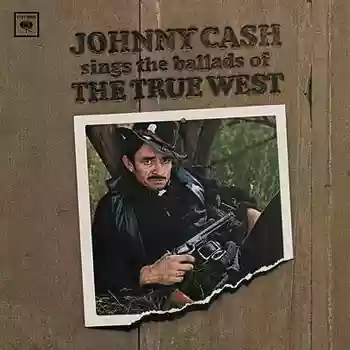
One of these is “Johnny Cash sings the Ballads of the True West.”
Strongly opposed during production by his record label (Columbia Records), this concept album, a double on LP, from 1965 represents one of the milestones in Johnny Cash's discography.
The record producers had every reason to express their skepticism: an album that focuses exclusively on the theme of the old, True West: cowboys, historical feats that became legendary, the patriots’ wars, arid and inhospitable places yet full of adventure and freedom.
But that wasn't all: not just an album of songs, but a continuous alternation between writer’s ballads or old folk songs (wisely reinterpreted) and bare readings, sometimes without any accompaniment.
The result is exceptional despite the album progressing with not a little difficulty: this is precisely due to the numerous interludes, readings, and recitations that "break" the musical thread and diminish the listener's attention.
Cash's voice is clear and unmistakable (despite his not-so-regular life undermining its stability), the constant reverberation (intentional or not) makes it ethereal and timeless, perfect for “the narrating voice of the true west.”
The actual songs present a remarkable example of period country music, which satisfyingly evokes “West” atmospheres through a correct mix of banjo and acoustic guitars, choirs, and strings.
Numerous songs would be included in subsequent hit records, especially concerts. They include “Sam Hall,” “25 Minutes to Go,” “Streets of Laredo.”
An album that’s not easy to listen to, sometimes exhausting. A masterpiece with commercially not-so-successful fortunes but of significant historical value, for its audacity, disregard for risk, and sense of experimentation.
Loading comments slowly
Summary by Bot
Johnny Cash's 1965 concept album 'Sings the Ballads of the True West' pushed musical boundaries with its unique mix of folk songs and spoken word. Despite initial industry resistance and challenging listening experience, it remains a historic country music milestone. The album blends authentic Western themes, storytelling, and Cash's distinctive voice, offering a bold artistic statement with lasting influence.Tracklist Lyrics Videos
02 The Road to Kaintuck (02:43)
03 The Shifting, Whispering Sands Part I (02:54)
04 The Ballad of Boot Hill (03:48)
05 I Ride an Old Paint (02:58)
06 Hardin Wouldn't Run (04:19)
08 The Streets of Laredo (03:39)
09 Johnny Reb (02:50)
10 A Letter From Home (02:35)
11 Bury Me Not on the Lone Prairie (02:26)
12 Mean as Hell (03:07)
13 Sam Hall (03:15)
14 25 Minutes to Go (03:14)
17 Green Grow the Lilacs (02:47)
19 The Shifting, Whispering Sands Part II (02:28)
21 Rodeo Hand (02:27)
22 Stampede (Alternate Instrumental) (01:07)
Johnny Cash
Johnny Cash (1932–2003) was an American singer-songwriter known as the “Man in Black,” celebrated for a deep baritone voice, stark storytelling, and songs about prisoners, outsiders, faith, and redemption. His late-career American Recordings with producer Rick Rubin sparked a major resurgence and introduced him to new audiences through sparse arrangements and transformative covers.20 Reviews
