
 •
Rating:
•
Rating:
THE REVIEW
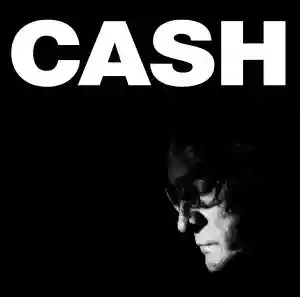
A great American singer-songwriter, undoubtedly one of the greatest, Johnny Cash, passed away in 2002 at the age of 71, leaving us almost a spiritual testament with this album, "The Man Comes Around." which I am about to review here.
He was never a complete country author (although his beginnings were of this matrix), he always tried to follow his own path, a path bordered by the world of the secluded, ostracized from civilization, prisoners, a world nevertheless always guided by a deep vein of religious spirituality. The four collections of American Recordings instead mark one of Cash's last inclinations, that of approaching the more mainstream world of rock and pop. Obviously, this is done in his own way, with a series of covers of some more or less known songs, transformed (or rather, reworked) to make them his own. By the author's choice, it must first be said that the album is simple and almost sparse regarding the melodic and rhythmic section (some acoustic guitar, a piano, occasionally percussion, but nothing more), and Johnny's voice, hoarse, warm, deep, and rich like aged whiskey, is enhanced by the collaboration of well-known artists (John Frusciante, Fiona Apple, and others). Moreover, for those approaching this artist for the first time, it must be emphasized that he doesn't "sing" his songs but almost recites them as prayers, yet giving them a particular tension and intonation that makes them quite enjoyable.
Already by the second track, a blow to the heart: "Hurt" by Nine Inch Nails, suffering, painful, and fragile from the start, is reinterpreted by Johnny in an almost spiritual and mystical way. This is a confession, an act of impotence and love, where drugs almost no longer matter—it's just the fragile man in front of his empire built on dirt and pain. As touching as few other things, with a crescendo that even Reznor, the mind behind NIN, couldn't listen to without tears.
The next "Give My Love To Rose" is a splendid sad love story set to music, a warm breeze that brings with it the flavor of wheat and the song of crickets. Moving through "Bridge Over Troubled Water" (Simon & Garfunkel), a wonderful declaration of love, three more gems in quick succession await us. The first is "I Hung My Head," a story of a (possibly unintended?) murder of a boy and the consequent imprisonment. I don't know why, but it's like someone you've known all your life is telling you a story: this is what I feel listening to this song, in which Cash tells the tale masterfully, simply, and effectively.
Then comes "First Time Ever I Saw Your Face": again, a melancholic declaration of love, so simple in its lyrics yet so incisive and touching. It's the soul of a man laid bare, it's his open heart, it's the perfect poetry to declare to your eternal love before an altar. If only the world were more permeated with this honest everyday yet special romanticism, if only each of us could say to our partner with such simple words what we feel, perhaps we would better realize what power love unleashes and what it means to have someone by your side.
Then you wake up with the dirty and bluesy "Personal Jesus"(Depeche Mode), undoubtedly an excellent interpretation, considered by many the true gem of the album. I'm not saying it doesn't deserve such a judgment, just that, perhaps due to its position in the tracklist, it has never particularly entered my veins. Nonetheless, its immense value remains unchanged.
In my personal selection, I jump straight to track twelve, "I'm So Lonesome I Could Cry." The song, in which Cash and Nick Cave alternate in singing, is of a dazzling melancholy and desolation. The two, who almost seem like the same person in the mirror and at two different moments in life (not surprisingly, Cash himself identified Cave as almost his heir), seek each other and find each other marvelously, and when their voices join, your heart opens, and you empathize with this sweet melancholy solitude.
Personally, the album could end right here: there have been so many emotions, so many sensations, and I won't hide it, at certain moments there were even some tears. Yet, even though it is far from what I typically listen to, I have learned with this album that melancholy, the sweet kind that cradles you, can be found in many things, even small ones, and that a simple song can have a thousand different facets, depending on who and especially how they interpret it. It has been and remains a very significant album in my discography and holds a place of absolute prominence, even just for gems like "Hurt," "First Time Ever I Saw Your Face," and "I'm So Lonesome I Could Cry." Give it a listen, folks, and surely in one of these fifteen beautiful and sincere tracks you will find a part of your soul.
Loading comments slowly
Summary by Bot
Johnny Cash's American IV: The Man Comes Around is a powerful and emotional album marked by minimalist arrangements and profound spirituality. The reinterpretation of songs like 'Hurt' and collaborations with artists like Nick Cave deepen its emotional impact. The album bridges country roots with rock and pop influences, delivering heartfelt and sincere performances. This work stands as a significant testament in Cash's discography, offering listeners a moving experience.Tracklist Lyrics Videos
Johnny Cash
Johnny Cash (1932–2003) was an American singer-songwriter known as the “Man in Black,” celebrated for a deep baritone voice, stark storytelling, and songs about prisoners, outsiders, faith, and redemption. His late-career American Recordings with producer Rick Rubin sparked a major resurgence and introduced him to new audiences through sparse arrangements and transformative covers.20 Reviews
Other reviews
By Enkriko
The song that starts it all, "When The Man Comes Around," is a ballad that illustrates the day of judgment with resurrecting dead and the Man walking among them.
The strength of Reznor’s song here is rendered tired and creaky, accompanied by just a few piano notes; the quality of the sound is truly that of a march for the ghosts.
By cece65
Johnny’s sick and suffering voice gives chills in every nuance.
One of Johnny’s abilities was to make exceptional songs that were perhaps not particularly brilliant at their origin and give everything a touch of greatness.
