
 •
Rating:
•
Rating:
THE REVIEW
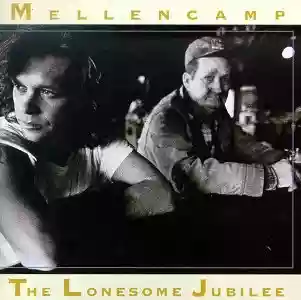
Two years after the critical and public success of "Scarecrow," John Cougar Mellencamp returns with a new chapter in his musical journey. "The Lonesome Jubilee" was released in 1987 and was produced, like "Uh-Huh" and "Scarecrow," with the help of Don Gehman. The sales success of the previous works has in no way undermined or polluted the spirit of Little Bastard, an artist who is naturally reserved and sharp towards the music business and mass-market promotion.
The peculiarity of "The Lonesome Jubilee" is the sound dictated by the violin-accordion combination. Cougar, more creative than ever, enriches the album's splendid electroacoustic ballads with distant musical echoes borrowed from Irish and Celtic traditions. Often even a pinch of bluegrass makes its way into the grooves of the work. John Mellencamp renews and refreshes roots music; in his work, there is no room for banal pop songs devoid of meaning. The guitars (Mike Wanchic and Larry Crane) remain protagonists but sound more refined and less raw than in the past. The rhythm section (Toby Myers on bass and the great Kenny Aronoff on drums) spectacularly and professionally guides the album's ten gems. Cougar enriches his sound with Lisa Germano's gentle fiddle and traditional instruments: the banjo, mandolin, dobro, accordion, and penny whistle. Furthermore, the already numerous combo is completed by the presence of two backup singers, Pat Peterson and Crystal Taliefero (later with Springsteen and Billy Joel).
The album, a masterpiece for American critics, lines up a series of winning and overwhelming singles with "Paper In Fire", "Check It Out", "Cherry Bomb", "The Real Life", "Rooty Toot Toot", which are permanent fixtures in concert setlists. The author does not forget the hard times honest people are living through, and in the underlying themes, there are barbs at politicians and social denunciations against a leadership class blind to the problems of ordinary people. Thus, like a great folk singer, in "Down And Out In Paradise" and "Empty Hands", he lets individuals who live an apparent normality with few satisfactions speak. He, as demonstrated in "We Are The People", always sides with the weakest ("If you're homeless, may our thought be with you...").
The album is followed by a highly successful tour (documented by the bootleg "Overdrive") and another round of critical and public success in Europe as well. During these concerts, the rapport between the musicians will grow day by day, transforming Cougar's group into one of the best live bands of the period. Highlighted in the concert setlists is a splendid reinterpretation of Bob Dylan's classic "Like A Rolling Stone," sung in three voices by John with the two backup singers. An important tribute made by one great to another of the greatest.
In the years to follow, "The Lonesome Jubilee" will be a source of inspiration for a generation of new musicians (including Michael McDermott, Will T. Massey, Whiskeytown, and the Jayhawks among others). Its folk roots will reach the new millennium when Bruce Springsteen will dust it off, citing it in some inspired moments of the masterpiece "The Rising."
Loading comments slowly
Summary by Bot
John Mellencamp's The Lonesome Jubilee (1987) continued his evolution as a roots rock artist, blending folk, Celtic, and bluegrass sounds. Produced by Don Gehman, the album features a rich mix of traditional instruments and socially conscious lyrics. Critically acclaimed and commercially successful, its singles remain concert staples. The album inspired future generations and solidified Mellencamp's status as a significant American singer-songwriter.Tracklist Lyrics Videos
John Mellencamp
John Mellencamp is an American singer-songwriter known for heartland and roots rock, with songs often focused on small-town life and social themes. He rose to mainstream success in the early 1980s (notably with American Fool) and later released acclaimed albums including Scarecrow and roots-oriented projects such as Trouble No More.17 Reviews
