
 •
Rating:
•
Rating:
THE REVIEW
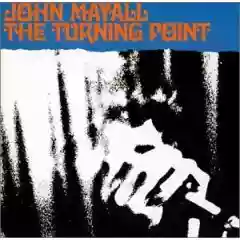
"The Turning Point" - The Turning Point.
No title is more appropriate and effective for describing this album. John Mayall was in the '60s with his Bluesbreakers one of the benchmarks of "english blues": besides being the point of connection between the blues revival of the '50s and the blues-rock of the following decade, the group was an important launching pad for artists like Eric Clapton, Mick Taylor, Larry Taylor, Peter Green.
After the classic "Crusades", John Mayall symbolically abdicates from the throne of the king of blues to seek new paths. Keeping the faithful bassist Steve Thompson in the line-up and recruiting Johnny Almond on saxophone and flute, and the semi-unknown Jon Mark on acoustic guitar, without any drummer or electric instruments, the group recorded in the summer of '69 at the Fillmore East in New York with Eddie Kramer (already a tech for Led Zeppelin) behind the console the album reviewed here.
The album can be considered an unplugged ante-litteram, in which there is a perfect blend between the most sophisticated and the rawest blues; the 7 tracks are very long (7 minutes on average) and structured, with significant contributions from the horns both in embroidery and solo sections. All tracks are of high level, but two in particular struck me: "The Laws Must Change" and "Room to Move", respectively the opener and the closing song of the album. The first, after the presentation of the band, initially develops like a typical blues in C with an efficient work of the harmonica, but in the central part it becomes a semi-jam in which the harmonica duets with the flute. Thematically the song deals with the theme of the clashes between students and the police and that of drugs. "Room to Move" is one of Mayall's classics and is famous for the duel between him and Almond in terms of "vocal percussion" and the frantic harmonica. The other tracks cannot go unmentioned: the ballad "Saw Mill Gulch Road", "I'm Gonna Fight for You J. B." (dedicated by Mayall to his master J. B. Lenoir), and the triptych formed by "So Hard to Share", the long ballad "California" and "Thoughts About Roxanne" that present more than one jazz cue.
Thanks to this album Mayall managed to convince even the most doubtful about the new path boldly undertaken and which represented a true turning point in the way of playing and conceiving blues.
RATING = 8
Loading comments slowly
Summary by Bot
The Turning Point marks a pivotal moment in John Mayall's career, showcasing a shift from traditional electric blues to a groundbreaking acoustic approach. Recorded live at the Fillmore East in 1969, the album blends raw blues with jazz elements, featuring standout tracks like ‘The Laws Must Change’ and ‘Room to Move’. Mayall’s innovative lineup and absence of drums give the record its unique, intimate sound. This album successfully quells doubts about Mayall’s new direction, solidifying its importance in blues history.Tracklist Lyrics Videos
John Mayall
John Mayall (born 1933) is a British blues singer, multi-instrumentalist and bandleader, best known for founding the Bluesbreakers and shaping the UK blues boom while fostering talents such as Eric Clapton, Peter Green and Mick Taylor.07 Reviews
