
 •
Rating:
•
Rating:
THE REVIEW
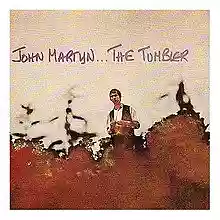
It's 1968, and good old John, who probably hasn't even met his (not for long) companion and life and sound muse yet, is already bursting with creativity.
After a solid debut with London Conversation, he offers us another excellent performance where he already seems to effortlessly navigate between folk/jazz/blues in perhaps the lesser-known album of the first part of his career.
Together with the first album, which will later form the basis of his approach to making music, we perhaps appreciate the most authentic John, who has yet to lay hands on various echoplexes, fuzz, wah-wah pedals and therefore tries to extract the unlikely from what the six-string alone can express. There is no hint of sound softening: everything you hear comes from his hands.
It's no coincidence that the most characteristic tracks are those with frenetic fingerpicking: the instrumental A Day at the Sea, The Gardeners, Seven Black Roses.
The voice, still too youthful to be fully appreciated, already creates that sonic tapestry that blends perfectly with the rhythm-lead section now of the guitar alone, now also of Harold Mc Nair's transverse flute, becoming the added wind instrument.
The same The Gardeners, the masterpiece of the album, with its nervous approach between dreamy-Gypsy atmospheres, reveals to us all the undeniable vocal abilities – singing that does not follow the music in an obvious way (as almost always happens) but ventures into counterpoints, dissonances, that is, it dialogues with the same.
The entire album is very varied both in tones and genres addressed. Seven Black Roses, an epic ride, is another excellent technical performance, interesting especially for the innovative use of the capo. While Knuckledy Crunch and Slippledee-slee Song is an authentic homage by the singer-songwriter to Nordic folk, with tambourines, popular voice choirs, curses.
Sing a Song of Summer lends itself to almost swing-like digressions, while other blues standards (which are mainly rearrangements of traditional songs, like Fishin Blues) are a pleasure to listen to and testify to all the carefreeness of a teenager at the end of the '60s.
And finally, I want to tell you that no, I can't give anything less than the maximum to someone who, even at the dawn of his artistic maturity, has always sought a balance between technique and emotion, and who can still tell me something new even after almost 50 years and who risks falling into oblivion to the detriment of much more celebrated mediocrity.
Chapeau
Loading comments slowly
Summary by Bot
John Martyn’s 1968 album The Tumbler is a remarkable early work full of creativity and technical skill. The album blends folk, jazz, and blues seamlessly, highlighting Martyn’s authentic sound before effects pedals defined his style. Notable tracks like The Gardeners and Seven Black Roses showcase his vocal and guitar talents, while the diverse styles reflect a young artist exploring new musical territory. This album remains a testament to his enduring artistry nearly 50 years later.Tracklist Videos
John Martyn
John Martyn (1948–2009) was a Scottish singer-songwriter and guitarist renowned for blending folk, jazz and blues with innovative use of the Echoplex. A key Island Records artist, he worked closely with double bassist Danny Thompson and recorded landmark albums including Solid Air, Bless the Weather, Inside Out and One World.07 Reviews
