
 •
Rating:
•
Rating:
THE REVIEW
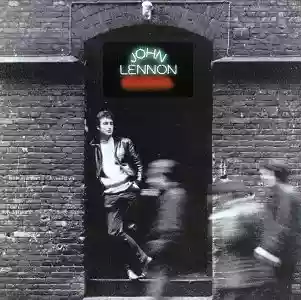
The end of a cycle. By recording the old rock'n'roll classics that had greatly influenced him when, barely more than a teenager, he picked up a guitar, John concluded the journey he began back in 1957 as a member of the Black Jacks (later Querry Men), before entering history and being overwhelmed by fame.
The album had a rather long gestation: in '73, after the release of the LP "Mind Games," John began recording a selection of covers of some of his favorite musicians, aided in the control booth by Phil Spector, who had already served him well in the excellent "Plastic Ono Band" and "Imagine." Fate had it that after the sessions, Spector himself disappeared with the recordings, later having an accident that put him in a coma. Considering the tapes lost, Lennon focused on another solo album, "Walls And Bridges," refusing to include the (later) found covers played a year before. After "Walls And Bridges" was released, the former Beatle's attention returned to the "Rock'n'roll" project, his last album before retiring to dedicate himself to his family and personal life.
The album was published in its official version (there exists a second one, named "Roots: John Lennon Sings The Great Rock & Roll Hits" and available only for three days before being pulled from the market) in February 1975, shortly followed by the single "Stand By Me", a classic rhythm & blues by Ben E. King played here with a more distinctly rock orientation. From the sessions two years prior with Spector, only four tracks remain, while the remaining nine tracks were arranged and produced by the English singer. The album, which pays tribute among others to Fats Domino, Chuck Berry, Buddy Holly, Sam Cooke, and Little Richard, turns out to be quite homogeneous despite the variety of sources, reaching its highest moments in "Ya Ya," the medley "Bring It On Home To Me/Send Me Some Lovin'," the non-single "Slippin' And Slidin'," and the concluding "Just Because." Still good music is found in "You Can't Catch Me," which bears the unmistakable touch of Phil Spector, while the Caribbean melodies of "Do You Wanna Dance" and the repetitiveness of "Bony Moronie" don't entirely convince, making for an LP that is undoubtedly fun but leaves little room for creativity and inventiveness.
Five years later, the British artist's retirement would be contradicted by the release of the controversial "Double Fantasy," but this "Rock'n'roll," thirty-five years after its release, remains a sizzling album, perfect for listening at parties, and is closely related to the almost contemporary "Rigor Mortis Sets In" by John Entwistle.
To be played at high volume.
Loading comments slowly
Summary by Bot
John Lennon’s 1975 album Rock 'n' Roll is a tribute to the classic rock and rhythm & blues hits that shaped his early music. Despite some tracks lacking originality, the album remains a fun, cohesive collection showcasing Lennon’s roots. It marked the end of a musical cycle before his retirement, featuring notable collaborations with Phil Spector. The album continues to resonate as a lively, nostalgic listen, perfect for high-volume enjoyment.Tracklist Lyrics
John Lennon
John Lennon (1940–1980) was a British singer-songwriter and a member of the Beatles, later pursuing a highly influential solo career. His solo work spans raw, autobiographical rock (John Lennon/Plastic Ono Band), melodic and idealistic pop/rock (Imagine), mid-’70s introspection (Walls and Bridges), and a late return to recording with Double Fantasy-era material.24 Reviews
Other reviews
By DBMsonic1
John Lennon’s ‘Rock 'n' Roll’ brings new life to old classics.
It’s a heartfelt salute that still packs a punch decades later.
