
 •
Rating:
•
Rating:
THE REVIEW
John Fahey is among the most important, eccentric, and eclectic acoustic six-string players. An American monument.
His overwhelming career, which began in the early '60s, has seen him go on a journey back through the history of American music, in a continuous search for the true roots in America that no longer exist: Delta blues, country, and traditional folk, but also Native Indian music, all genres reworked and presented with ultimate mastery and innovative technique.
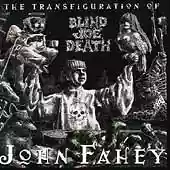
His finger-picking, his slide guitar, have nurtured several generations of guitarists around the world, and his music has been an inspiration to many, including the followers of the "nu-weird-folk" scene who see him as an icon to be preserved and revered. "The Transfiguration of Blind Joe Death" (a pseudonym often used by Fahey) showcases a young John Fahey, as the album is one of his early works, but all the prerogatives and peculiarities of his approach to music are already evident: bittersweet harmonies and melodies that capture, cradle, and comfort the soul in a perpetual intertwining of emotions.
"The Transfiguration of Blind Joe" is a must-have and essential record for those who love acoustic sounds, it is one of those timeless records, obviously indebted to the greats of traditional blues like Blind Willie Johnson, Robert, Charley Patton, Skip James, or Robert Johnson, but it is completely free from any temporal reference. The album demonstrates all its versatility and ability to range: in a sort of emotional seesaw, it goes from moments of great liveliness and carefree progressive folk (like the compelling "Orinda-Moraga" or "I Am The Resurrection"), to darker and more reflective ones (like the poignant "On The Sunny Side of The Ocean"), and yet to other sad and melancholic more distinctly blues (like "Poor Boy" where the slide dominates or "Come Back Baby"), all with a great sense of compactness and organicity of the album, which makes it akin to a true concept album.
What else to say... an unmissable album, by an artist fundamentally essential in the history of American music.
Loading comments slowly
Summary by Bot
John Fahey's early album, The Transfiguration Of Blind Joe Death, is a landmark in American acoustic guitar music. It showcases a mix of Delta blues, folk, and Native American influences with masterful finger-picking and slide techniques. The album balances lively progressive folk with dark, melancholic blues, presenting a timeless and emotionally rich experience. Widely regarded as essential listening for acoustic and blues enthusiasts, it continues to inspire generations.Tracklist Videos
John Fahey
John Fahey (1939–2001) was an American guitarist and composer, a pioneer of American Primitive Guitar who fused country blues, folk, and experimental ideas. He founded Takoma Records and recorded influential solo guitar albums under his name and the pseudonym Blind Joe Death.08 Reviews
