 •
Rating:
•
Rating:
THE REVIEW
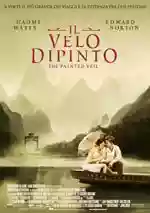
In the second decade of the 20th century, Kitty Fane (N. Watts), a young British woman, sets off for China to follow her husband Walter (E. Norton), a bacteriologist. A victim of boredom and reluctant about Walter, whom she married against her will, Kitty ends up betraying him. She starts a relationship with Charles Townsend (L. Schreiber), a consul-general. The affair is discovered by her husband, who, in revenge, drags her to the village of Mai Tan Fu, stricken by cholera. Overcoming the initial hostility linked to the adultery, Kitty experiences the miserable Chinese reality not as a colonizer but takes a forefront role in helping orphan girls in a Catholic convent. The effort and sacrifice will lead to the rediscovery of herself and marital love, although too late.
"The Painted Veil" is the second cinematic adaptation of the novel of the same name by William Somerset Maugham (1925). A significant portion of critics inevitably compared the first adaptation, dating back to 1934, with that of Curran, a director already familiar with Watts in "We Don't Live Here Anymore". The results have been predictably inevitable. "The Painted Veil" of 1935, besides the indiscreet charm of black-and-white film, has Richard Boleslawski behind the camera, a semi-unknown Polish actor and director who, before lowering his ambitions in Hollywood, was part of the avant-garde and political protest theatre, and Kitty is played by Greta Garbo. Given these premises, it's a bit like comparing the Colosseum to the Kodak Theatre. But regardless of the senselessness of the comparison, which would only aim to devalue Curran's work, the premises on which the direction operates suggest a voluntary and humble distancing from any similarities.
First and foremost, Curran remains faithful to the novel as in the first adaptation but modifies the ending with a less cynical and disenchanted version, though slightly sentimental. Moreover, he spares us from the sermon against colonialism which, rather than enriching the plot, would have only shifted the screenplay towards entirely different reflections, perhaps also lacking actual substance and thus ignorant. Naomi Watts, thank heavens, doesn't pretend to be Garbo, but does her best to perfectly construct the character of Kitty: a British bourgeois woman caught in the whirlwind of her frivolities, for whom the encounter with the most blatant poverty serves as a warning for inner redemption. Edward Norton succeeds in the role, although the roles of betrayed husband, ruthless avenger, and converted to forgiveness, when stitched together, seem to almost fall off him in many moments of the film. A positive note and of undeniable originality are without a doubt the enchanting oriental settings. Both in the vast fields and in the sweltering Chinese villages, a particular dedication emerges towards the locations, all reproduced with graceful realism.
What makes "The Painted Veil" different from the numerous sugar-coated stories that emerge daily from the Hollywood hills? In fact, rather than being cloying, the film is simply romantic. It isn't about the pyrotechnic romance of "Moulin Rouge" or the controversial sensuality of "Atonement", but, with due exceptions, the couple Kitty - Walter retraces the steps of Ruth - Bertil, the sad spouses of Bergman’s "Thirst", a connection tied, more than anything, to the resolution both couples reach: despite incompatibility and misunderstandings, through a greater awareness of individuality and living together, it is possible to achieve an unbreakable marital balance.
Loading comments slowly
Summary by Bot
John Curran's The Painted Veil adapts Somerset Maugham's novel with a focus on romantic redemption and personal growth amid the stark realities of early 20th-century China. Naomi Watts delivers a nuanced portrayal of Kitty, a woman caught between boredom, betrayal, and self-discovery. The film avoids heavy colonial criticism, instead emphasizing emotional depth and realistic settings. While comparisons to the 1934 adaptation are inevitable, Curran's approach offers a fresh, sentimental conclusion. The evocative Chinese landscapes add originality and grace to this thoughtful drama.
