
 •
Rating:
•
Rating:
THE REVIEW
Xenophilia is often a necessary evil. Sometimes, though, it's just a snobbish pretext. In Italy, there's always a critical eye on national filmography (which indeed hasn't offered great titles, at least in the last twenty years), and foreign films are praised, sometimes improperly so. But we Italians also have our national glories. And so, among a Monicelli and a Fellini, an Antonioni and a Ferreri, the name of Francesco Rosi emerges, a director of immense talent, undervalued for almost fifty years, despite a series of high-level films ("Le mani sulla città", "Cadaveri eccellenti", "Cristo si è fermato ad Eboli", "Tre fratelli").
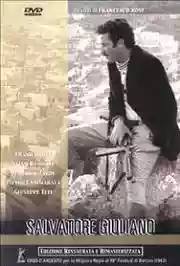
His masterpiece is "Salvatore Giuliano", which, if Italy had an ounce of dignity, would be immediately included among films of cultural interest. Because "Salvatore Giuliano" is much more than a film; it is a perfect example of cinema vérité serving the citizen, without frills or artistic hysteria, just the linearity of history, amid contradictions and embarrassing political silences. The life of the bandit Giuliano, from the Portella della Ginestra massacre (also known as the May Day massacre) to his death, amidst betrayals and deceptions, which would arrive in 1950. Francesco Rosi chooses the path of simplicity: chronologically impeccable, the film moves with sublime elegance between effective documentary style and detailed narration. And the two forms often intertwine, forming a sort of grand Italian epic that goes beyond the character of Giuliano (dissected to the smallest details), but which fits into a kind of genre we would today call "protest cinema".
What interests F. Rosi is not recounting the deeds of the bandit Giuliano (whom we more or less all know), his aim is to narrate Sicily, the true Sicily, the fiery one that lives and struggles every day, torn between solitude, honesty, and criminality. Post-war Sicily, traversed by children and the elderly, destroyed by the ruins of a conflict that has also erased hope, among political promises never kept and illusions sold cheaply. Political criminality, corruption, compromises slithering between institutions and the mafia, hidden truths. Broadening the scope a little, it seems to describe today's Italy, and perhaps, from post-war Sicily to Italy at the onset of the millennium, the step is shorter than it seems.
"Salvatore Giuliano" is therefore a film to watch, to recover historical memory (which often in Italy tends to disappear), not to forget what we were until a few years ago (60 years, for History, is a joke!), and because, above all, it is a great film, skillfully divided between reality and fiction with moments of great cinema (the shooting of the massacre), and some small nuances (but not so small) that make it a very curious film, often revolutionary for how it overturns certain cinematic clichés (the shootout at Portella della Ginestra is shot as if it were a western film)
The entire cast is applause-worthy (Frank Wolff, the always impeccable Salvo Randone, Giuseppe Teti, Pietro Cammarata, Federico Zardi), and standing ovation for Francesco Rosi, who alongside the character Giuliano, inserts the emblematic figure of Gaspare Pisciotta, the bandit's lieutenant, who died in prison poisoned with a coffee (it's still one of the greatest Italian mysteries today).
The film was released in 1962, in the midst of the Christian Democrat era, obtaining a shameful VM16. Paraphrasing Caterina Caselli: "The truth, it hurts, you know...".
Loading comments slowly
Summary by Bot
Salvatore Giuliano by Francesco Rosi is hailed as a masterpiece of Italian cinema, blending documentary realism with dramatic retelling of Sicily’s post-war struggles. The film’s focus on political corruption, mafia ties, and historical memory transcends its narrative, making it a landmark protest cinema piece. Praised for its elegant simplicity and innovative storytelling, the cast's performances and political courage, despite censorship, remain relevant today.
Joel Schumacher
Joel Schumacher (1939–2020) was an American film director, screenwriter, and producer known for stylish, genre-hopping films from St. Elmo’s Fire and The Lost Boys to Falling Down and the Batman entries. His work spans courtroom thrillers, glossy fantasies, and sharp urban dramas.07 Reviews
