
 •
Rating:
•
Rating:
THE REVIEW
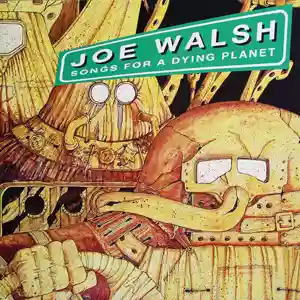
Joe Walsh’s clear stance regarding the irresponsible atrocities that the rulers of the world—be they those with money or those with weapons—are inflicting on our unique and irreplaceable planet, this time overflows right into the title of his tenth work (1992). In fact, this had already been the subject of several songs on previous albums. Even the cover illustration is grotesquely explanatory in this regard.
The guitarist somehow takes refuge in his music and his words, given that his life and sobriety are still pretty messed up. The moving song that also gives the album its title is placed at the end and delivers this message:
_Is anyone out there?
Does anybody listen or care anymore?
We are living on a dying planet
We're killing everything that's alive
And anyone who tries to deny it
Wears a tie and gets paid to lie
_So I wrote these songs for a dying planet
I'm sorry but I'm telling the truth
And for everybody trying to save it
These songs are for you, too
Is anyone out there?
And that was thirty-five years ago… Today things are better because it’s talked about much more, but also worse because action is too slow, and those doing the most damage (USA, China…) still don’t care and, more than ever, deny the evidence, basking in their own greed and materialism.
But before reaching this final ecological song, Joe tells other stories… Like the emptiness one feels waking up in the morning next to a stranger, or how much he’s tormented by the fake friends who swarm around him to ask about Don Henley and Glenn Frey, and also the amusing fact that he’s been more or less everywhere in the world, but for some reason, never to “Fairbanks Alaska” (without the comma, in the title).
This time, though, the comic moments end pretty much here. For the rest, the lyrics are as sincere as always but also rusty, polemical. Rather than humorous, “Vote for Me,” in which he runs for the... vice presidency of the United States, just sounds grotesque! He’ll gather zero votes and this album doesn’t sell much either: a reflective and brooding Walsh just doesn’t catch on with the music world. So, our man loses the desire to push on with his solo career, and indeed, the next album after this one (and so far his last) will come out only about twenty years later.
As already mentioned, in those years Joe is risking his health and maybe even his life, but he will be saved by the very two guys named in “Coyote Love,” track 3 of this album, which, as said above, denounces the nerve-wracking and hypocritical side of fame and notoriety. In 1993, Henley and Frey actually met with him and informed him that the Eagles were about to take flight again, that the position of lead guitarist was still and always his, but with one essential, non-negotiable condition: they want him sober, and “clean.”
Thus, Joe would embark on a tough period of rehab in a specialized facility—the kind where you even have to mop the floors in the hallways in the morning and tidy up your room daily, all to reconnect you to a real… reality, to resurrect self-care. Everything turned out just fine, and a newly sober Walsh would go on to play hundreds and hundreds more concerts with the Eagles, as well as contribute to a double album of new songs with his usual dose of personal compositions and broad, inspired guitar work.
Things also turned out well romantically: he would become good friends with Ringo Starr—a positive, humble, and constructive person—thus getting to know and fall in love with Ringo’s sister-in-law Marjorie Bach. He would soon marry her (his fifth and final marriage), and after almost twenty years, they’re still together. Amen.
Loading comments slowly
Summary by Bot
This review explores Joe Walsh's 'Songs for a Dying Planet,' highlighting its reflective songwriting and environmental undertones. The author praises the album's depth and Walsh's musicianship while noting its 90s rock sound. The review is positive, recommending it to fans of thoughtful rock music.Tracklist
01 Shut Up (00:00)
02 Will You Still Love Me Tomorrow (00:00)
03 Decades (00:00)
04 Song For A Dying Planet (00:00)
05 Fairbanks Alaska (00:00)
06 Coyote Love (00:00)
07 I Know (00:00)
08 Certain Situations (00:00)
09 Vote For Me (00:00)
10 Theme From Baroque Weirdos (00:00)
11 The Friend Song (00:00)
12 It's All Right (00:00)
Joe Walsh
American guitarist, singer-songwriter, and producer. Rose to prominence with the James Gang, formed Barnstorm, and joined the Eagles, contributing signature slide tone, talk box work, and wry songwriting on classics like Rocky Mountain Way and Life’s Been Good.11 Reviews
