
 •
Rating:
•
Rating:
THE REVIEW
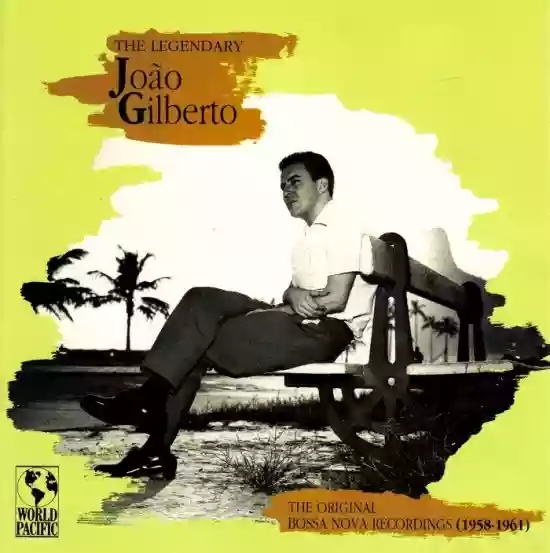
It's truly a miracle that some of these magnificent recordings have reached us. Rui Castro tells that João would stop every session upon hearing musicians' mistakes that escaped others, forcing the orchestra led by Jobim to start from the beginning, as if everyone in that studio were deaf except him. After several tries, the exhausted musicians began to accuse him of being crazy, to which he angrily replied that they were driving him mad, showing particular spite towards an Argentine trumpeter named Catita. Once, everyone stormed out after slamming the door, and when they eventually agreed to return, he was the one who refused, saying he no longer wanted to record. Even Jobim himself, already considered a star of the new Brazilian music at the time, had to endure the difficult character of this singer and guitarist in his first solo experience. The tension in that studio was unbearable, and paradoxically the songs spoke of "hugs and kisses and endless cuddles".
However, this young man could be forgiven for everything because he was a genius. Inventing, or better yet, finding, the "batida" that all Brazilian guitarists would later try to imitate was perhaps his greatest merit, but this has overshadowed and continues to obscure the extent of his innovation in the way he used his voice. Not even Frank Sinatra at the time sang like him and, in my opinion, no one today is as modern. Someone exceedingly naive might think that singing like him would be as easy as painting a Picasso, and in part, they would be right. Just as the lesser-known Picasso showed until 1901 to have an extraordinary technique in realistic drawing, which we wouldn't visibly find again when he abolished perspectives and depth, so João in 1951, when he was a soloist of the vocal group Garotos da Lua, sang with a perfectly set voice, deep and rich in vibrato, which we wouldn't hear again when he decided to become "desafinado" (out of tune). Curiously, all these innovations by the Bahian artist, capable of spending entire days in pajamas at a friend's house playing and smoking marijuana, seem to have been born in the bathroom where, thanks to the echo of the walls, he learned to control the guitar sound and to discipline his voice, realizing that musical phrases could be modulated in counter-time with the "batida".
"The Legendary" is a collection of masterpieces. Rather than describing the songs, I would prefer to make a simple recommendation: when you get ready to listen, I hope you've resolved all your commitments and turned off your phones because nothing should disturb your concentration. Even in slow tracks like "Coisa mais linda" or "Insensatez" paying the utmost attention, you will have the impression of listening to the imposing rhythm of a samba, and in the finale of "Voce e eu" (for me absolutely impossible to replicate) you will find it hard to believe that João didn't do a meticulous overdub when in fact all tracks were recorded live.
FAREWELL
Tomorrow morning, I leave as an emigrant; this is my last review (hastily written, by the way) on Deb for some time, and I will hardly have the pleasure of reading your comments. Therefore, I appoint my friend JakeChambers as moderator of any possible discussion. Turn to him if you have trouble finding this album (because he even knows how to help you find João's elusive recordings with the Garotos da Lua) and feel free to insult him in my place.
A kiss to all. Yours muitosaudosismo
Loading comments slowly
Summary by Bot
This review praises João Gilberto's historic bossa nova album as a miraculous and groundbreaking work. It highlights his perfectionist nature and innovative guitar and vocal techniques, particularly his invention of the 'batida' rhythm. The reviewer advises listeners to engage fully with the album’s subtle rhythms and live-recorded quality, calling it a timeless masterpiece that remains modern and unmatched.Tracklist Lyrics Videos
06 O amor em paz (02:22)
07 Trevo de quatro folhas (01:23)
11 Hô-Bá-Lá-lá (02:15)
12 Aos pés da cruz (01:34)
15 Coisa mais linda (02:51)
17 Trenzinho (Trem de ferro) (01:50)
18 Brigas nunca mais (02:05)
20 Amor certinho (01:52)
23 Morena boca de ouro (01:58)
24 Maria ninguém (02:22)
25 A primeira vez (01:52)
26 Presente de natal (01:53)
28 Saudade da Bahia (02:16)
29 Corcovado (01:58)
30 Só em teus braços (01:47)
33 Doralice (01:27)
35 Se é tarde me perdoa (01:47)
37 Manhã de carnaval (02:35)
38 Medley: O nosso amor / A felicidade (03:05)
João Gilberto
João Gilberto (1931–2019) was a Brazilian singer and guitarist, widely regarded as a pioneer of bossa nova. His intimate voice-and-guitar approach and batida rhythm reshaped Brazilian music and influenced artists worldwide. Key releases include Chega de Saudade, O Amor, o Sorriso e a Flor, João Gilberto, and the landmark Getz/Gilberto.04 Reviews
